MITSUBISHI	 Automotive Clutch Release Bearing

MITSUBISHI

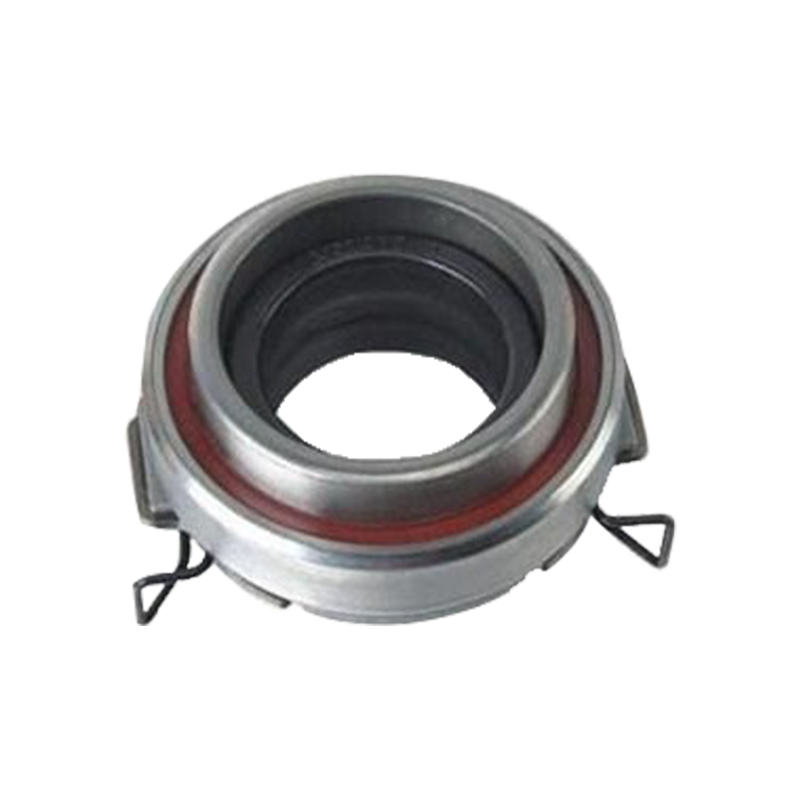
MITSUBISHI Clutch Release Bearing is a key component specially designed for Mitsubishi series models. It is made of high-quality materials and has the characteristics of high precision, high wear resistance and long life. This bearing plays an important role in the clutch system, ensuring that the clutch can be separated and combined smoothly and quickly, thereby improving driving comfort and safety. At the same time, it also undergoes strict quality control to ensure a perfect match with Mitsubishi models.

Send inquiry
MITSUBISHI · OEM · HYDRAULIC CLUTCH
MITSUBISHI Clutch Release Bearing
self-centering pre-greased -40°C to +150°C

The MITSUBISHI clutch release bearing is a precision-engineered component designed for hydraulic clutch actuation systems in Mitsubishi passenger and light commercial vehicles. Manufactured from case-hardened chromium steel, the bearing features a self-centering spherical contact face that maintains constant alignment with the diaphragm spring fingers during pedal travel. The unit is pre-greased and sealed with a high-temperature nitrile rubber lip seal, ensuring protection against clutch dust and thermal degradation. Designed to operate within a temperature range of -40°C to +150°C, this bearing provides reliable disengagement performance for the entire service life of the clutch assembly. Compatible with both concentric slave cylinder (CSC) and fork-actuated configurations, the MITSUBISHI release bearing meets OEM specifications for models including Lancer, Outlander, Pajero, Triton, and Eclipse Cross.

Self-centering design
Spherical contact geometry automatically aligns with the pressure plate diaphragm spring, eliminating edge loading and uneven wear.
Dust & heat resistant
Integral sealing system with dual-lip NBR construction prevents contamination from clutch debris and withstands high thermal loads.
Pre-lubricated
Factory-filled with high-temperature lithium complex grease, tested to withstand over 100,000 engagement cycles in real-world conditions.
OEM compatibility
Designed to meet Mitsubishi factory specifications for Lancer, Outlander, Pajero, Triton, Eclipse Cross, and other popular models.
Product characteristics
MaterialCase-hardened chromium steel (GCr15 / SAE 52100)
Contact faceSpherical, self-centering
Sealing typeDual-lip nitrile rubber (NBR)
LubricationHigh-temperature lithium complex grease, -40°C to +150°C
Actuation typeHydraulic (concentric slave or fork-operated)
Compatible modelsLancer, Outlander, Pajero, Triton, Eclipse Cross, and more
Application scenarios
Passenger cars
Lancer, Mirage, and Galant — hydraulic clutch systems with daily driving and urban commuting cycles.
SUVs & 4x4 vehicles
Outlander, Pajero, ASX — off-road and on-road versatility requiring robust sealing and impact resistance.
Pickup trucks & commercial
Triton, L200 — heavy-duty applications requiring high axial load capacity and thermal stability.
Performance & sports
Eclipse, Lancer Evolution — upgraded releases for modified clutch kits and track-day applications.
Common technical inquiries
How to diagnose a failing MITSUBISHI clutch release bearing?

Listen for a chirping or grinding noise when the clutch pedal is partially depressed. Increased pedal vibration or difficulty engaging gears also indicates bearing wear. Measure axial play — if it exceeds 1.2 mm, replacement is recommended. For hydraulic CSC systems, inspect for fluid leaks around the slave cylinder.

Can this bearing be used with dual-mass flywheel (DMF) systems?

Yes. The MITSUBISHI release bearing is validated for DMF applications up to 0.8 mm axial oscillation. Ensure the clutch slave cylinder is in good condition to maintain correct hydraulic pressure. For DMF-equipped vehicles, always replace the bearing with the clutch kit.

What is the recommended torque for the fork pivot bolt?

Apply 25 Nm to the release fork pivot bolt for most Mitsubishi models. Use a thread-locking compound and ensure the guide tube is greased with Molykote G-n Plus prior to installation. For CSC systems, torque the hydraulic line fitting to 18 Nm.

Is it necessary to replace the bearing with the clutch kit?

Yes, it is standard practice. Reusing a release bearing with a new pressure plate can cause uneven wear patterns and reduce service life by 40-60%. Always replace the bearing when servicing the clutch. For Mitsubishi vehicles, the bearing and clutch kit are designed as a matched set.

Installation
Apply force only to the outer ring during mounting. Use an appropriate press sleeve — never strike the bearing directly. For CSC systems, verify the hydraulic line is free of air.
Cleanliness
Keep the guide tube and fork contacts clean. Contamination can lead to premature seal wear and bearing seizure. Use brake cleaner on the bell housing before installation.
Hydraulic system bleed
After installation, bleed the hydraulic system thoroughly. Air in the system can cause incomplete disengagement and excessive bearing load. Use Mitsubishi-specified brake fluid.
Storage
Store in original VCI packaging in a dry area with stable temperature. Avoid exposure to brake fluid or solvent vapors. Do not open packaging until ready to install.

Product parameters

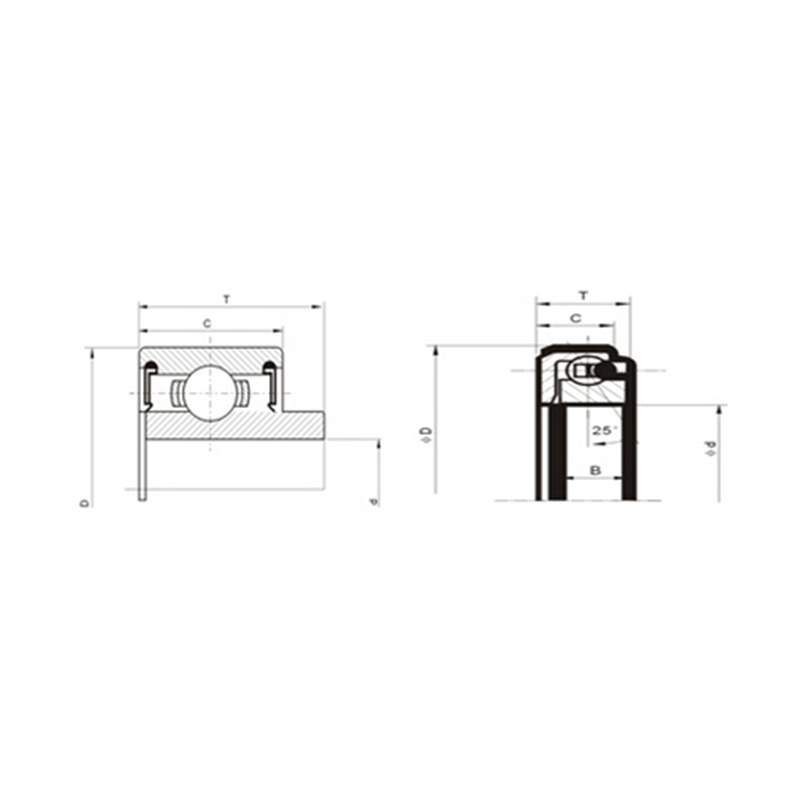
OE NO. SKF NO. Application Boundary dimensions(mm)
d D h W
M0706180 VKC3515 MITSUBISHI 32 48 22 60
MD719469 VKC3579 MITSUBISHI 41.8 55 27 46
ME624678 VKC3587 MITSUBISHI 47.1 68 48.7 68.2
MD703270 VKC3592 MITSUBISHI 32 55 34 46
MD701125 VKC3505 MITSUBISHI 38.1 48 16.5 67

about Yinin

Shanghai Yinin Bearing and Transmission Company was founded in 2009 and has over 20 years of experience in the bearing field. We are China MITSUBISHI Automotive Clutch Release Bearing manufacturers and offer custom MITSUBISHI Automotive Clutch Release Bearing factory. Since 1999, starting from representing bearing manufacturers in China, we have exported different kinds of bearings. Nowadays we are developing one completed sales and manufacturing bearings group.

Industry Applications

Bearings also play a very important role in agricultural machinery. They are used to support rotatin...

Bearings are widely used in automobiles. They are the key supporting and rotating parts of many movi...

Used for support, height, angle, joint, and rotating parts of medical equipment.

Used for support, rotation, motor and compressor parts of household appliances.

Used for rotation and movement of support and guide parts of automation equipment

In building structures, bearings can be used to connect different structural components.

In the production process of food and beverages, pumps are needed to transport liquids and compresso...

Bearings are used in aircraft and spacecraft engines to support rotating components such as turbines...

WHAT’S NEWS

read more

2026-09-09

How Bearing Manufacturers Ensure Quality: Materials, To...
When a food-processing plant replaces the same 6200-size bearing every three weeks, the problem is rarely the load calculation and almost never the maintenance crew. More often, the bearing was produ...

2026-09-03

Deep Groove Ball Bearing Manufacturing Process Explaine...
Why the Manufacturing Process Decides Bearing Performance A CNC machine spindle stops mid-cycle, and the maintenance team pulls a 6205 deep groove ball bearing with spalled raceways. The replacement ...

2026-08-26

Future Trends in Bearing Technology: Smart, Sustainable...
A maintenance engineer opens a monitoring dashboard and sees a bearing in the main conveyor drive reporting a slow temperature rise and a subtle vibration trend. The system recommends a scheduled rep...

contact us

SUBMIT