Industry Trends
2026-10-28
Content
At a seafood processing plant in Fujian, a 6202 deep-groove bearing on a washdown conveyor failed after eleven weeks in service. Lubrication and alignment were correct, yet the raceways showed pitting, rust-colored sludge, and early flaking. A material specification error caused the failure: standard AISI 52100 chrome steel was installed in a zone exposed to daily caustic and chlorine cleaning cycles.
That scenario captures the central challenge of sourcing stainless steel bearings for corrosive environments. The right bearing is a combination of ring material, ball grade, cage design, seal compound, and grease type. This guide gives procurement and maintenance teams a practical framework built on washdown, marine, chemical, and food processing duty.
Chrome steel bearings fail in corrosive environments because the passive chromium oxide film on AISI 52100 breaks down in chlorides, acids, or persistent moisture, and the resulting pits develop into fatigue spalls under cyclic contact stress.
AISI 52100 chrome steel contains about 1.5 percent chromium, enough for light humidity but insufficient for washdown, marine, or chemical atmospheres. When caustic or chlorine-based cleaners contact a loaded raceway, localized depassivation initiates pits. Each pit concentrates stress, and under cyclic loading it grows into flaking that destroys the raceway.
Three corrosion mechanisms dominate in bearing service:
The two practical grade families for corrosive-duty bearings are 440C martensitic stainless steel for load-critical applications and 304 or 316 austenitic stainless steel for maximum corrosion resistance; buyers must verify which grade is used in both rings and balls, because suppliers sometimes mix grades within one bearing.
Stainless steel bearing: a bearing whose rings and rolling elements are manufactured from martensitic or austenitic stainless steel, giving intrinsic corrosion resistance without relying on surface coatings.
440C resists pitting far better than chrome steel and retains hardness near 56 to 60 HRC, making it the standard choice for industrial washdown. For food and marine duty, 304 offers better corrosion resistance but lower hardness; 316 adds molybdenum, which improves chloride resistance significantly. The trade-off is load capacity: a stainless bearing's dynamic load rating is typically 10 to 20 percent below the same chrome steel size, and austenitic grades are lower still.
| Property | 52100 Chrome | 440C Stainless | 304 Stainless | 316 Stainless |
| Corrosion resistance | Poor | Moderate to good | Good | Excellent |
| Hardness, HRC | 58–63 | 56–60 | 22–28 | 22–28 |
| Dynamic load rating | Baseline | 10–20% lower | 30–50% lower | 30–50% lower |
| Magnetic response | Magnetic | Magnetic | Weakly magnetic | Weakly magnetic |
| Relative cost | 1x | 1.5–2.5x | 2–3x | 3–4x |
Before finalizing a specification, review our detailed comparison of 304 versus 440C stainless steel deep groove ball bearings, which includes hardness and magnetic property data for the two grades.
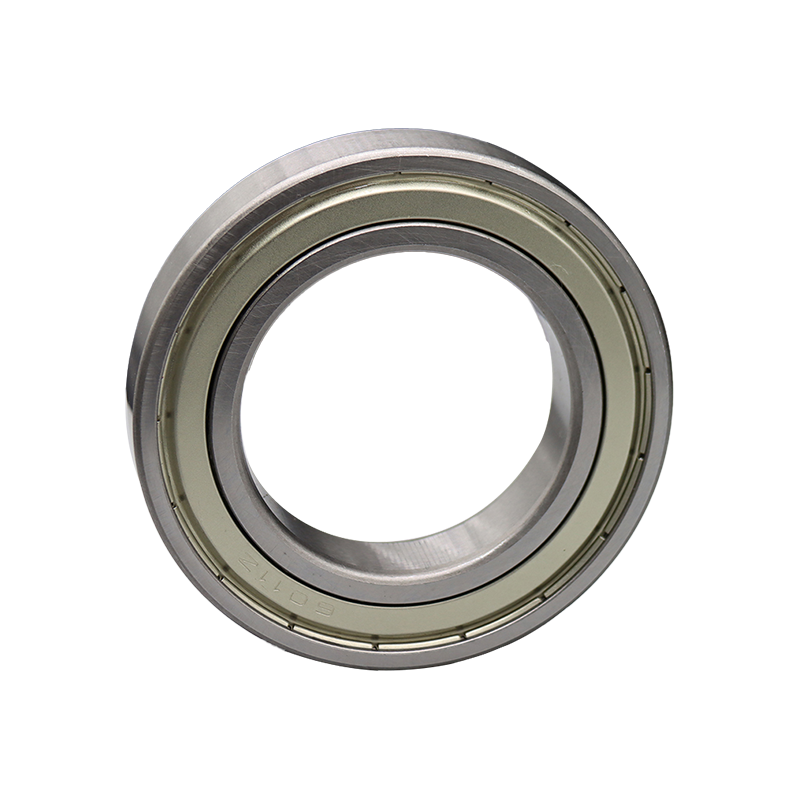 6000 Series Deep Groove Ball BearingThis common rolling bearing handles radial and some axial loads with low friction and noise, suited for high-speed applications. Review its material options to avoid cage corrosion.View Product →
Cage and ball materials determine whether a bearing remains truly corrosion-free, and buyers should confirm them on every purchase order because a stainless ring set with a carbon steel cage will rust from the inside out.
Common cage options in stainless steel bearings:
Rings, balls, and cage are all stainless steel. Used in food, marine, and pharmaceutical lines where washdown is continuous.
Stainless rings and balls with a carbon steel or polyamide cage. Lower cost, but the cage becomes the weak point.
Contact seals and a corrosion-compatible grease extend the service life of a stainless steel bearing in wet environments more than any other single design decision, even when the material grade is correct.
Metal shields deflect large particles but do not keep moisture out. Contact seals (2RS) made of NBR or FKM press against the inner ring and block water, caustic solutions, and low-pressure steam. For food and beverage washdown lines, specify H1-registered grease; PTFE-based greases resist water washout especially well. Standard lithium soap grease degrades quickly in high-humidity or washdown service.
In most washdown applications, a 440C bearing with contact seals and H1 grease outperforms an open 316 bearing with standard grease, because ingress control keeps moisture away from the raceways. This matters most in food and beverage washdown environments, where hygiene regulations also restrict which lubricants are permitted.
Stainless steel bearings typically carry dynamic load ratings 10 to 20 percent below their chrome steel equivalents, and austenitic grades such as 304 and 316 can be far lower, so always recalculate the L10 life with the manufacturer's published stainless steel data instead of applying a chrome steel datasheet.
440C provides the best compromise for most industrial washdown applications. For 304 and 316, the higher corrosion resistance demands a larger bearing, a reduced load, or a shorter service interval. Speed limits of stainless bearings are broadly similar to chrome steel, but the higher thermal expansion of austenitic grades means mounting fits may need adjustment for 316 in applications with wide temperature swings.
Qualify suppliers that can provide material certificates, heat-treatment records, seal compound documentation, and lot traceability, because these documents are the only reliable evidence that a bearing is genuinely stainless.
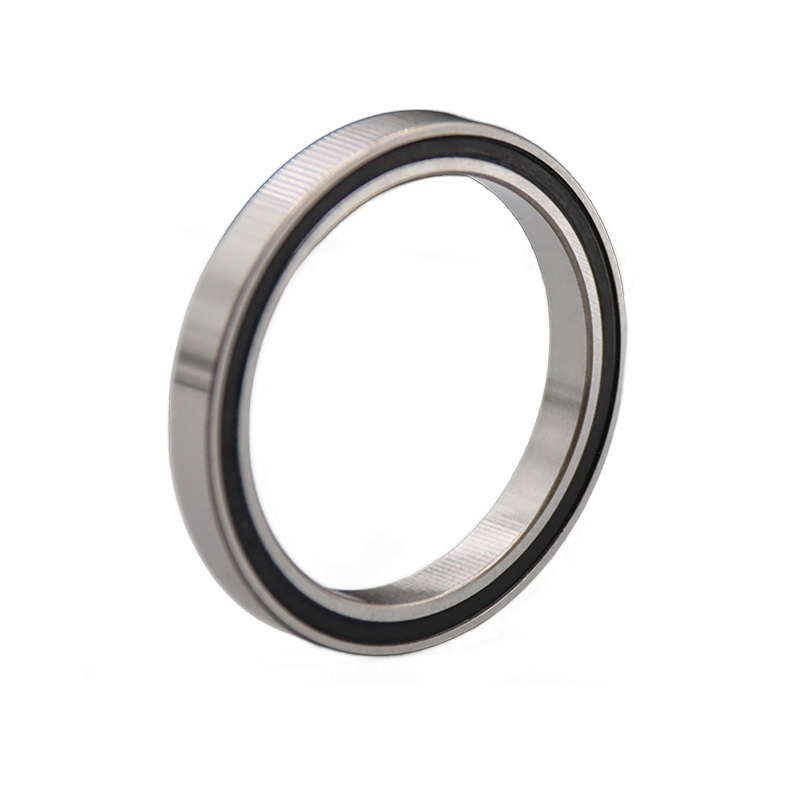 6200 Series Deep Groove Ball BearingA widely used bearing offering strong load capacity, smooth operation, and low noise for industrial automation and motors. Pair it with the right stainless grade for chloride exposure.View Product →
316 stainless steel offers the best chloride resistance among common bearing grades and is the right choice for saltwater and aggressive chemical washdown. Use 440C when the application demands higher hardness and load capacity and the chloride exposure is moderate.
No. A 440C stainless bearing typically has a dynamic load rating 10 to 20 percent below the same chrome steel size, and 304 or 316 bearings can be substantially lower. Recalculate the L10 life with stainless steel data before substituting.
Yes. Standard lithium grease washes out quickly in wet service. Use a water-resistant grease, and in food zones use an H1-registered grease compatible with the seal compound.
Request the mill certificate and the hardness test report for each delivered lot. As a first check, a 300-series austenitic bearing is only weakly magnetic, while a 440C bearing is magnetic; a quick magnet test can reveal a material substitution before installation.
Our provided products
Contact Us
Tel: +86-13916786238
Fax: +86-21-68551629
Email: [email protected]
Add: HuangXu Industrial Area, DanTu, ZhenJiang city, JiangSu Province, China
Industries


 English
 日本語
 Français
 Español