Industry Trends
2025-12-12
Content
The stainless steel deep groove ball bearings are essential components in environments characterized by high moisture, chemical exposure, or extreme temperatures, where standard chrome steel (e.g., Grade 52100) would rapidly corrode. While stainless steel offers superior corrosion resistance, B2B procurement professionals must critically assess the trade-off in mechanical performance, particularly concerning the Basic Dynamic Load Rating and Static Load Rating.
Shanghai Yinin Bearing & Transmission Company, with an integrated industry and trade structure since 2016, specializes in delivering high-quality and specialized bearings, including stainless steel types. Our team of technicians emphasizes that achieving high-performance stainless steel deep groove ball bearings requires meticulous material selection and heat treatment to overcome the inherent mechanical limitations of the alloy.
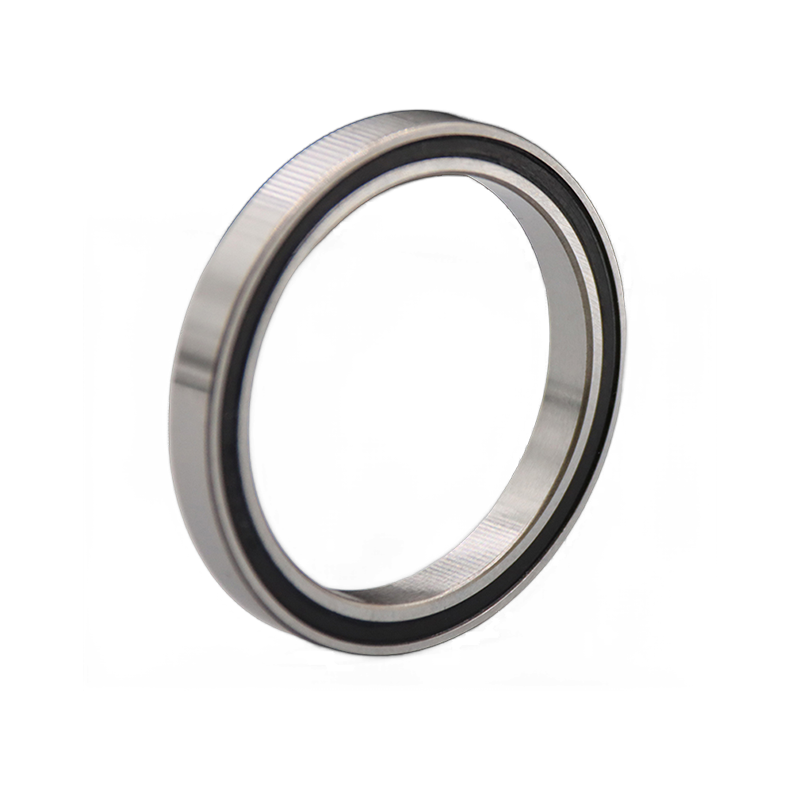
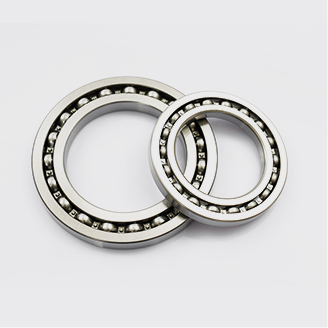
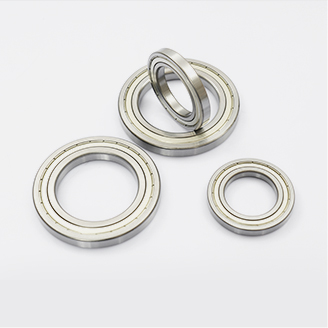
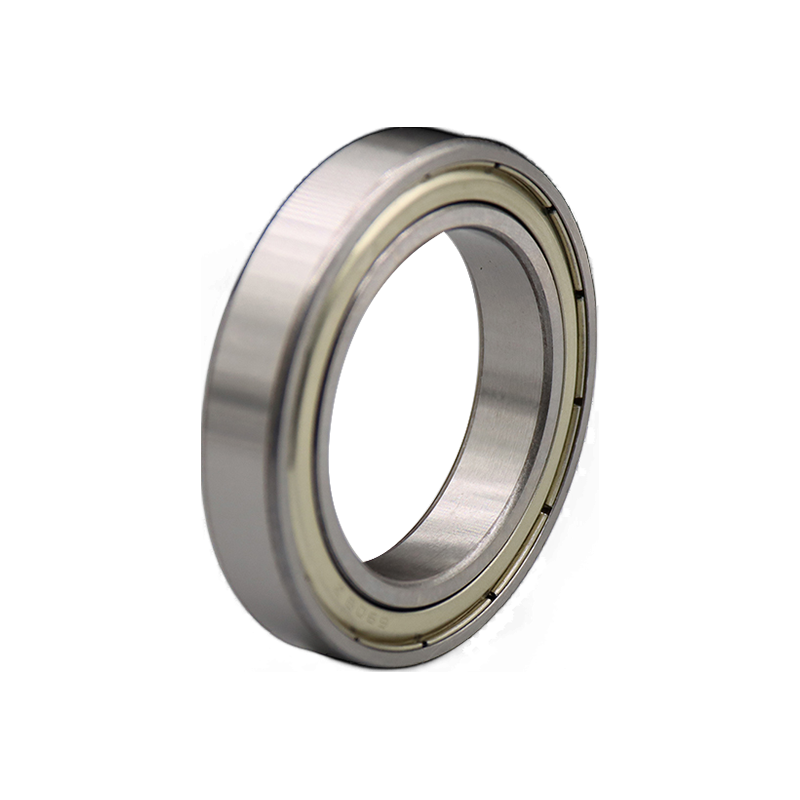
6200 Series Deep Groove Ball Bearing
The load ratings are standardized values derived from extensive testing of bearing life and material properties. Since stainless steel alloys used in bearings (such as Grade 440C) contain a high percentage of chromium (up to eighteen percent) to prevent corrosion, they typically exhibit lower hardness, fracture toughness, and fatigue strength compared to the high-carbon chrome steel Grade 52100.
In a direct dynamic load rating comparison 440C vs 52100 bearings, stainless steel commonly shows a reduction in load capacity. The reason is that the reduced toughness affects the material's resistance to subsurface fatigue (spalling), which is the primary mode of failure defining the dynamic load rating.
This leads directly to the load capacity reduction factor for stainless steel bearings. For B2B planning, a general rule is to apply a derating factor, often ranging from 0.70 to 0.85, when calculating the expected life of a stainless steel bearing compared to a same-sized Grade 52100 bearing in the same application.
The key to maximizing stainless steel bearing performance lies in specialized heat treatment to maximize hardness while retaining chromium's corrosion benefit.
Grade 440C is the most common martensitic stainless steel used for high-precision stainless steel deep groove ball bearings. Effective heat treatment optimization for 440C stainless steel bearings requires precise control over the hardening process:
This process is essential for the B2B guide to corrosion resistance and hardness in stainless bearings. The goal is a final hardness of 58 to 60 on the Rockwell C scale, which approaches the standard for Grade 52100 steel, mitigating the capacity reduction.
| Property | Grade 52100 (Chrome Steel) | Grade 440C (Stainless Steel) |
|---|---|---|
| Primary Function | High Hardness, High Fatigue Strength | Corrosion Resistance, Moderate Hardness |
| Typical Maximum Hardness | 60 to 64 Rockwell C | 58 to 60 Rockwell C (Optimized) |
| Corrosion Resistance | Very Low (Requires protection) | High (Due to $\sim$ seventeen percent Chromium) |
| Typical Dynamic Load Factor | 1.0 (Baseline) | 0.70 to 0.85 (Derated) |
Dimensional stability is paramount for bearing life. Stainless steel, especially after incomplete heat treatment, can contain residual austenite, which slowly transforms over time, causing micro-volume changes and loss of precision.
Dimensional stability testing for stainless steel deep groove ball bearings involves controlled temperature cycling (thermal aging) to accelerate the transformation of any remaining retained austenite. The bearing is then re-measured to ensure critical dimensions (bore, Outer Diameter, ring parallelism) have not shifted beyond tolerance limits.
High-quality manufacturers like Shanghai Yinin ensure that a precise tempering cycle is applied post-cryogenic treatment. This process relieves internal stresses induced by quenching and stabilization, guaranteeing the long-term dimensional stability required for high-speed or high-precision applications.
Choosing the correct stainless steel deep groove ball bearings requires expert technical consultation. The specific environment—chemical exposure versus pure humidity—dictates the alloy choice (e.g., Grade 440C for balanced performance, Grade 316 for extreme chemical resistance). Our company, built on a foundation of quality and technology, employs 12 experienced technicians to help B2B customers navigate these complex specifications and provide the highest quality bearings.
While a general load capacity reduction factor for stainless steel bearings exists due to material properties, advanced manufacturing techniques—particularly precise heat treatment optimization for 440C stainless steel bearings—can significantly close the performance gap with chrome steel. By demanding rigorous procedures, including dimensional stability testing for stainless steel deep groove ball bearings and attention to the dynamic load rating comparison 440C vs 52100 bearings, B2B buyers can confidently procure reliable stainless steel deep groove ball bearings that offer the necessary corrosion resistance without undue sacrifice in lifespan.
It is necessary because stainless steel alloys like Grade 440C, due to their high chromium content, inherently have lower material toughness and hardness (even when optimized) compared to standard Grade 52100 chrome steel. This reduces the material's resistance to subsurface fatigue, leading to a shorter expected service life under the same load.
The main finding is that for the same bearing size, the Dynamic Load Rating for Grade 440C stainless steel is typically fifteen percent to thirty percent lower than that of Grade 52100 chrome steel, making the Grade 52100 bearing capable of handling a higher load or achieving a longer service life under identical loads.
The critical step is the sub-zero or cryogenic treatment, which is applied after quenching. This process is essential for converting unstable retained austenite into hard, stable martensite, thus maximizing the final hardness (up to 60 Rockwell C) and improving both wear resistance and dimensional stability.
The guide recommends selecting martensitic stainless steel (like Grade 440C) for applications needing high load capacity and corrosion resistance, and relying on precise heat treatment to achieve maximum hardness. For extremely corrosive environments where load is minimal, austenitic stainless steel (like Grade 316), which has lower hardness but higher corrosion resistance, is recommended.
This testing verifies that the bearing's critical dimensions (bore, outer diameter, raceway geometry) will not change over its service life, even when exposed to temperature fluctuations. It confirms that internal microstructural changes, such as the transformation of retained austenite, have been completed during the manufacturing process.
Our provided products
Contact Us
Tel: +86-13916786238
Fax: +86-21-68551629
Email: [email protected]
Add: HuangXu Industrial Area, DanTu, ZhenJiang city, JiangSu Province, China
Industries


 English
 日本語
日本語
 Français
 Español