Industry Trends
2025-12-04
Content
For applications involving moisture, chemicals, or high hygiene standards, standard chrome steel bearings are inadequate. The solution lies in **stainless steel deep groove ball bearings**. However, the term 'stainless steel' encompasses various alloys with dramatically different performance profiles. Engineering specification requires a deep understanding of the differences in hardness, load rating, and corrosion resistance between martensitic and austenitic alloys.
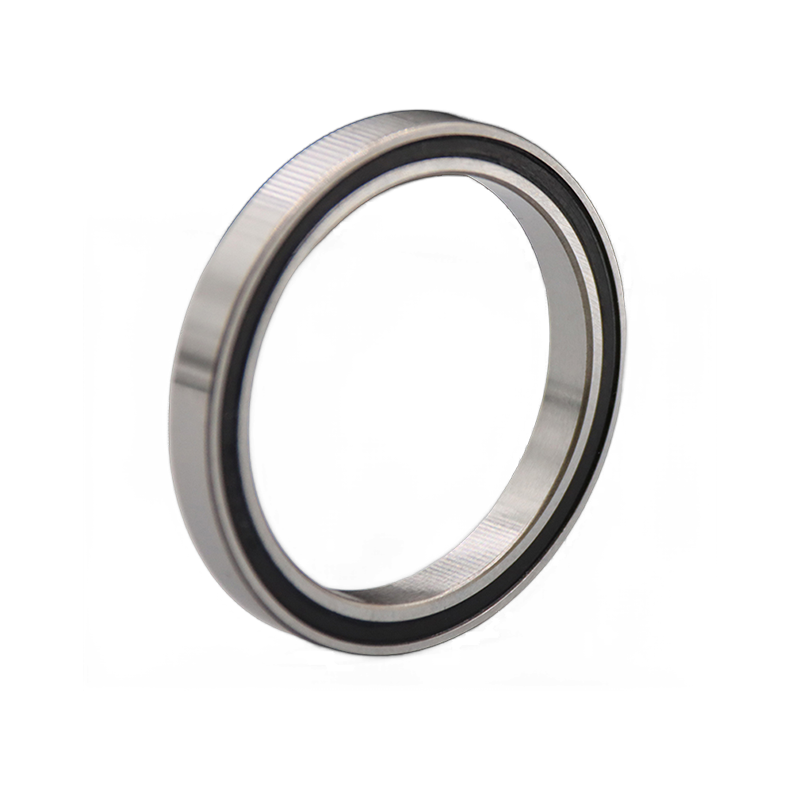
The choice between AISI 440C (Martensitic) and AISI 304/316 (Austenitic) is a fundamental engineering decision that defines the operating limits of the bearing.
While both alloy groups form a passive chromium oxide layer, their resistance to specific environments differs. 440C offers good corrosion resistance in mild environments (e.g., fresh water, dry conditions) but is vulnerable to pitting and crevice corrosion from chlorides. Conversely, 316, with its inclusion of Molybdenum, provides superior resistance, making the AISI 440C vs 316 stainless steel bearing comparison critical for chemically aggressive environments.
| Alloy Type | Primary Grade for Bearings | Max Hardness (HRC) | Relative Load Capacity | Chloride Resistance |
|---|---|---|---|---|
| Martensitic | AISI 440C | 58 - 60 | High (Closest to chrome steel) | Moderate (Vulnerable to pitting) |
| Austenitic | AISI 316 | < 30 | Low (Requires significant derating) | High (Preferred for salt/marine environments) |
Engineers must account for the mechanical limitations of stainless steel, particularly when substituting carbon steel bearings.
Proper heat treatment of the 440C inner and outer rings is crucial. Controlling the tempering temperature ensures the necessary balance between achieving maximum hardness for high load resistance and retaining sufficient ductility to prevent brittle fracture.
Selecting the optimal alloy depends entirely on the specific corrosive agents present in the operating environment.
Food processing and pharmaceutical washdown areas are common applications for **stainless steel deep groove ball bearings**. Selecting stainless steel deep groove ball bearings for washdown typically favors 316 for the rings and balls when aggressive cleaning agents (high chlorine/caustic content) are used, despite the required load derating. For less aggressive washdowns where high speed is needed, 440C is often chosen for the rolling elements, paired with 300-series retainers and seals for comprehensive protection.
Shanghai Yinin Bearing & Transmission Company, established in 1999, is an integrated industry and trade enterprise dedicated to comprehensive bearing design, production, sales, and service. Our team of technicians emphasizes quality, service, and technology to provide the highest quality bearings. We specialize in various products, including standard ball bearings, spindle bearings, and high-quality **stainless steel deep groove ball bearings**. We utilize our deep technical expertise to guide customers through critical specifications like Corrosion resistance ratings for stainless steel bearings and managing the Load capacity reduction in stainless steel ball bearings. Our integrated approach ensures that when you are Selecting stainless steel deep groove ball bearings for washdown or high-load applications, you receive the precisely specified alloy, based on a rigorous AISI 440C vs 316 stainless steel bearing comparison, to achieve optimal performance and durability.
440C is martensitic and can be hardened to 58-60 HRC through heat treatment, providing the high surface hardness necessary to resist contact fatigue stress under high dynamic and static loads, unlike the softer austenitic 316.
AISI 316 is generally recommended, particularly if strong chlorine-based cleaners are used, due to its superior resistance to pitting and crevice corrosion compared to 440C, even though a significant Load capacity reduction in stainless steel ball bearings must be applied.
The derating factor for AISI 316 is substantial, often ranging between 0.25 and 0.35, meaning the rated capacity must be reduced to 25% to 35% of an equivalent chrome steel bearing due to its low hardness.
The key difference is the addition of Molybdenum in 316, which significantly boosts its resistance to chlorides and certain acids, giving it a much higher rating on the Corrosion resistance ratings for stainless steel bearings scale in aggressive environments.
It refers to the crystalline structure of the steel. Martensitic (440C) is body-centered tetragonal, allowing for high hardness via heat treatment, while Austenitic (304/316) is face-centered cubic, offering superior corrosion resistance but remaining relatively soft.
Our provided products
Contact Us
Tel: +86-13916786238
Fax: +86-21-68551629
Email: [email protected]
Add: HuangXu Industrial Area, DanTu, ZhenJiang city, JiangSu Province, China
Industries


 English
 日本語
日本語
 Français
 Español