Industry Trends
2026-09-03
Content
A CNC machine spindle stops mid-cycle, and the maintenance team pulls a 6205 deep groove ball bearing with spalled raceways. The replacement part costs a few dollars; the unplanned downtime can cost a full shift of production. Scenarios like this play out in plants every week, which is why engineers and procurement professionals are increasingly looking beyond the part number to understand how a bearing is actually made.
A deep groove ball bearing looks deceptively simple: an inner ring, an outer ring, a cage, and a complement of balls. What the drawing never shows is the long manufacturing chain behind those parts. Steel selection, ring forming, heat treatment, grinding, superfinishing, ball lapping, cage assembly, greasing, and final testing all influence how quietly the bearing runs, how long it lasts, and how consistently it performs. This article follows the complete deep groove ball bearing manufacturing process from steel bar to finished, tested product, so you can specify with confidence, inspect more effectively, and avoid paying the hidden cost of poor manufacturing.
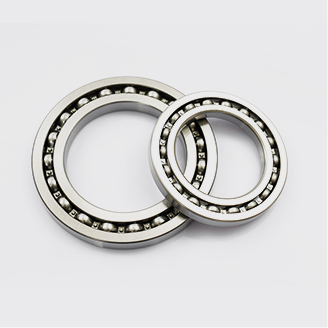
If you are comparing the full deep groove ball bearing range, the manufacturing differences explain much of the price gap between low-cost imports and premium products.
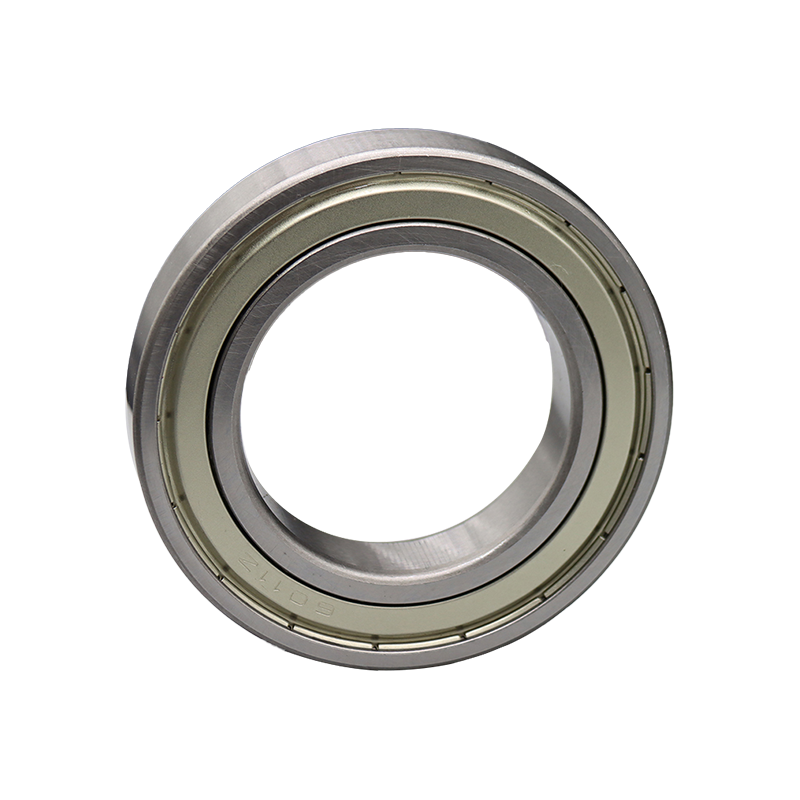 Wholesale Deep Groove Ball Bearing Suppliers, FactoryAs China Deep Groove Ball Bearing Suppliers and Deep Groove Ball Bearing factory, Shanghai Yinin Bearing & Transmission supply wholesale ...View Product →
Nearly all deep groove ball bearings are made from high-carbon chromium bearing steel — GCr15 in Chinese standards, SUJ2 in Japanese standards, and 52100 in ISO and ASTM practice. After heat treatment, this steel reaches 60-66 HRC, giving the raceways the hardness they need to survive millions of rolling contact cycles without plastic deformation. For wash-down, chemical, and food processing environments, martensitic stainless steel such as 440C is common, while 316 austenitic stainless is selected when corrosion resistance outweighs load capacity.
| Grade | Typical hardness | Corrosion resistance | Typical applications |
|---|---|---|---|
| GCr15 / SUJ2 / 52100 | 60-66 HRC | Low | General industrial, electric motors, automotive |
| 440C martensitic stainless | 58-62 HRC | Moderate | Food processing, humid and wash-down environments |
| 316 austenitic stainless | Low, not hardenable by heat treatment | High | Chemical and marine equipment, medical devices |
Manufacturing starts by cutting steel bars into blanks. For most ring sizes, hot forging shapes the blank and creates a grain flow that follows the ring contour — a structural advantage over machining directly from bar stock. The forged rings are then annealed to soften the steel for machining, and CNC lathes produce the rough inner and outer ring geometries that move on to heat treatment.
Heat treatment is where a turned ring becomes a real bearing component. The rings are austenitized at about 830-860°C, oil quenched to form martensite, and then tempered at 150-200°C to relieve internal stress and stabilize the structure.
| Stage | Typical parameters | Purpose |
|---|---|---|
| Austenitizing | 830-860°C | Dissolve carbides and prepare the steel for hardening |
| Oil quenching | Controlled oil bath | Transform austenite into hard martensite |
| Tempering | 150-200°C | Relieve stress, increase toughness, stabilize dimensions |
Raceway hardness is the most direct material factor in bearing fatigue life. A ring a few HRC points below specification will dent, spall, and fail far sooner under the same load, which is why reputable manufacturers verify hardness after every heat treatment batch.
Thin-section bearing rings distort slightly during quenching as the steel changes phase, and retained austenite can keep transforming at operating temperature, slowly changing bearing dimensions over time. Some manufacturers add a cold treatment step below -40°C to convert retained austenite before grinding — a step you will only see in precision-class products, and one of the reasons precision grades cost more.
Once hardened, the rings are ground to final geometry. The sequence typically includes centerless grinding for the outer diameter, internal grinding for the bore, and profile grinding for the raceways. Grinding allowances are deliberately small because the hardened case must be preserved; removing too much material would reduce hardness and fatigue resistance.
The tolerances at this stage are measured in micrometers, not millimeters. A 6205 deep groove ball bearing with normal P0 tolerance, for example, has a bore deviation of 0 to -10 μm — roughly one-eighth of the diameter of a human hair, and raceway geometry is held even tighter. When you specify a higher precision class, the grinding process adds passes, tighter gauging, and lower feed rates, which is exactly why the precision class differences matter at the purchasing level.
The final machining step is superfinishing: fine abrasive stones pass over the raceway to remove the fragile, disturbed layer left by grinding and reduce surface roughness to about Ra 0.05-0.2 μm. Smoother raceways mean less friction, less heat, lower noise, and longer fatigue life. This is arguably the clearest visible difference between an economy bearing and a high-quality bearing made to the same drawing.
Vibration and noise in rotating machinery come mainly from raceway roundness deviations and waviness. Low-noise bearing grades are achieved by holding these parameters to very tight limits during grinding and superfinishing, then verifying the result on vibration testers. Electric motor and appliance manufacturers depend on this part of the process. If you are working with compact designs that still need quiet, reliable operation, 6000 series deep groove ball bearings are a common starting point because the series balances a small cross section with low noise performance.
Custom 6000 Series Deep Groove Ball Bearing Manufacturers, FactoryShanghai Yinin Bearing & Transmission Company Is China 6000 Series Deep Groove Ball Bearing Manufacturers and custom 6000 Series Deep G...View Product →Balls begin as wire, cut into slugs and cold headed into near-spherical blanks, then hardened and tempered to the same hardness class as the rings. Grinding and lapping between plates with abrasive slurry brings the balls to final grade. A G10 ball, a common grade in deep groove ball bearings, has a maximum spherical deviation of 0.13 μm and a surface roughness around Ra 0.012 μm. When both balls and raceways are finished at this level, the bearing rolls smoothly, quietly, and with low friction.
The cage keeps balls evenly spaced, prevents ball-to-ball contact, and maintains the correct ball set geometry during operation. Three types dominate deep groove ball bearing production:
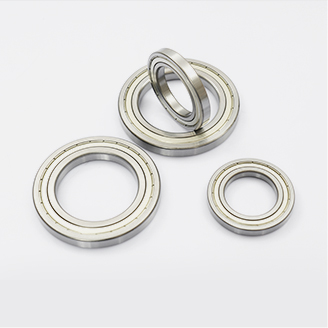
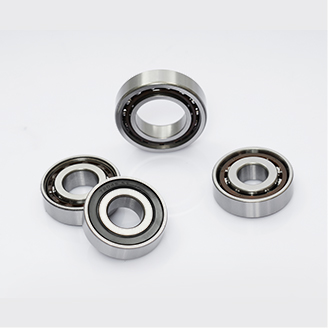
Sealing is decided at this stage of the process. A metal shield (ZZ suffix) excludes large contaminants with minimal friction, while a contact rubber seal (2RS suffix) keeps grease in and moisture or dust out at the cost of slightly higher running torque. The right choice depends entirely on the working environment.
Assembly starts with rigorous washing of rings, balls, and cages. Components are then matched so that radial internal clearance falls into the required group: C2, CN, C3, or C4. This clearance determines how the bearing reacts to thermal expansion, interference fits, and preload. A C3 clearance, for instance, is often selected for bearings that will run hot or be fitted with a tight housing interference.
After matching, balls are inserted, the cage is installed and riveted, and the bearing receives its grease charge. Typical grease fill is 25-35% of the free volume. Overfilling raises torque and temperature; underfilling shortens relubrication life. Food-grade H1 grease is used for food and beverage contact applications, and specialty greases are available for high-speed or low-temperature service.
The assembled bearing is then run in and subjected to final testing, which includes:
| Check | Typical method | Why it matters |
|---|---|---|
| Radial internal clearance | Dial gauge under a fixed load | Controls running temperature, preload, and fit behavior |
| Vibration / noise level | Vibration test instrument | Defines low-noise grade for motors and appliances |
| Bore and OD dimensions | Automatic gauging machines | Guarantees interchangeability and correct mounting fit |
| Rotating torque | Torque measurement rig | Critical for instruments, robotics, and high-speed spindles |
Serious manufacturers run 100% inspection on these parameters rather than sampling. If two bearings with the same part number behave completely differently in service, the cause is almost always traceable to this stage of the process.
The manufacturing process explains most of the price difference between bearings with identical dimensions and load ratings. The expensive one is not made of more expensive metal alone; it reflects tighter heat treatment control, better raceway superfinishing, higher ball grades, matched clearances, and 100% final testing. The cheap one may not reveal any of that until it is installed in your machine.
Start by defining the operating conditions: load, speed, temperature, contamination level, and allowable noise. General industrial machinery and electric motors have well-understood requirements. Automotive environments add road shock, water, salt, and vibration, which is why automotive bearing requirements usually demand sealed, specially greased variants. Food and beverage equipment requires stainless materials and food-safe lubrication, covered in our application-focused deep groove ball bearing selection guide.
Then hold your supplier to process evidence. Ask about steel source, heat treatment parameters, raceway surface finish, ball grade, clearance matching, and whether final inspection is 100% or sampling. A supplier that cannot answer these questions is asking you to accept the risk of hidden manufacturing variation.
At Shanghai Yinin Bearing & Transmission Company, the 6200 series deep groove ball bearings we supply follow this exact manufacturing logic: controlled raw material, verified heat treatment, precision grinding and superfinishing, matched assembly, and comprehensive final testing. Understanding the process is the fastest way to separate a bearing supplier from a bearing seller — and to keep your machines running.
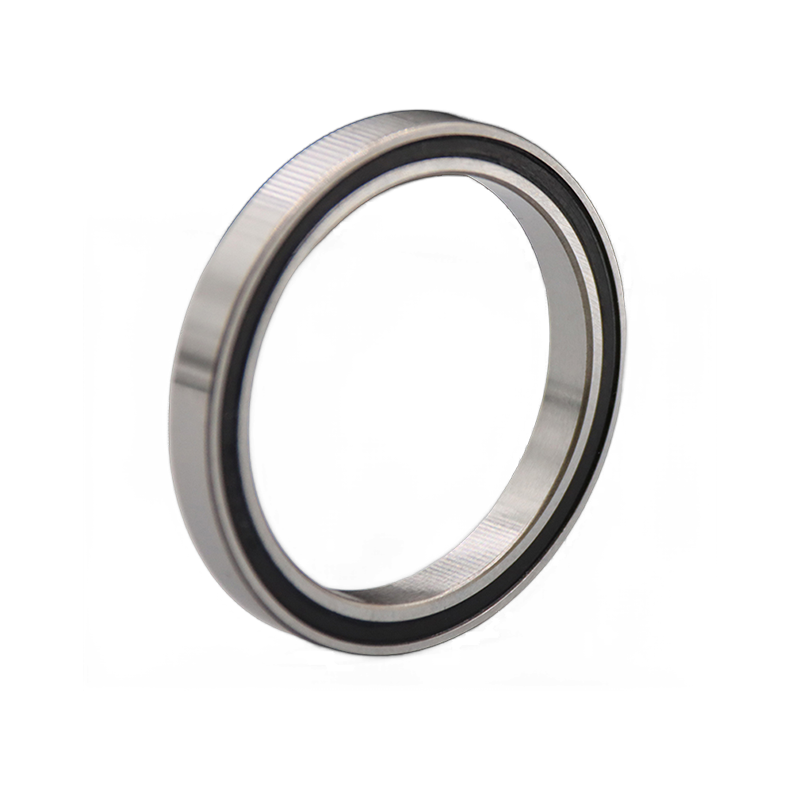 Custom 6200 Series Deep Groove Ball Bearing Manufacturers, FactoryShanghai Yinin Bearing & Transmission Company Is China 6200 Series Deep Groove Ball Bearing Manufacturers and custom 6200 Series Deep G...View Product →
Our provided products
Contact Us
Tel: +86-13916786238
Fax: +86-21-68551629
Email: [email protected]
Add: HuangXu Industrial Area, DanTu, ZhenJiang city, JiangSu Province, China
Industries


 English
 日本語
日本語
 Français
 Español