Industry Trends
2026-08-26
Content
A maintenance engineer opens a monitoring dashboard and sees a bearing in the main conveyor drive reporting a slow temperature rise and a subtle vibration trend. The system recommends a scheduled replacement within six weeks, preventing an unplanned shutdown. This scenario is already real, and it captures where bearing technology is going: components that collect and transmit data, materials that last longer under harder conditions, and designs built for electrified, automated, and sustainability-driven machinery. For engineers, maintenance teams, and buyers, these trends are not distant concepts. They change how bearings should be selected, sourced, and specified in the next purchasing cycle.
The clearest shift in bearing technology is the integration of sensing and communication directly into the bearing. Embedded sensors measure temperature, vibration, rotational speed, and in some designs approximate load distribution. The data travels wirelessly to condition monitoring software, where algorithms compare live readings against normal operating profiles and flag anomalies before they become failures.
The commercial logic is simple. Unplanned downtime is one of the largest cost drivers in industrial operations, and a failed bearing can damage a shaft, housing, or adjacent equipment, multiplying the repair bill. Predictive maintenance based on bearing data reduces that risk, extends maintenance intervals, and lets operators replace parts based on actual condition rather than a fixed calendar.
What this changes for specifiers and buyers:
The practical takeaway is to standardize on dimension series that can accept sensor-ready variants later, and to ask suppliers whether their product families are designed with sensor integration in mind.
Material science is advancing bearing limits in two directions: enabling higher speeds and protecting against the failure modes that shorten service life. The most established trend is hybrid ceramic technology, which pairs steel rings with silicon nitride rolling elements. Ceramic balls are lighter and harder than steel, so hybrid bearings generate less centrifugal force at high speed, run cooler, and tolerate marginal lubrication better. They also resist electrical arcing, an increasingly common problem in inverter-driven motors where stray shaft currents etch bearing raceways.
Hybrid bearings are becoming the default choice in high-speed spindles, machine tools, and traction motors. Their higher initial cost is justified when it prevents premature failures, reduces friction energy losses, or solves electrical erosion problems that steel bearings cannot survive.
Conventional bearing steels are also being refined. Vacuum-degassed, through-hardened steels with tighter inclusion control improve fatigue life. Stainless grades such as 440C, and increasingly nitrogen-enriched alloys with lower magnetism, provide corrosion resistance for food, beverage, pharmaceutical, and marine environments. Diamond-like carbon and other thin-film coatings reduce friction and protect raceways during momentary lubrication starvation.
| Material approach | Typical applications | Main advantage | Key consideration |
|---|---|---|---|
| Hybrid ceramic (steel rings, silicon nitride balls) | High-speed spindles, EV traction motors | Low friction, high rigidity, electrical insulation | Higher cost per unit |
| Chrome steel (52100 / GCr15) | General industrial machinery | Proven fatigue life, cost-effective | Susceptible to corrosion |
| 440C stainless steel | Food and beverage, chemical processing | Good corrosion resistance with moderate hardness | Lower load capacity than chrome steel in some designs |
| Nitrogen-enriched stainless steel | Medical devices, marine, pharmaceuticals | Excellent corrosion resistance, low-magnetism options | Lower hardness; requires design adjustments |
For buyers, material choice should follow the operating environment first and the price list second. A corrosion-driven failure in a washdown area will erase any savings from choosing a cheaper steel grade.
Vehicle electrification is one of the strongest forces shaping bearing development. Traction motors routinely operate above 15,000 rpm, and some powertrain architectures push beyond 20,000 rpm. At those speeds, cage stability, internal clearance, lubrication delivery, and thermal balance become critical. A bearing that was perfectly adequate in an internal combustion engine auxiliary does not automatically survive a motor that sustains high speed for hours.
For high-speed rotating assemblies, single-row angular contact ball bearings are a common choice because their contact angle supports combined radial and axial loads while maintaining predictable stiffness. Cage design, contact angle, and internal clearance determine speed capability and noise behavior, so selection should be application-specific rather than based on dimensions alone. Single-row angular contact ball bearings are among the product families where this level of engineering attention is now expected.
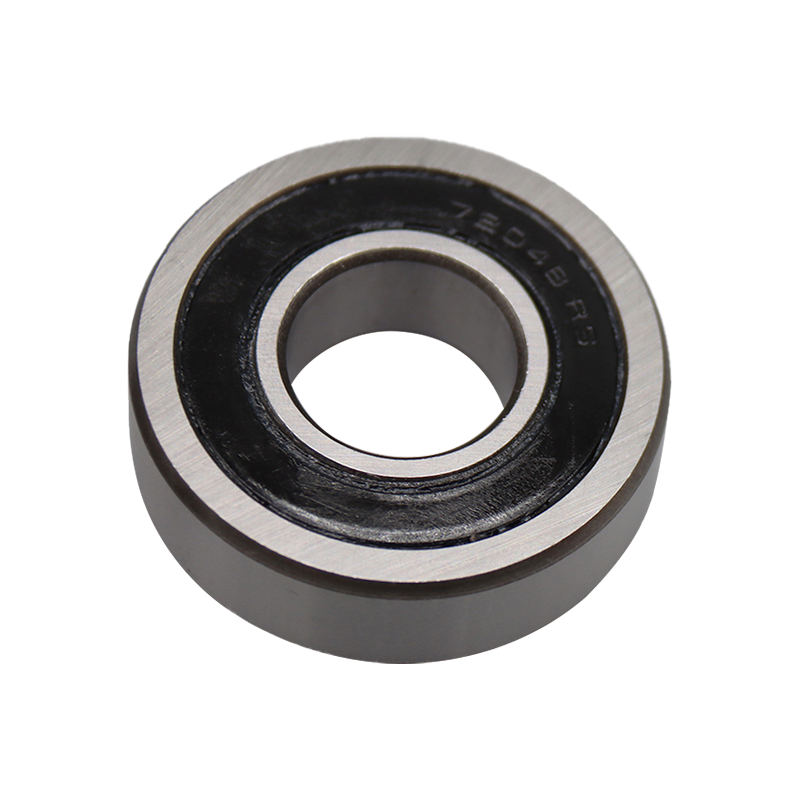 Wholesale Single Row Angular Contact Ball Bearings Suppliers, FactoryShanghai Yinin Bearing & Transmission Company Is China Single Row Angular Contact Ball Bearings Suppliers, Factory, We Wholesale Single R...View Product →
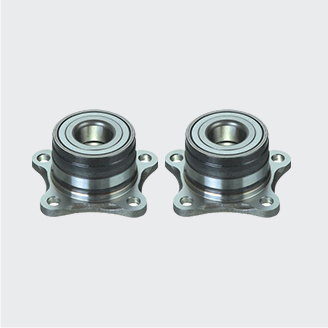
Wheel-end systems are evolving just as quickly. Hub unit bearings now integrate speed sensors and, in some cases, load estimation, supporting traction control, brake-by-wire, and driver assistance functions. The overall pattern is clear: bearing supply for vehicles is shifting from standard catalog parts to application-engineered systems. Buyers sourcing for automotive bearing applications should evaluate suppliers on engineering support, testing capability, and traceability, not only on unit price and lead time.
Sustainability has moved from a marketing theme to a documented engineering requirement. Energy efficiency is the most direct example: lower-friction bearings reduce the power consumed by motors, gearboxes, and conveyor lines. Over the operating life of a machine, the energy saved by a low-torque bearing can exceed its purchase price several times.
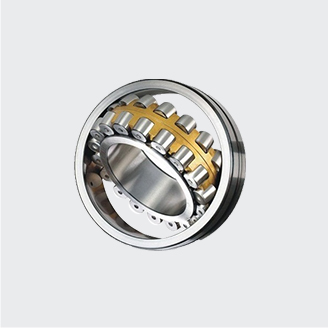
Extended service life is the second pillar. A longer-lasting bearing consumes fewer raw materials, requires less frequent production, and generates less waste. In heavy industries, reconditioning has become an accepted practice: careful inspection, regrinding, and replacement of rolling elements can return a large bearing to service with a fraction of the embodied carbon of a new unit. 22200 series spherical roller bearings are a typical example of heavy-duty designs where lifecycle management delivers measurable cost and environmental benefits.
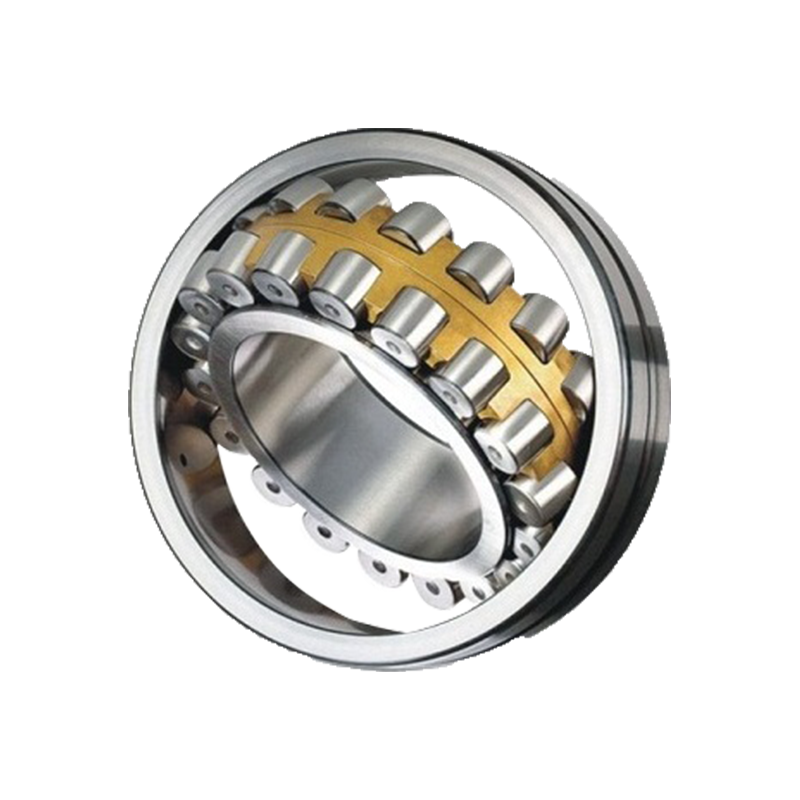 Custom 22200 Series Spherical Roller Bearing Manufacturers, FactoryShanghai Yinin Bearing & Transmission Company Is China 22200 Series Spherical Roller Bearing Manufacturers and custom 22200 Series Sphe...View Product →
Third, lubricants and packaging are becoming more environmentally responsible. Biodegradable greases, reduced grease volumes, and recyclable packaging now appear in procurement criteria, particularly among global OEMs with carbon targets. The practical consequence for buyers: ask suppliers for material documentation, manufacturing footprint data, and expected service life during qualification, not at the end of the project.
Medical devices and aerospace are pushing bearing technology toward smaller sizes, tighter tolerances, and higher reliability. Surgical robots demand low-friction, low-noise bearings that operate for years without maintenance. Imaging systems require smooth, vibration-free rotation. In these settings, the gap between an acceptable bearing and an excellent one is measured in microns and decibels.
Miniature bearings with bore diameters under 10 mm continue to improve in material consistency, lubricant behavior, and dimensional control. They support small motors, flow meters, dental instruments, surgical tools, and precision sensors. Miniature ball bearings in metric and flange configurations deserve careful specification, because tolerance and noise performance vary significantly between grades.
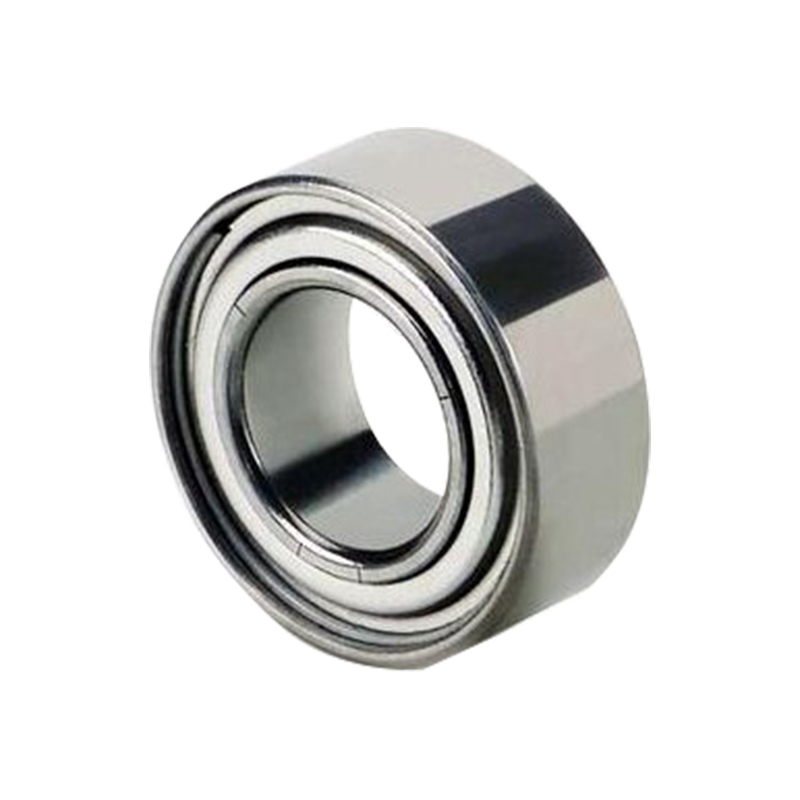 China Custom Minature Ball Bearing Manufacturers, CompanyShanghai Yinin Bearing & Transmission Company Is China Custom Minature Ball Bearing Manufacturers, Company, Such As Series 60/62/63/68/69...View Product →
Aerospace is a stricter arena: reduced weight, extreme temperature ranges, long maintenance intervals, and demanding certification requirements define the envelope. That is why aerospace programs are usually built on suppliers who understand aerospace bearing requirements and can provide traceable, application-validated components.
More bearings fail from contamination and lubrication breakdown than from material fatigue. Sealing and lubrication technology therefore deserves a place in any discussion of bearing trends. New contact and non-contact seal designs keep fine dust and washdown water out while reducing torque. In food and beverage plants, seals rated for repeated cleaning cycles, paired with H1 food-grade grease, eliminate a major source of premature failure. Advances in conveyor roller bearing sealing technology show how much service life can be gained by keeping contaminants out.
Lubricant development is equally active. Low-noise greases formulated for electric motors, high-temperature greases for wheel ends, and anti-wear additives for marginal lubrication conditions are all in wider use. Grease selection and re-lubrication intervals now account for a measurable share of total cost of ownership, so they deserve the same attention as bearing dimensions and ratings.
The future of bearing technology is a convergence rather than a single breakthrough: sensors that make bearings intelligent, materials that make them faster and more durable, designs that serve electrified and automated machines, and lifecycle thinking that reduces both cost and environmental impact. All of these trends change how bearings should be specified and purchased, but they do not change the practical foundation of the industry. Standard dimension series are still the backbone of supply, which is good news because it means advanced options fit into existing machine designs.
For your next bearing project, start with the operating conditions and the failure history, not the price list. Then apply the trends in order:
Bearing technology is advancing quickly, but the buying principles remain the same: understand the duty, demand verifiable quality, and choose a partner who can bring the right solution from a broad and proven product portfolio.
Our provided products
Contact Us
Tel: +86-13916786238
Fax: +86-21-68551629
Email: [email protected]
Add: HuangXu Industrial Area, DanTu, ZhenJiang city, JiangSu Province, China
Industries


 English
 日本語
日本語
 Français
 Español