Industry Trends
2026-02-26
Content
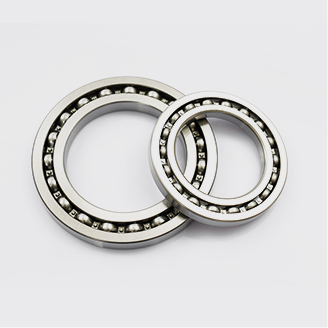
In the high-precision world of Computer Numerical Control (CNC) machining, the performance of the 6000 ball bearing is fundamental to achieving sub-micron accuracy. As the workhorse of the 6000 series deep groove ball bearing family, the 6000 model must balance load capacity with rotational stability. Shanghai Yinin Bearing & Transmission Company, established in 1999, has evolved into an industry and trade integrated enterprise specializing in high-end spindle and motor bearings. With our manufacturing arm, Jiangsu Dahua Bearing Manufacturing Co., Ltd., we provide technical expertise in 6000 ball bearing engineering. Understanding the transition from ISO Class 6 (P6) to ISO Class 5 (P5) is essential for engineers selecting high speed CNC spindle bearings to minimize runout and thermal generation.
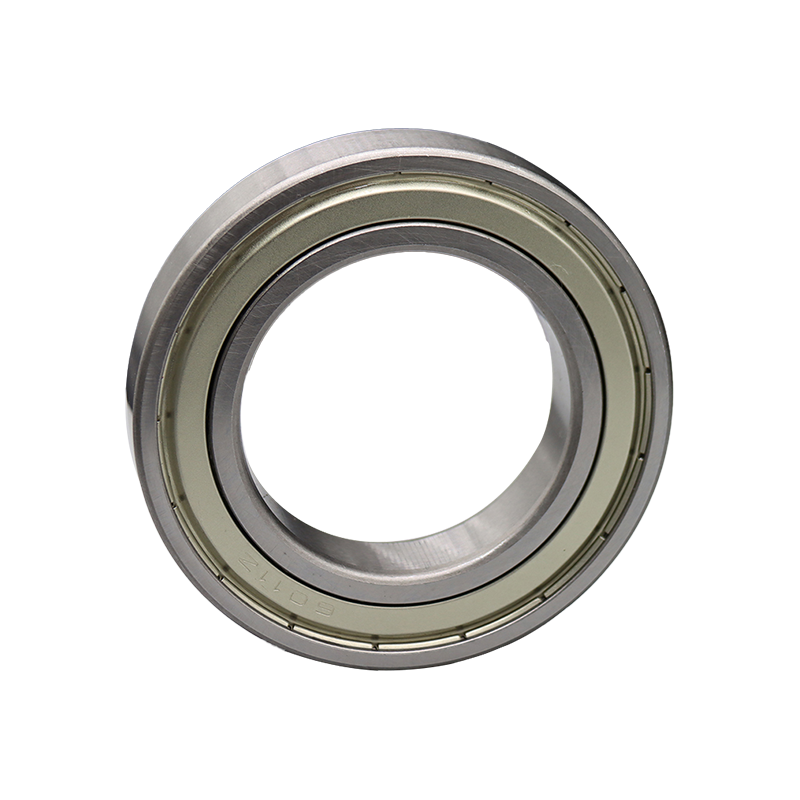
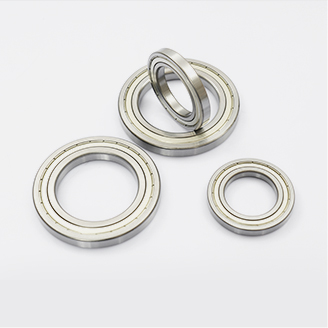
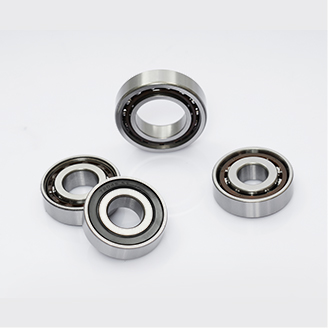
Precision grades are defined by the ISO 492 and DIN 620 standards, which dictate the allowable deviation in dimensions such as bore diameter, outer diameter, and width. For a 6000 ball bearing, the P5 grade offers significantly tighter tolerances compared to P6. While P6 is suitable for high-quality electric motors and general machinery, P5 is mandatory for 6000 bearing for CNC machine tool applications where even a few microns of deviation can lead to chatter marks on the workpiece. The 6000zz bearing vs 6000 2rs for CNC debate often centers on these tolerances, as the seal type must not compromise the precision of the inner and outer ring raceways.
P5 grade bearings offer roughly a 50% reduction in dimensional variance compared to P6, ensuring a more consistent fit within the housing and on the shaft.
| Metric | P6 (Class 6) Tolerance | P5 (Class 5) Tolerance |
| Bore Diameter Deviation (Δdmp) | 0 to -7 µm | 0 to -5 µm |
| Radial Runout of Assembled Inner Ring (Kia) | 7 µm | 4 µm |
| Width Deviation (ΔBs) | 0 to -120 µm | 0 to -40 µm |
Rotational accuracy, or runout, is the primary differentiator in P5 vs P6 bearing precision. Radial runout (Kia) measures the variation in the thickness of the inner ring raceway as it rotates. In CNC applications, high runout causes the cutting tool to oscillate, leading to poor surface finish and accelerated tool wear. By selecting a 6000 series deep groove ball bearing with P5 precision, engineers can ensure that the spindle maintains a stable axis of rotation even at peak RPM. This stability is why P5 is the baseline for customized non-standard high-end bearings used in precision grinding and milling heads.
The internal finish of the raceways and the sphericity of the steel balls directly impact the vibration decibels (dB). P5 bearings require superior honing of the raceways compared to P6. Lower vibration is critical for low friction 6000 ball bearing performance, as vibration energy is typically dissipated as heat. For high-speed CNC spindles, excessive heat leads to thermal expansion, which can seize the bearing. P5 grade motor bearings for high precision often undergo rigorous Z3 or V3 vibration testing to ensure they operate silently and coolly under sustained loads.
The refined surface finish of P5 components leads to a lower coefficient of friction and reduced kinetic energy loss compared to P6 components.
| Operating Condition | P6 Grade Performance | P5 Grade Performance |
| Vibration Amplitude | Standard (Suitable for general motors) | Ultra-Low (Necessary for high-speed CNC) |
| Heat Generation | Moderate | Low (High thermal stability) |
| Lubricant Life | Standard | Extended (Due to lower operating temps) |
While the 6000 ball bearing load capacity is theoretically the same for both grades based on the steel type (typically GCr15), the actual service life differs. Tighter P5 tolerances ensure that the load is distributed more evenly across all rolling elements. In a P6 bearing, slight variations in ball size or raceway eccentricity can cause certain balls to carry a disproportionate load, leading to premature metal fatigue (spalling). This is particularly important when considering stainless steel 6000 series bearings used in corrosive CNC environments, where consistent load distribution prevents localized pitting.
The choice between P6 and P5 for a 6000 ball bearing depends entirely on the application's tolerance for error. For standard electric motors or power tools, P6 provides an excellent balance of cost and performance. However, for CNC applications that demand high rotational accuracy, low vibration, and thermal stability, P5 is the industry standard. Shanghai Yinin Bearing & Transmission Company remains committed to providing the highest quality bearings, utilizing our 12 technicians and decades of export experience to ensure our 6000 bearing for CNC machine tool products exceed customer expectations through rigorous technology and service.
While it will fit, it is not recommended. The higher runout of P6 can cause tool chatter and significantly shorten the life of both the bearing and the cutting tool compared to a P5 grade.
The ZZ (metal shield) offers lower friction and higher speed limits, making it ideal for high-speed spindles. The 2RS (rubber seal) provides better protection against coolant and dust but generates more heat due to friction.
The static and dynamic load ratings (C and C0) are generally identical, but P5 bearings often have a longer "effective" life because the load is shared more evenly among the balls.
Yes. We specialize in custom designs, including specific clearances, grease types, and ultra-high precision grades (P5, P4, or higher) for specialized CNC and motor applications.
Low friction reduces heat buildup. In a CNC machine, heat causes the spindle to grow in length, which directly changes the "Z-axis" offset and ruins the dimensional accuracy of the parts being made.
Our provided products
Contact Us
Tel: +86-13916786238
Fax: +86-21-68551629
Email: [email protected]
Add: HuangXu Industrial Area, DanTu, ZhenJiang city, JiangSu Province, China
Industries


 English
 日本語
日本語
 Français
 Español