Industry Trends
2026-10-14
Content
A 6205 deep groove ball bearing fails after 2,000 running hours in a packaging line, while the same part number runs for 18,000 hours in a neighboring machine. The difference is rarely the steel grade printed on the box; it is the CNC machining process that turns that steel into raceways accurate to a few micrometers. That process decides how long a bearing actually lasts.
CNC machining is the backbone of modern ball bearing production. Every concentric raceway, every controlled internal clearance and every quiet revolution depends on machine tools that remove material with repeatable accuracy. This article explains the manufacturing route from bar stock to finished bearing, the precision grades that come out of it, and the checks you should apply before trusting a supplier.
Every precision bearing ring is the product of a controlled CNC sequence, not a single cutting pass. The route is the same whether the material is GCr15 (52100) chrome steel, 440C stainless or another bearing grade: form, harden, grind and finish.
In the soft state, CNC lathes turn the inner and outer rings to near-net shape, generating the bore, outside diameter, faces, chamfers and a shallow groove that will later become the raceway. Modern turning centers hold dimensions within about ±15 to ±25 micrometers at this stage. That sounds loose next to the final tolerance, but it matters: the remaining stock must be uniform enough for the grinding line to remove it without forcing the ring out of shape. Turning also decides squareness. If the ring faces are not square to the bore after this operation, grinding cannot fully recover the error later.
After turning, the rings are hardened and tempered to about 58 to 63 HRC to give the steel its wear resistance. Heat treatment also distorts geometry: rings can go oval by several micrometers, and the bore or outside diameter can grow or shrink. Hardening is therefore never the final step. It is the step that makes precision grinding necessary, because the hardened ring can only be corrected by abrasive machining.
In the hardened state, the ring moves through a grinding sequence in which each surface is finished separately:
Superfinishing follows grinding. A fine oscillating stone removes the torn and smeared metal left by the grinding wheel, leaving a raceway with a surface roughness Ra between 0.05 and 0.2 μm for standard bearings and below 0.03 μm for high-precision classes. This surface layer is where bearings succeed or fail early: a rough raceway generates friction, heat and noise long before visible wear appears.
A bearing is only as precise as its least precise component. The rolling elements and the cage that spaces them carry their own machining requirements, and this is where cost-cutting first shows up.
Steel balls begin as wire, which is cold-headed into rough spheres, then flash-trimmed, heat-treated and ground in several passes. The final lapping operation uses fixed plates with abrasive slurry to bring the balls to a degree of accuracy that surprises most first-time buyers: within a single high-grade bearing, balls are matched in diameter to about 0.5 μm or less. Out-of-round balls distribute load unevenly, which is why a producer that skips lapping cannot ship quiet or durable bearings. If your application depends on consistent running behavior, review the steel ball grades offered by a dedicated bearing supplier instead of assuming every ball is the same.
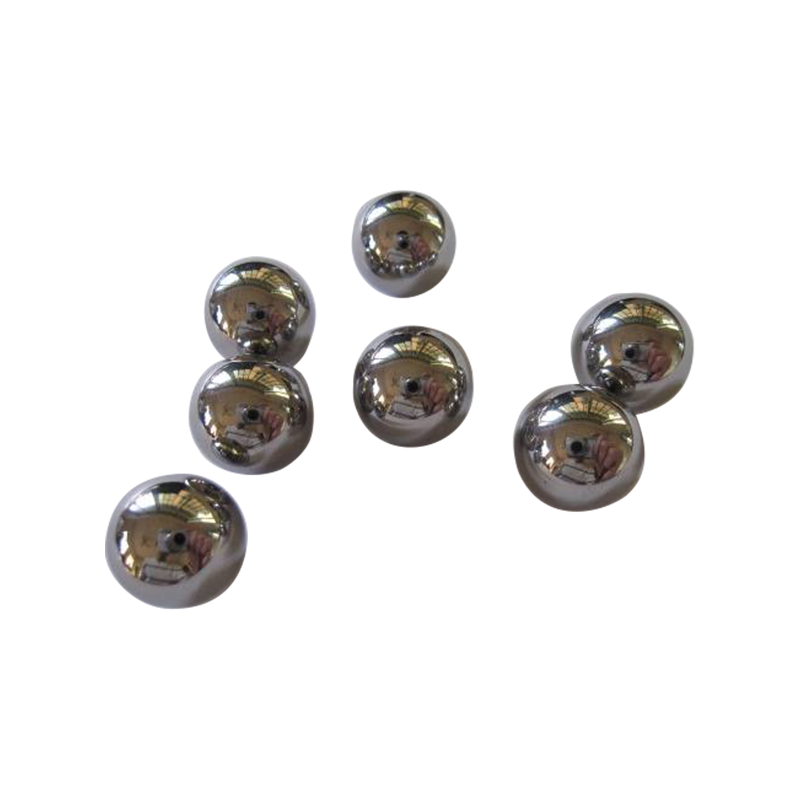 Custom Steel Ball Bearings Manufacturers, FactoryShanghai Yinin Bearing & Transmission Company Is China Steel Ball Bearings Manufacturers and custom Steel Ball Bearings factory, Steel ba...View Product →
Ball quality is defined by ISO 3290, where a lower grade number means a tighter diameter tolerance and better sphericity. G20 is the typical minimum for a standard deep groove bearing; G10 and finer are common for higher-precision and higher-speed machinery. The grade affects the contact pattern between the ball and the raceway, and therefore the vibration level and life of the assembled bearing.
Cages are produced in three main ways:
The cage controls how evenly the balls stay spaced. A cage with inconsistent pockets allows ball skidding at high speed and rattling during cold starts, and it is one of the first parts to fail under shock loads.
The precision grade is not a marketing label; it is a set of measurable limits defined by ISO 492 and marked P0, P6, P5 or P4. The ABEC scale used in North America follows the same dimensional logic, with ABEC 1 corresponding to P0 and ABEC 5 sitting close to P5. The CNC grinding parameters, wheel dressing frequency, coolant control and measurement feedback are all set according to the grade the line must hold.
| Characteristic | P0 (ABEC 1) | P6 (ABEC 3) | P5 (ABEC 5) |
|---|---|---|---|
| Bore diameter deviation (μm) | 0 to -10 | 0 to -8 | 0 to -6 |
| Assembled bearing radial runout (μm) | max 12 | max 8 | max 4 |
| Typical raceway roundness after grinding (μm) | 1.0-2.0 | 0.5-1.0 | 0.2-0.5 |
| Typical raceway surface roughness Ra (μm) | 0.10-0.20 | 0.05-0.12 | 0.025-0.05 |
Moving from P0 to P5 does not mean grinding for longer. It means selecting better raw material, taking smaller grinding increments, dressing the wheel more frequently, using finer superfinishing stones and measuring in a temperature-controlled environment, because bearing tolerances are defined at 20 °C. All of this raises cycle time and cost, which is why experienced buyers do not specify P5 for a conveyor that runs perfectly at P0. The practical rule is to choose the lowest grade that meets the speed, runout and noise requirements of the application, then confirm the supplier can hold that grade consistently across production batches. Exact limits vary with bearing size and the edition of the standard, so always verify against the inspection report issued with the batch.
The P6 and P5 precision classes in CNC-machined 6000-series bearings differ in bore and outside-diameter deviation, running accuracy and the cost of the grinding process itself. In parallel, the shaft and housing fits recommended for ABEC 5 bearings become more critical as tolerances tighten; pressing a P5 ring into a housing with excess interference can deform the raceway beyond its manufactured accuracy.
If you need a concrete family to compare against those numbers, the 6200-series deep groove ball bearings are manufactured in exactly these tolerance classes and are among the most widely verified series in industrial procurement.
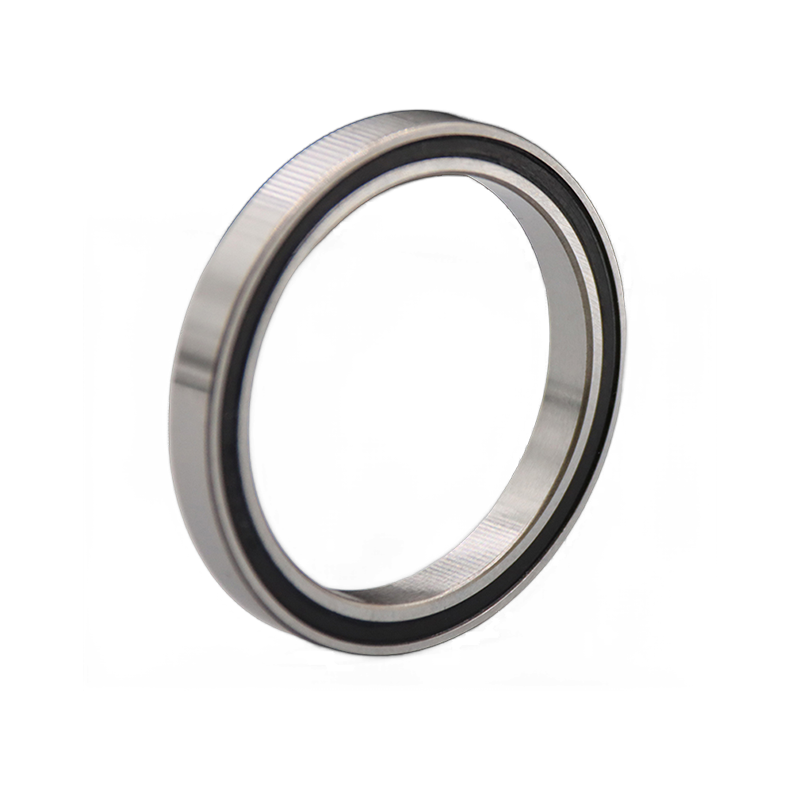 Custom 6200 Series Deep Groove Ball Bearing Manufacturers, FactoryShanghai Yinin Bearing & Transmission Company Is China 6200 Series Deep Groove Ball Bearing Manufacturers and custom 6200 Series Deep G...View Product →
Even when the certificate shows the correct tolerance class, a bearing can fail early if the machining line left hidden damage. These five defects account for most premature bearing failures on the market:
The pattern behind all five defects is the same: the bearing passes a basic dimensional check but carries a process fault that shortens service life. That is why suppliers with real machining capability control the process, not just the final inspection numbers.
You cannot see CNC process quality from a photograph, but you can ask the right questions and request the right documents. Use the list below as a starting point for supplier evaluation.
When you translate these checks into a purchasing decision, start with the bearing family that fits the machine. The deep groove ball bearing range is the default starting point for most rotating equipment because it balances load capacity, speed and cost across a broad envelope of sizes and precision classes. Whatever the part number, remember that the CNC machining process behind the bearing is invisible after assembly, but it shapes every performance characteristic you will measure later. Understand the turning, grinding, superfinishing and measurement chain, and you stop buying part numbers and start buying proven machining capability.
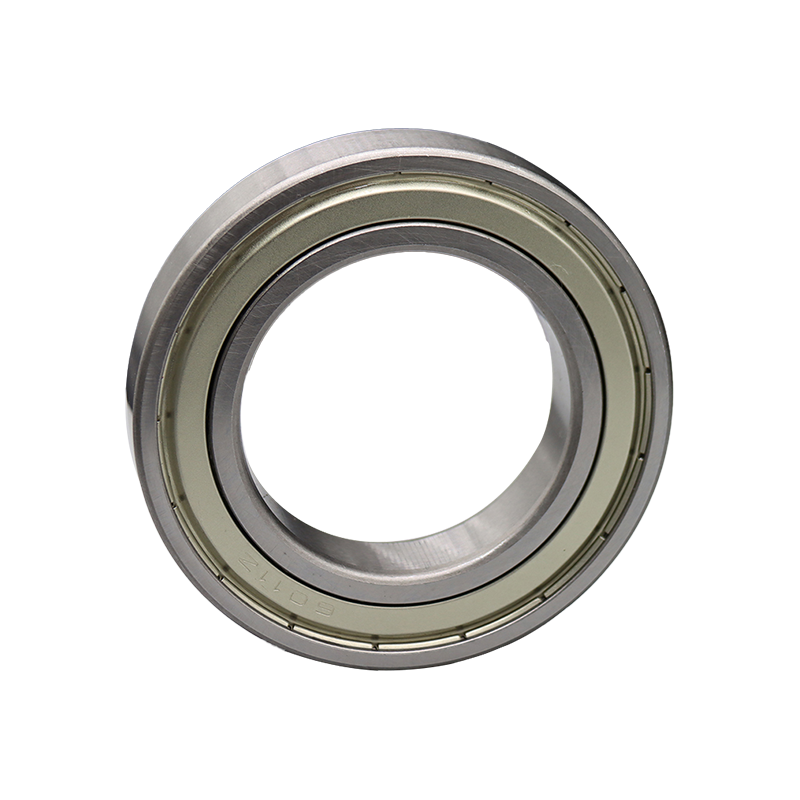 Wholesale Deep Groove Ball Bearing Suppliers, FactoryAs China Deep Groove Ball Bearing Suppliers and Deep Groove Ball Bearing factory, Shanghai Yinin Bearing & Transmission supply wholesale ...View Product →
Our provided products
Contact Us
Tel: +86-13916786238
Fax: +86-21-68551629
Email: [email protected]
Add: HuangXu Industrial Area, DanTu, ZhenJiang city, JiangSu Province, China
Industries


 English
 日本語
日本語
 Français
 Español