Industry Trends
2026-10-09
Content
A mid-size passenger car carries between 100 and 150 rolling bearings across its engine, transmission, wheel hubs, steering column, and auxiliary drives. When one of those precision interfaces fails, the vehicle stops - not because a shaft fractured, but because a component measured in microns lost its load-carrying geometry.
Warranty analyses across carmakers consistently attribute roughly one in four mechanical claims to bearing degradation. Shanghai Yinin Bearing & Transmission Company supplies automotive-grade bearings for these failure-sensitive positions, including hub units, tensioner and idler pulleys, clutch release systems, and water pumps. Understanding how bearing design parameters become vehicle-level reliability is the first step to specifying parts that survive the 200,000 km service life modern buyers expect.
Automotive bearings carry three simultaneous responsibilities: locating rotating shafts, transmitting applied load, and controlling friction, across a temperature band of about -40°C to 150°C and shaft speeds above 10,000 rpm in auxiliary drives.
Two ratings govern selection. Dynamic load rating (C) is the load under which a bearing population achieves 1 million revolutions with 90% survival. Static load rating (C0) is the maximum load a bearing accepts without permanent raceway deformation. In a wheel hub, the margin between service load and these ratings is the safety buffer that absorbs pothole impacts and panic braking.
Bearing reliability is the probability that a bearing continues to carry design loads and control friction, under specified speed, temperature, and contamination conditions, for a defined service period without premature spalling or seizure.
Load direction changes by mounting position:
The first reliability decision is rolling element geometry. Each vehicle position imposes a distinct load profile, and each bearing type balances load capacity, speed capability, space envelope, and misalignment sensitivity.
| Bearing type | Typical position | Load profile | Failure when misapplied |
| Deep groove ball | Wheels, gearboxes, auxiliary drives | Radial with moderate axial | Fatigue spalling |
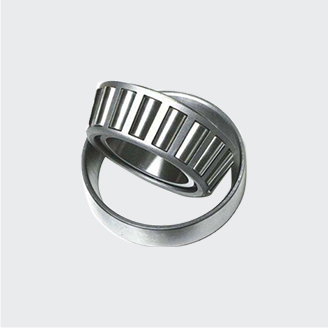
| Tapered roller | Truck wheel hubs, differentials | Heavy combined radial and axial | Edge loading, roller wear |
| Cylindrical roller | Transmission shafts, e-motor rotors | Heavy radial, low axial | Cage wear, roller skewing |
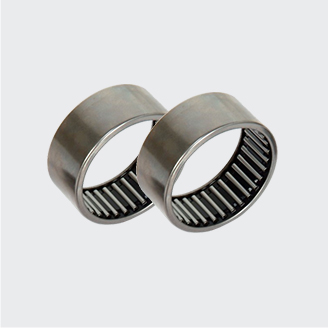
| Needle roller | Automatic transmission gear pairs | Radial in tight space | Lubrication starvation |
| Clutch release | Clutch engagement system | Axial thrust | Seal wear, release slip |
| Water pump | Engine coolant pump | Radial plus thrust at speed | Coolant ingress, spalling |
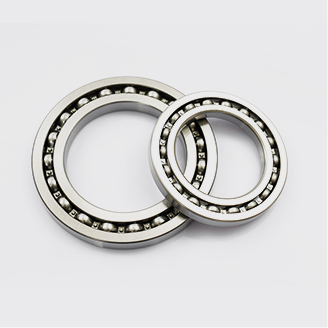
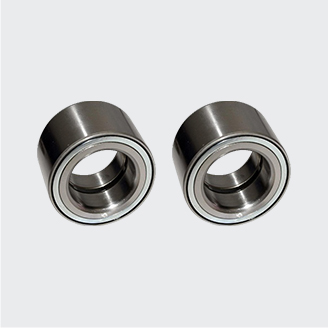
Deep groove ball bearings dominate modern vehicles because they balance low friction with moderate load capacity and tolerate slight misalignment. Tapered roller bearings take over where combined loads become severe, such as truck wheel hubs and differential pinions. At the wheel end, hub units integrate two rows of elements into a preloaded package matched to axle loads and sensor requirements.
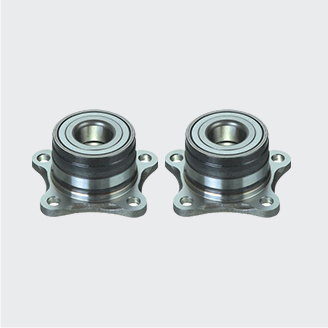
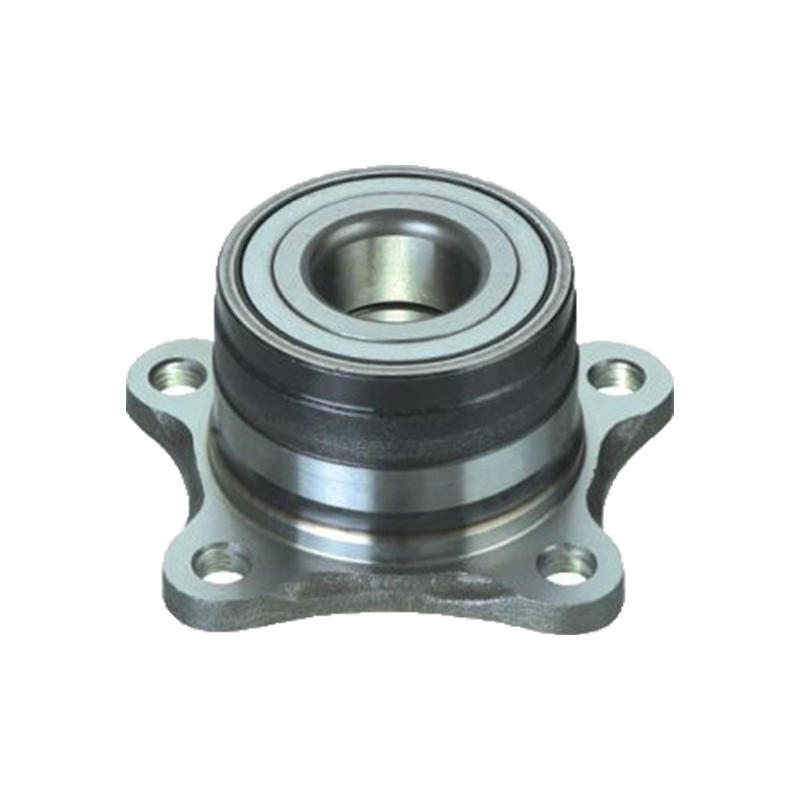 Preloaded Sealed Hub Unit Bearing for Vehicle Wheel EndsThis hub unit combines two rows of bearing elements into a preloaded, sealed package, reducing loose parts and assembly steps while matching axle load and sensor requirements for modern wheel-end applications.View Product →
The difference between a bearing that lasts 200,000 km and one that fails at 40,000 km is controlled by four parameters: tolerance class, radial clearance, sealing, and cage material.
Sealing and lubrication decide most field outcomes. Failure studies attribute only about one-third of automotive bearing failures to genuine material fatigue; the rest trace to contamination, lubrication breakdown, or incorrect mounting.
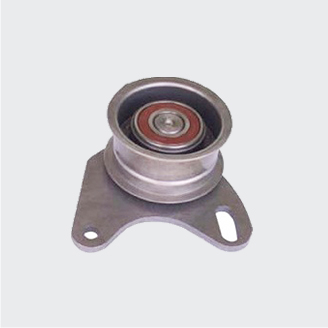
For belt drives in the engine bay, the correct choice combines C3 clearance, high-temperature grease, and a robust contact seal. Shanghai Yinin supplies tensioner and idler bearings engineered for this duty cycle.
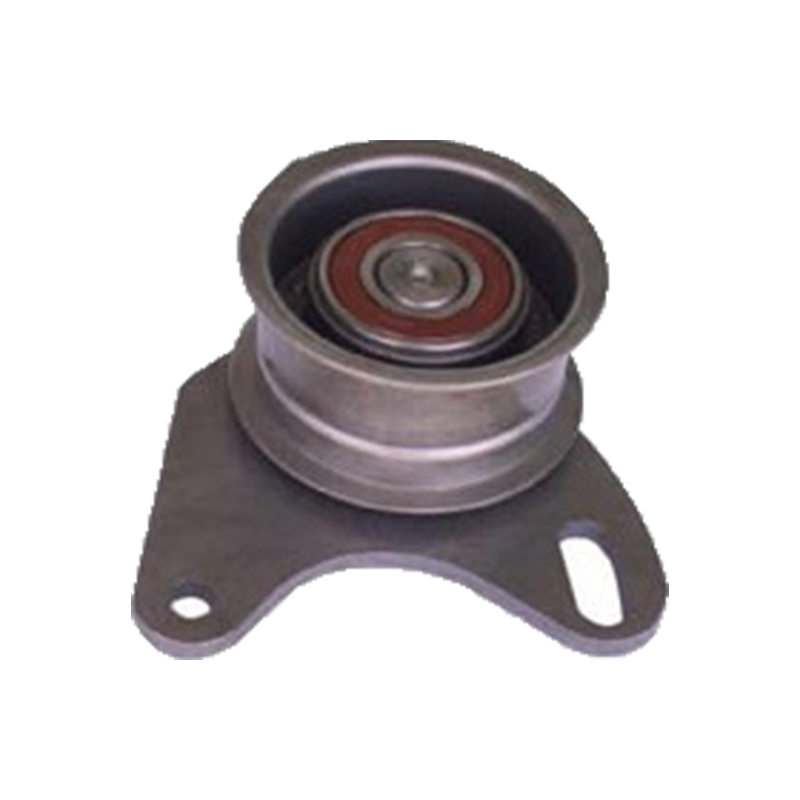 Tensioner and Idler Bearings for Engine Belt DrivesThese bearings are specified for engine-bay belt drives, incorporating C3 clearance, high-temperature grease, and robust contact seals to support tensioner and idler duty cycles reliably.View Product →
Specifying a bearing for the duty cycle, not just the shaft diameter, is the strongest single lever on fleet uptime. A bearing that is correctly rated but mis-specified for clearance or sealing fails early, and every unscheduled replacement costs far more than the component.
Field economics make specification quality cheap insurance. A wheel hub bearing may cost tens of dollars; the roadside failure that follows a premature spall can cost hundreds in towing and labor. In commercial fleets, unscheduled replacements directly reduce vehicle availability.
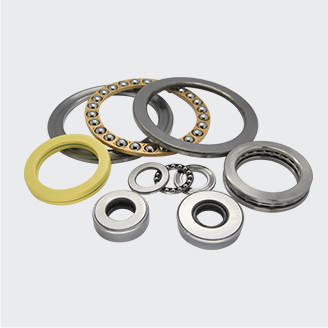
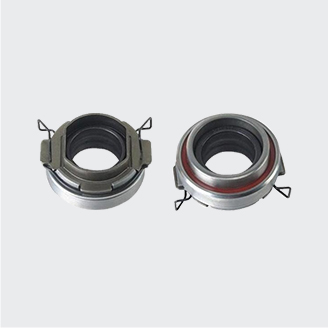
Clutch release bearings demonstrate the same principle. They carry pure axial load, cycle with every gear change, and operate inside a dusty bell housing. A self-aligning release bearing with a protected seal maintains consistent pedal feel and avoids the early wear that produces clutch judder.
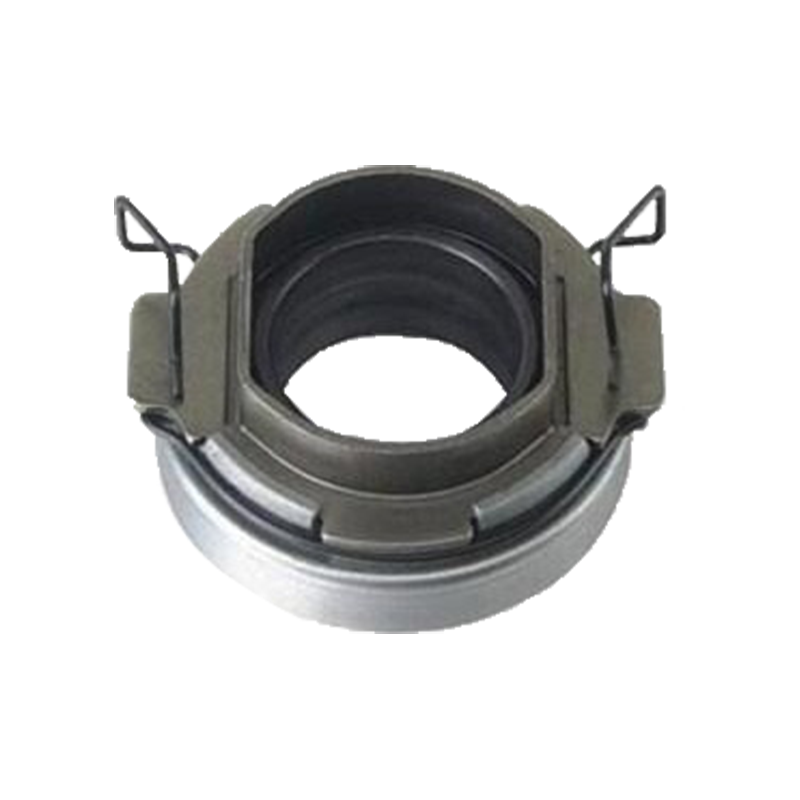 Self-Aligning Clutch Release Bearing with Protected SealThis clutch release bearing handles axial loads through gear changes and is built for dusty bell housing conditions, with a protected seal that helps maintain consistent pedal feel and avoid early wear.View Product →
A reliable bearing design is worthless if production batches vary in steel quality, heat treatment, or raceway finish. OEM buyers and aftermarket distributors evaluate suppliers on traceability and consistency, not just catalog coverage.
Working with a supplier that holds consistent quality across hub units, tensioner bearings, clutch release bearings, needle rollers, and water pump bearings reduces inspection cost and warranty exposure. Shanghai Yinin Bearing & Transmission Company's automotive industry offering covers these categories from a single qualified source.
For a closer look at the catalog structure and application focus, the company's overview of its automotive bearing solutions is a useful starting point.
Traceability across batches, consistent heat treatment, and honest load ratings are the real currency of bearing supply. A distributor that cannot document these is transferring risk, not removing it.
A well-specified OEM wheel hub unit is designed for 150,000-200,000 km. Engine accessory bearings are typically matched to the belt service interval, roughly 60,000-100,000 km. Actual life depends on sealing, lubrication, and contamination exposure.
Field failure analyses consistently rank lubrication breakdown and contamination ingress above material fatigue. Only about one-third of failures are genuine fatigue; the rest involve moisture, degraded grease, or incorrect mounting.
C3 is an increased radial internal clearance class. It accommodates a larger temperature difference between shaft and housing, preventing preload and skidding in engine-bay and driveline positions where heat builds quickly.
Match the rolling element type to the load direction, verify the dynamic load rating against the duty cycle, choose the seal for the contamination environment, and select the clearance class for the operating temperature range. Use the original equipment part number to preserve fit and preload.
Our provided products
Contact Us
Tel: +86-13916786238
Fax: +86-21-68551629
Email: [email protected]
Add: HuangXu Industrial Area, DanTu, ZhenJiang city, JiangSu Province, China
Industries


 English
 日本語
日本語
 Français
 Español