Industry Trends
2026-08-05
Content
A Deep Groove Ball Bearing is the default choice across industrial equipment for one simple reason: it handles radial load, moderate axial load, and high rotational speed all in one compact, low-maintenance package. That versatility is why the same bearing design shows up in electric motors, pumps, CNC machines, and conveyor rollers without needing a specialized alternative.
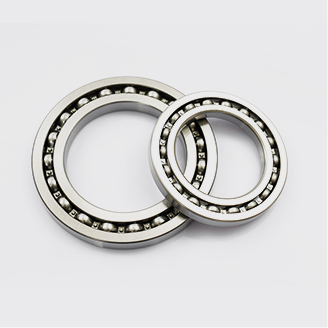
A Deep Groove Ball Bearing consists of an inner ring, outer ring, steel balls, and a cage that keeps the balls evenly spaced. The raceway grooves on both rings are deep and continuous, which is what lets the bearing carry radial loads and axial loads in both directions while still spinning at high speed with low friction.
Radial Load Capacity
Axial Load Capacity
Speed Capability
Low-friction design suits electric motors and high-speed machine tools.
Sealed designs retain lubrication and stretch out service intervals.
Standardized sizing fits into machines with limited installation space.
Balances availability, service life, and price better than specialized bearings.
The same Deep Groove Ball Bearing design spans at least eight distinct categories of industrial equipment — a versatility few other bearing types can match.
Deep groove ball bearings support shaft rotation in electric motors and generators, rotating shafts and impellers in pumps and compressors, and precision motion systems in CNC and grinding machines. They also carry roller and drive mechanisms in conveyor systems, keep fans and blowers running with low noise, and support robotic arms and assembly systems in automation equipment. Agricultural machinery and automotive components round out the list, relying on the same bearing for transmission systems, alternators, and auxiliary equipment.
| Equipment Type | Typical Application |
| Electric Motors | Shaft support, rotor rotation |
| Pumps & Compressors | Rotating shafts and impellers |
| CNC Machines | Precision motion systems |
| Conveyors | Roller and drive mechanisms |
| Automation Equipment | Robotic and assembly systems |
| Bearing Type | Main Advantage | Typical Applications |
| Deep Groove Ball Bearing | Versatile, high-speed operation | Motors, pumps, machinery |
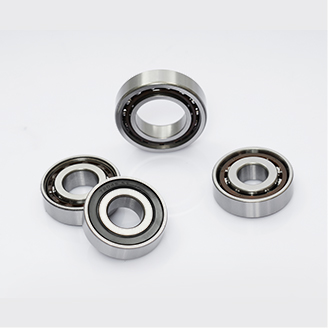
| Angular Contact Bearing | Higher axial load capacity | Precision machines |
| Roller Bearing | Higher load capacity | Heavy machinery |
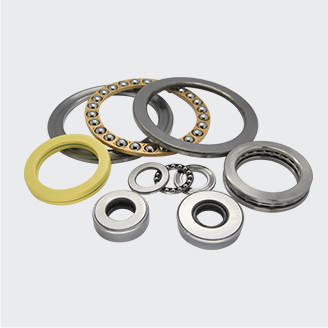
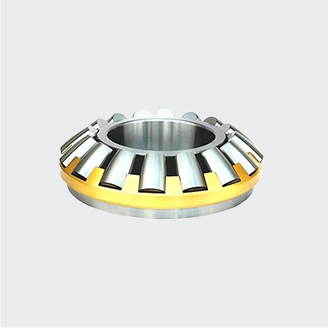
| Thrust Bearing | Mainly axial loads | Axial force applications |
Yes, in both directions, though the axial capacity is moderate compared to bearings designed specifically for axial force, such as thrust bearings.
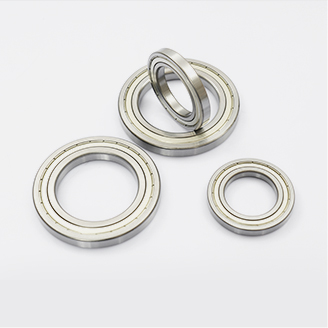
Sealed bearings are generally preferred in dusty or low-maintenance applications, since they keep contaminants out and retain lubrication longer.
Their combination of radial and axial load support, high-speed capability, and compact size makes them adaptable across very different rotating equipment.
Matching load rating, speed capability, and sealing type to actual operating conditions directly reduces wear and unplanned downtime.
Our provided products
Contact Us
Tel: +86-13916786238
Fax: +86-21-68551629
Email: [email protected]
Add: HuangXu Industrial Area, DanTu, ZhenJiang city, JiangSu Province, China
Industries


 English
 日本語
日本語
 Français
 Español