Industry Trends
2026-08-12
Content
Not every rotating shaft needs the same bearing. A Deep Groove Ball Bearing covers most general industrial machinery well, but heavy loads, high axial force, tight spaces, and shaft misalignment each push the right answer toward a different bearing type entirely.
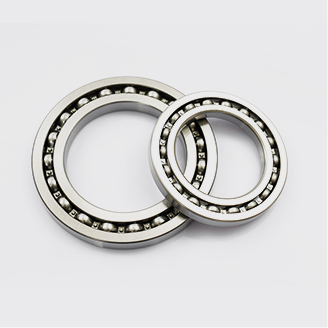
Built around deep raceway grooves on both the inner and outer rings, this bearing supports radial loads, moderate axial loads in both directions, and high-speed rotation from one simple, standardized design. That combination is why it shows up so often in motors, pumps, compressors, and general automation equipment.
Every alternative trades away some of the deep groove design's simplicity in exchange for one specific strength.
Illustrative Load Capacity Rating (out of 10)
| Deep Groove Ball | Versatility, high speed | Motors, pumps, machinery |
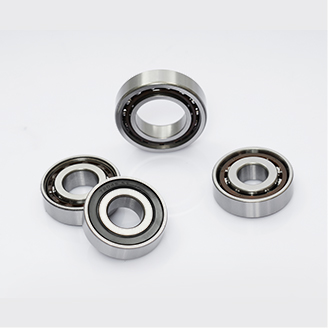
| Angular Contact | High axial load capacity | Precision equipment |
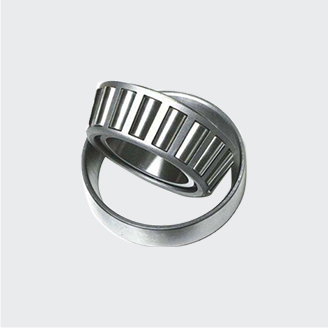
| Roller Bearing | Heavy load support | Industrial machinery |
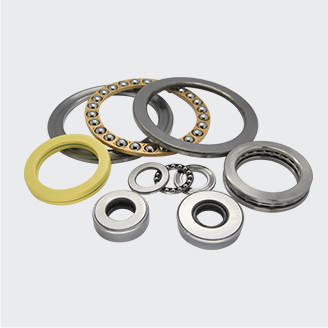
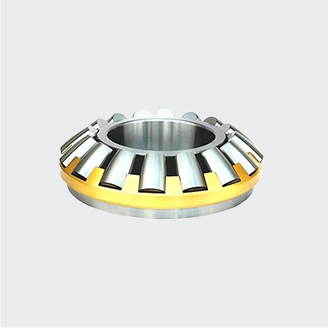
| Thrust Bearing | Axial load handling | Axial force systems |
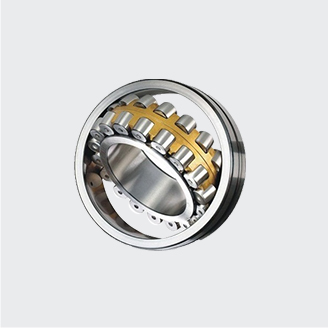
| Self-Aligning | Misalignment compensation | Agricultural equipment |
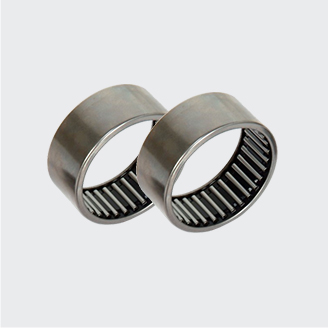
| Needle Bearing | Compact high-load design | Space-limited mechanisms |
Columns left to right: Bearing Type, Main Strength, Typical Applications
Reach for a specialized bearing only when load, speed, space, or alignment conditions actually demand it. For everything else, the deep groove design's balance of speed, cost, and simple maintenance is hard to beat.
Choose a roller bearing when the application involves heavy loads or shock loading, since rollers distribute load over a larger contact area than balls.
Yes, moderate axial loads in both directions, alongside its primary radial load capacity. For high axial loads, an angular contact or thrust bearing performs better.
A self-aligning ball bearing is designed specifically to compensate for shaft misalignment that a standard deep groove bearing would not tolerate well.
They combine high-speed capability, low friction, standardized sizing, and low cost, which matches the general-purpose requirements of most motors and pumps.
Our provided products
Contact Us
Tel: +86-13916786238
Fax: +86-21-68551629
Email: [email protected]
Add: HuangXu Industrial Area, DanTu, ZhenJiang city, JiangSu Province, China
Industries


 English
 日本語
日本語
 Français
 Español