Industry Trends
2026-09-16
Content
Two batches of the same 6200 series bearing can behave completely differently in service. One runs quietly for years; the other fails after a few hundred hours. The basic geometry of deep groove ball bearings is standardized, so the difference is almost never in the design. It is in how consistently the manufacturer controls steel selection, heat treatment, raceway grinding, and final inspection.
Keep this conclusion in mind: a reliable deep groove ball bearing manufacturer is defined by process discipline, not by catalog length or marketing claims. Before you compare prices, compare the systems the supplier uses to keep every batch within specification.
The raw steel determines nearly every performance limit of a deep groove ball bearing. Most general industrial applications use chrome steel such as GCr15 (SAE 52100), which provides a good balance of hardness, wear resistance, and cost. Not all GCr15 is equal, however. Steel source, inclusion cleanliness, and the uniformity of chemical composition directly affect fatigue life. A bearing made from low-grade steel can measure correctly on the outside while failing prematurely under load.
Ask the manufacturer for material certificates and ask whether the factory performs incoming steel inspection or trusts the mill certificate alone. When requesting certificates, specify what you need: a mill certificate for the raw steel and a heat-treatment report confirming hardness depth. Inconsistencies between the two are a practical red flag. A supplier that cannot confirm the steel grade in writing is not ready to supply a production component.
For washdown environments, food processing, medical equipment, or marine exposure, the conversation moves to stainless steel. 440C martensitic stainless is the usual choice when hardness and load capacity matter, while 316 austenitic stainless is preferred when corrosion resistance outranks hardness. A competent supplier explains the trade-off and confirms the grade rather than labeling everything simply as stainless.
A trustworthy manufacturer never answers "high precision" when you ask about tolerance. They state the class: P0, P6, or P5 under ISO 492, roughly equivalent to ABEC 1, ABEC 3, and ABEC 5. Tighter classes such as P5 or ABEC 5 give closer control of bore and outside diameter, which matters in spindles, instruments, and other dimensionally sensitive assemblies.
Internal clearance is another parameter that must match the application. Normal clearance (CN) serves most industrial uses, but motor applications often require C3 to accommodate thermal expansion, and precision assemblies may need C2. The supplier should state the clearance class explicitly on the order confirmation.
A tolerance class means little if the measuring instruments are not calibrated. Ask whether the supplier measures bore and outside diameter with air gauges or electronic comparators, and whether each batch ships with dimensional reports. The willingness to provide written measurement data is a stronger signal than any framed certificate.
Sealing is one of the most common sources of application trouble. A deep groove ball bearing manufacturer with real engineering depth clearly distinguishes metal shields (ZZ) from contact rubber seals (2RS) and explains the trade-offs. A 2RS seal resists contamination but adds friction torque; a ZZ shield suits continuous high-speed running but offers less protection. For a 6200 series ball bearing in a dusty gearbox, the sealed variant is usually safer; in a high-speed fan, a shielded variant may be the better choice. The supplier should also confirm the grease type, fill percentage, operating temperature range, and any food-grade approvals before shipment.
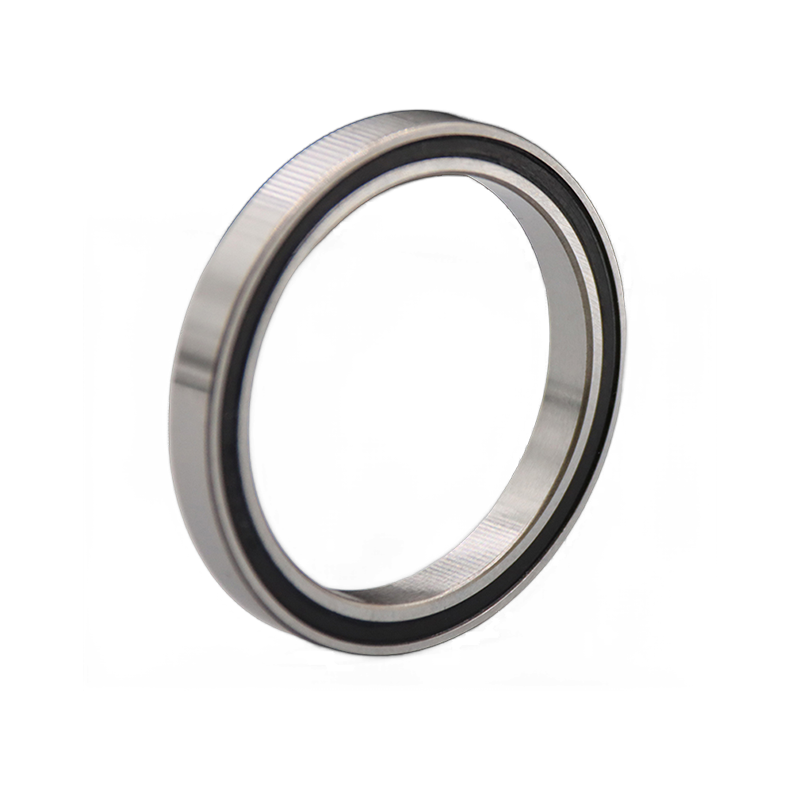 Custom 6200 Series Deep Groove Ball Bearing Manufacturers, FactoryShanghai Yinin Bearing & Transmission Company Is China 6200 Series Deep Groove Ball Bearing Manufacturers and custom 6200 Series Deep G...View Product →
When the application runs hot, grease selection matters as much as the seal: standard lithium grease may survive at 100°C, but continuous operation above 120°C calls for a high-temperature or synthetic grease, and food-line use may require an H1-registered lubricant.
Vibration rating is equally important. Reliable manufacturers classify bearings into vibration groups such as Z1, Z2, and Z3 based on measured vibration velocity. A Z3 bearing is noticeably quieter than a Z1 part, which matters in household appliances and medical devices. Ask how the supplier measures vibration and whether a specific vibration group can be guaranteed on the order.
For a practical comparison, the 2RS versus ZZ sealing guide explains how seal choice affects 6000 series bearings in electric motors and general machinery.
The breadth of a catalog tells you whether deep groove ball bearings are a core product or a side line. A supplier that offers the standard series — 6000, 6200, 6300, 6400, 6700, 6800, and 6900 — has invested in the grinding lines, tooling, and gauging needed for mainstream industrial sizes. The 6000 series deep groove ball bearings, for example, cover lightweight, high-speed applications such as electric motors, fans, and power tools.
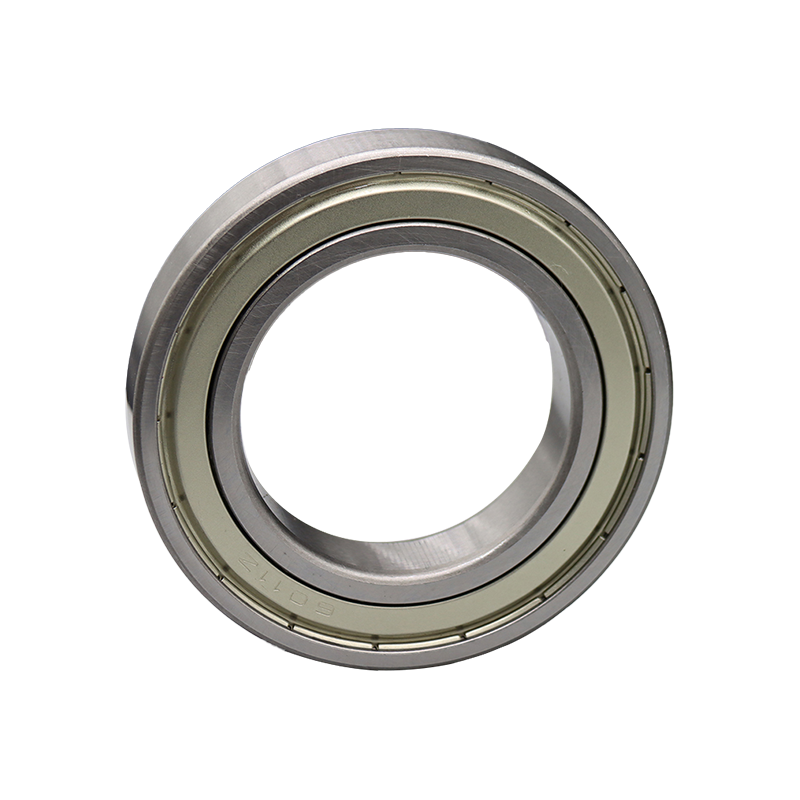 Custom 6000 Series Deep Groove Ball Bearing Manufacturers, FactoryShanghai Yinin Bearing & Transmission Company Is China 6000 Series Deep Groove Ball Bearing Manufacturers and custom 6000 Series Deep G...View Product →
| Series | Load profile | Typical applications |
|---|---|---|
| 6000 | Light to moderate | Small motors, fans, power tools |
| 6200 | Moderate | Pumps, gearboxes, conveyors |
| 6300 | High | Heavy machinery, large motors |
| 6900 | Light and compact | Automation, instruments, medical devices |
The table is a starting point. Design engineers also specify 6200 series for pumps and gearboxes, and choose 6900 series deep groove ball bearings when radial space is limited. A broader catalog also reduces supply-chain complexity, because ordering several series from one supplier maintains a single quality baseline.
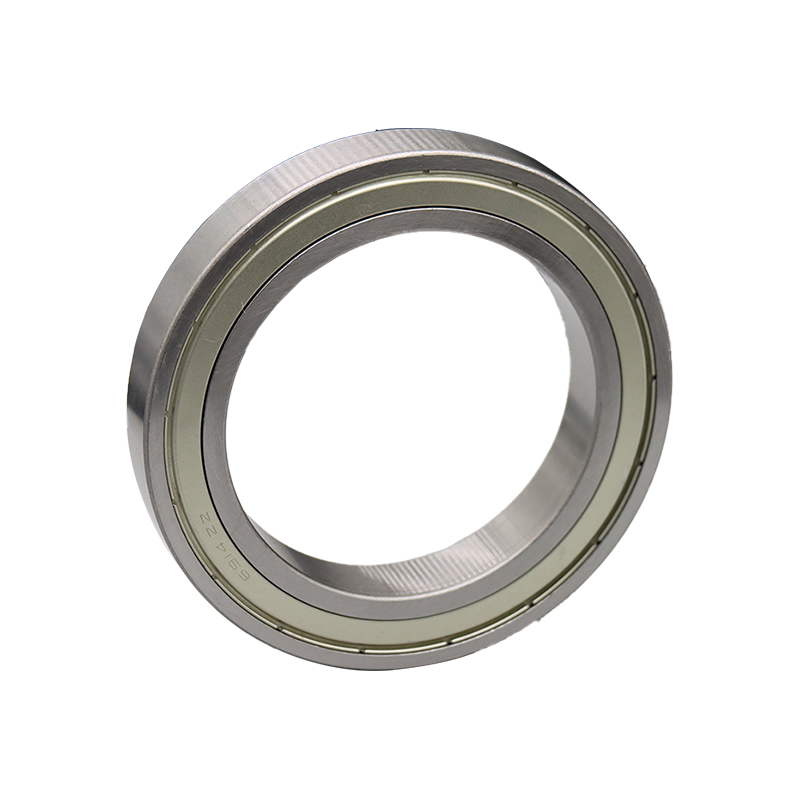 6900 Series Deep Groove Ball Bearings | Low Profile Bearings for Compact MachineFind technical specifications and application details for our 6900 series deep groove ball bearings. Engineered for high performance in s...View Product →
Professional manufacturers can trace a finished bearing back to the steel heat number, the grinding line, and the production date. When a field failure occurs, traceability lets the supplier isolate the affected batch, identify the root cause, and correct the process without a blanket recall.
Ask about heat treatment control as well. Raceway hardness, hardened-layer depth, and retained austenite determine how well the bearing resists indentation and fatigue. A supplier that provides hardness test results and documents heat treatment parameters is demonstrating process control rather than hoping for good output. For a broader view of how these variables affect service life, read the deep groove ball bearing selection and maintenance guide.
The quality of a supplier's questions during quotation tells you how they will behave after the order. A reliable manufacturer asks about operating speed, load direction, ambient temperature, lubrication method, and mounting arrangement. If a supplier quotes without asking anything, they are treating the bearing as a commodity and are likely to ship whatever comes off the line.
In demanding fields such as automotive bearing applications, a competent supplier goes further. They discuss cage material, internal clearance C3 or C4, balance quality, and grease behavior at high temperature. They also tell you when a standard bearing is the wrong answer for your application, which is exactly the honesty you want from a long-term partner.
Several warning signs predict an unreliable supplier, regardless of how professional the website looks:
Price discipline is a normal part of purchasing, but the cheapest quote becomes expensive when it stops a production line. A serious supplier would rather lose a deal than guarantee a specification they cannot hold.
To keep the screening process efficient, work through these six steps in order:
Choosing a reliable deep groove ball bearing manufacturer is ultimately about matching process control to application risk. A supplier that documents materials, measures output, and communicates clearly — even when it means declining an unrealistic request — is the supplier that will keep your equipment running.
Our provided products
Contact Us
Tel: +86-13916786238
Fax: +86-21-68551629
Email: [email protected]
Add: HuangXu Industrial Area, DanTu, ZhenJiang city, JiangSu Province, China
Industries


 English
 日本語
日本語
 Français
 Español