Industry Trends
2026-02-19
Content
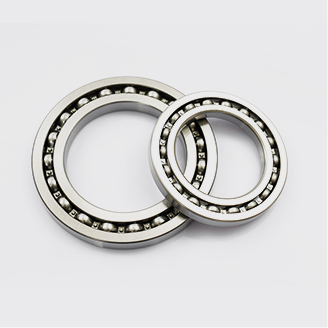
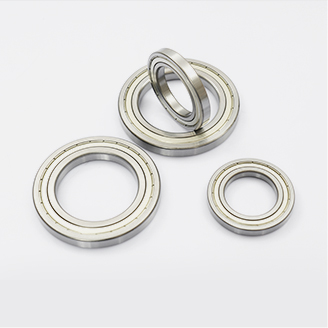
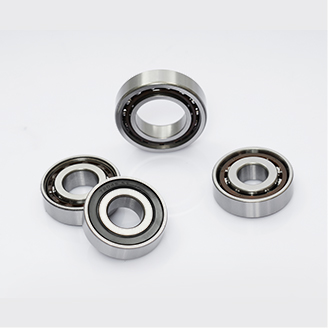
In the field of high-precision engineering, selecting the correct material for stainless steel deep groove ball bearings is a decision that dictates the operational lifespan and safety of the entire machinery. Since 1999, Shanghai Yinin Bearing & Transmission Company has evolved into an industry-and-trade integrated enterprise, supported by our manufacturing arm, Jiangsu Dahua Bearing Manufacturing Co., Ltd. With over 80 employees and 12 senior technicians, we specialize in high-end solutions, including spindle bearings and motor bearings. A recurring technical challenge for our clients is determining the optimal alloy—specifically, why use 440C instead of 304 stainless steel bearings for certain industrial environments.
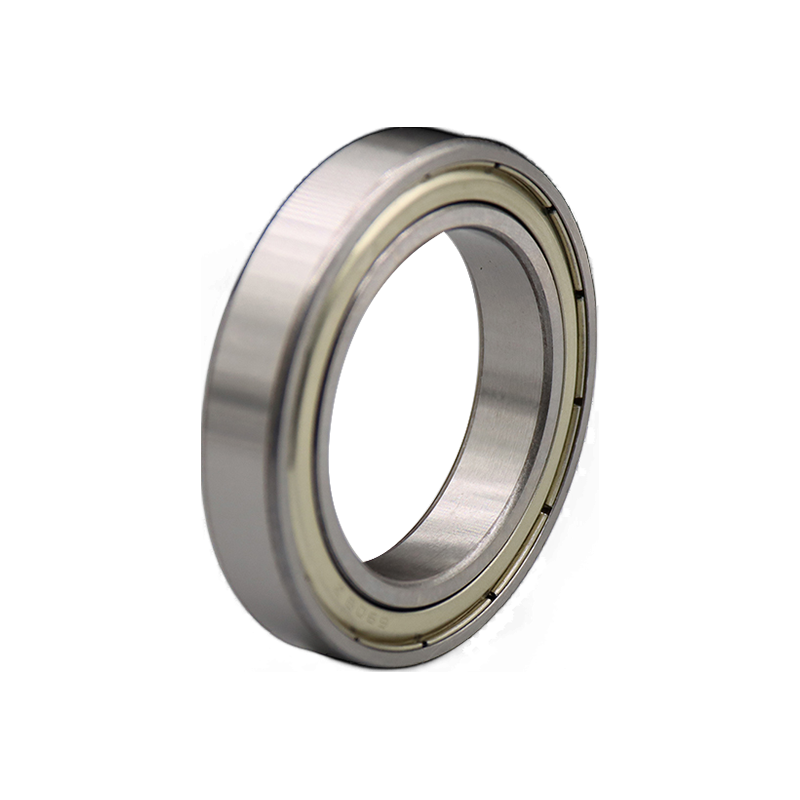
The primary engineering distinction between these two alloys lies in their carbon and chromium content. AISI 304 is an austenitic stainless steel, which is virtually non-magnetic and cannot be hardened by heat treatment. In contrast, AISI 440C is a high-carbon martensitic stainless steel designed specifically for stainless steel deep groove ball bearings that require high hardness and wear resistance. When analyzing how to measure stainless steel bearing hardness, 440C typically reaches 58-62 HRC after heat treatment, whereas 304 remains relatively soft, making it unsuitable for high-load applications where structural deformation is a risk.
While 304 provides extreme ductility and toughness, 440C offers the high yield strength necessary for supporting rolling elements under pressure.
| Property | AISI 304 Stainless Steel | AISI 440C Stainless Steel |
| Microstructure | Austenitic (Non-magnetic) | Martensitic (Magnetic) |
| Hardness (Rockwell C) | ~25 HRC (Non-hardenable) | 58 - 62 HRC (Hardened) |
| Load Capacity | Low (Light loads only) | High (Standard bearing loads) |
| Ductility | Excellent | Moderate |
Corrosion resistance is the secondary driver for material selection. Although 440C is a stainless steel, its high carbon content slightly diminishes its chemical resistance compared to the 300-series. For applications involving corrosion resistant ball bearings for food processing, 304 is often preferred for static components or very light-duty submerged roles because of its higher nickel content, which resists aggressive acids and alkalis better than 440C. However, for most waterproof stainless steel ball bearings used in general machinery, 440C remains the standard because it balances sufficient corrosion resistance with the mechanical strength required for rotation.
AISI 304 offers superior resistance to a wider range of chemicals, whereas 440C is primarily resistant to fresh water, steam, and mild organic chemicals.
| Environment | AISI 304 Grade | AISI 440C Grade |
| Fresh Water / Humidity | Excellent | Good |
| Salt Water (Marine) | Moderate (Prone to pitting) | Low |
| Strong Acids / Alkalis | High Resistance | Low Resistance |
| Nitric Acid | Excellent | Moderate |
From an engineer's perspective, the dynamic load rating (C) and static load rating (C0) are the most critical metrics. Stainless steel deep groove ball bearings made of 440C can handle high-speed rotation and heavy radial loads without the raceways suffering from "Brinelling" (permanent indentation). Because 304 cannot be hardened, it has a significantly lower load capacity of 304 stainless steel bearings—often only 20% to 30% of its 440C counterpart. Using 304 in a high-speed motor or a spindle would result in rapid surface fatigue and premature bearing failure.
Magnetic interference is often a deciding factor in medical imaging (MRI) or semiconductor manufacturing. If an application requires non-magnetic stainless steel bearings, AISI 304 is the only viable choice among standard steels, as 440C is highly magnetic. At Shanghai Yinin Bearing Co., Ltd., we recognize these niche requirements and offer customized non-standard high-end bearings. Our technicians can design hybrid solutions—such as 304 cages with ceramic balls—to satisfy both non-magnetic and performance requirements when standard alloys fall short.
| Technical Factor | AISI 304 | AISI 440C |
| Magnetic Response | Non-magnetic (Paramagnetic) | Strongly Magnetic (Ferromagnetic) |
| Thermal Expansion | Higher (17.2 μm/m·°C) | Lower (10.1 μm/m·°C) |
| Heat Treatment | Annealed only | Quenched and Tempered |
In summary, while AISI 304 offers superior chemical resistance and non-magnetic properties, AISI 440C is the necessary material for stainless steel deep groove ball bearings subjected to mechanical stress and high-speed rotation. Choosing the wrong grade can lead to catastrophic system failure. Shanghai Yinin Bearing & Transmission Company remains dedicated to the "Quality First" principle, providing the technical foundation and manufacturing expertise needed to supply the highest quality stainless steel bearings for your specific industrial needs.
While 440C is "stainless," it is prone to pitting in salt water. For marine environments, we recommend specialized coatings or 316-grade stainless steel, though the latter has much lower load capacities.
The simplest method is a magnet test. A 440C bearing will be strongly attracted to a magnet, while a 304 bearing will show little to no magnetic attraction. Additionally, 440C will be significantly harder to scratch with a steel file.
Generally, yes, because 304 does not require the expensive vacuum heat treatment processes that 440C undergoes. However, the cost of frequent replacement usually makes 304 more expensive in the long run for moving parts.
Standard 440C stainless steel bearings can operate up to 150°C. With specialized heat stabilization treatments provided by Jiangsu Dahua Bearing, they can be engineered to withstand temperatures up to 250°C.
Many modern industries, such as aerospace and medical robotics, require unique dimensions or material combinations that standard catalogs do not cover. Our 12 technicians specialize in bridging this gap with precision engineering.
Our provided products
Contact Us
Tel: +86-13916786238
Fax: +86-21-68551629
Email: [email protected]
Add: HuangXu Industrial Area, DanTu, ZhenJiang city, JiangSu Province, China
Industries


 English
 日本語
日本語
 Français
 Español