Industry Trends
2026-02-12
Content
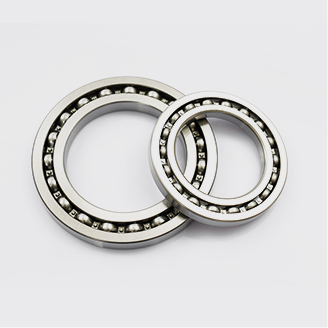
In the field of rotary motion engineering, the 6200 series is one of the most widely utilized deep groove ball bearings due to its versatility and optimized radial load capacity. However, when operating in high-moisture industrial environments, such as food processing, maritime logistics, or chemical washdown areas, the material composition of the bearing becomes the deciding factor between operational uptime and catastrophic failure. While chrome steel is the standard for general machinery, the stainless steel ball bearing 6200 is often considered the premium choice for harsh conditions. Shanghai Yinin Bearing & Transmission Company, an industry-integrated enterprise since 1999, specializes in the design and production of high-end stainless steel bearings to meet these rigorous technical demands.
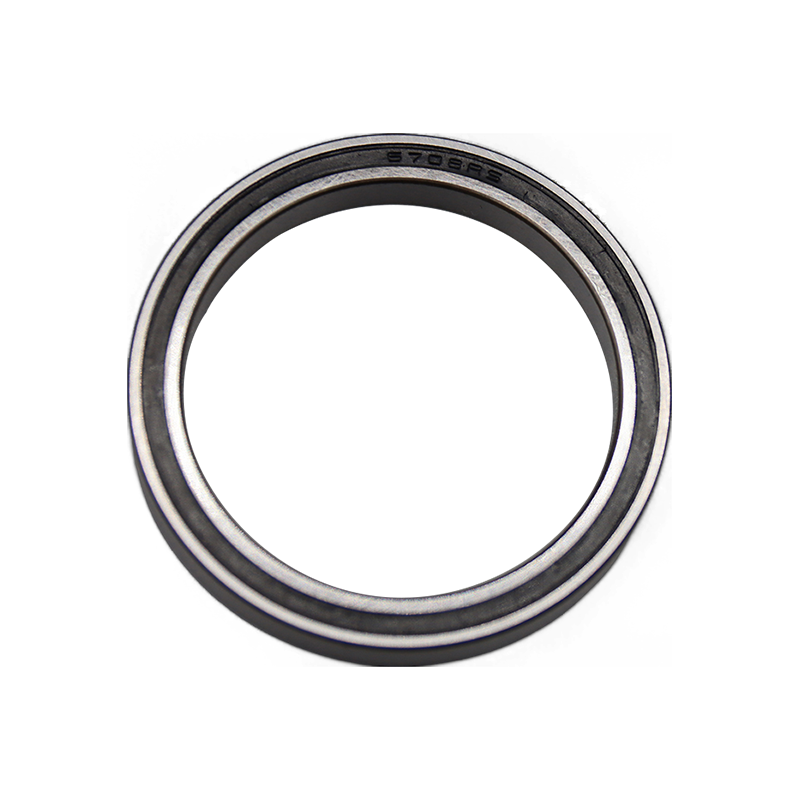
The primary technical difference between the two materials lies in their chemical resistance to oxidation. How stainless steel 6200 bearings prevent rust in wet conditions is a result of their high chromium content (typically 12-18%), which forms a passive chromium oxide layer on the surface. In contrast, chrome steel (GCr15/SAE 52100) lacks this protective barrier, making it highly susceptible to surface pitting and "red rust" when exposed to water or high humidity. Shanghai Yinin Bearing Co., Ltd. utilizes high-grade AISI 440C or 304 stainless steel to ensure that our products maintain structural integrity in corrosive media.
While chrome steel offers higher surface hardness, it fails rapidly in moisture without constant lubrication, whereas stainless steel remains stable even in periodic washdown cycles.
| Material Property | Stainless Steel 6200 (AISI 440C) | Chrome Steel 6200 (GCr15) |
| Corrosion Resistance | High (Excellent in moisture/chemicals) | Low (Requires strict lubrication) |
| Hardness (HRC) | 58-62 HRC | 60-64 HRC |
| Surface Passive Layer | Yes (Chromium Oxide) | No |
Engineers must carefully evaluate what is the load capacity of a stainless steel 6200 bearing compared to its chrome counterpart. Due to the slightly lower carbon content in stainless steel alloys, the dynamic load rating (Cr) of a stainless steel ball bearing 6200 is typically 15-20% lower than that of a chrome steel bearing of the same dimensions. This is a critical consideration for high-torque spindle bearings or motor bearings where peak mechanical stress is a factor.
Chrome steel is superior for dry, high-load applications, but stainless steel is the engineering necessity when the environmental risk of corrosion outweighs the need for maximum load density.
| Performance Metric | Stainless Steel 6200 | Chrome Steel 6200 |
| Dynamic Load Rating (Cr) | Approximately 4.3 kN | Approximately 5.1 kN |
| Max Speed (RPM) | Slightly Lower (Higher internal friction) | High (Optimized for precision) |
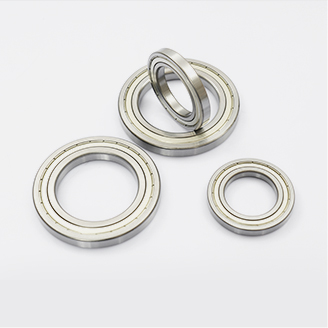
In high-moisture zones, the lubrication system is just as important as the steel itself. One frequent question is: why choose sealed stainless steel bearings for food processing? Standard grease in chrome bearings emulsifies when mixed with water, leading to metal-to-metal contact. Jiangsu Dahua Bearing Manufacturing Co., Ltd., our production arm, integrates customized non-standard high-end bearing solutions with food-grade water-resistant greases and specialized NBR (Nitrile Butadiene Rubber) or Teflon seals to ensure the stainless steel ball bearing 6200 remains hermetically protected.
Implementing a waterproof 6200 bearing for industrial pumps ensures that moisture cannot ingress into the raceways, a feature that is far more effective on a stainless substrate than a chrome one.
When calculating the Total Cost of Ownership (TCO), the question arises: is a stainless steel ball bearing 6200 worth the extra cost? While the initial purchase price of stainless steel is 2-3 times higher than chrome steel, the reduction in downtime is significant. In a high-moisture plant, a chrome bearing might require replacement every 3 months due to rust, whereas a stainless steel ball bearing 6200 can operate for years with minimal maintenance. At Shanghai Yinin, we guide our clients through this stainless steel vs chrome steel bearing comparison for moisture to ensure they make an economically sound decision.
Yes, but you must ensure the internal clearance (e.g., C3) and the grease are rated for high temperatures. Stainless steel is naturally more stable than chrome steel across varying thermal ranges.
Yes, 440C stainless steel used in the stainless steel ball bearing 6200 is martensitic and therefore magnetic. If you require a non-magnetic bearing, 304 or 316 grades are needed, though they have significantly lower load capacities.
Most stainless steel ball bearing 6200 units are marked with an "S" prefix (e.g., S6200). Additionally, the surface has a distinct bright, slightly grayish luster compared to the mirror-like blue-white finish of chrome steel.
While they can use standard grease, in high-moisture areas, we recommend waterproof or food-grade greases to maximize the life of the stainless steel ball bearing 6200.
Absolutely. We provide comprehensive bearing design and production services, specializing in customized non-standard high-end bearings for specific industrial challenges since 2016.
Our provided products
Contact Us
Tel: +86-13916786238
Fax: +86-21-68551629
Email: [email protected]
Add: HuangXu Industrial Area, DanTu, ZhenJiang city, JiangSu Province, China
Industries


 English
 日本語
日本語
 Français
 Español