Industry Trends
2026-11-18
Content
A hub unit can match every dimension on the drawing and still come back as a warranty claim, because the encoder ring is the wrong type. Bore, flange pattern and overall height all pass inspection. The ABS warning light does not.
That mismatch is the everyday risk in the automotive aftermarket: a bearing is bought on a number, but it performs on a specification set. Two 6205 bearings from different sources share 25 x 52 x 15 mm and nothing else until you state the clearance group, the tolerance class, the seal type and the grease.
This guide is written for distributors, jobbers and parts buyers who place the order, not for the engineer who designed the corner. It covers the specifications that decide fit and life, the checks that catch a mismatch before it reaches a shelf, and the arithmetic that turns a load rating into a service interval.
An automotive bearing is defined by five verifiable specifications: boundary dimensions under ISO 15, tolerance class under ISO 492 or ABMA 20, radial internal clearance under ISO 5753, sealing and lubrication configuration, and, on hub units, the sensor interface.
Specification set. Boundary dimensions (bore d, outside diameter D, width B or assembly height T) fix the mechanical fit. Tolerance class fixes permissible deviation in bore, runout and width. Clearance group fixes the internal play left after mounting. Sealing fixes what reaches the raceway. The sensor interface, where present, fixes whether the wheel speed system reads the part at all.
Buyers who specify only the first item get a part that installs. Buyers who specify all five get a part that returns at the rate the catalogue promised. The gap between the two is where aftermarket margin is lost.
Metric designations carry the bore size in the final two digits, so a 6205 has a 25 mm bore and a 6208 has a 40 mm bore.
The digits before the bore give the dimension series, which sets the outside diameter and width at a fixed bore. A 6305 shares the 25 mm bore of a 6205 but measures 62 mm outside against 52 mm, so the two are not interchangeable in a housing even though both are 25 mm bearings.
| Family | Example | Dimensions | Load direction | Confirm before ordering |
| Deep groove ball | 6205 | 25 x 52 x 15 mm | Radial plus light axial | Clearance group, seal type |
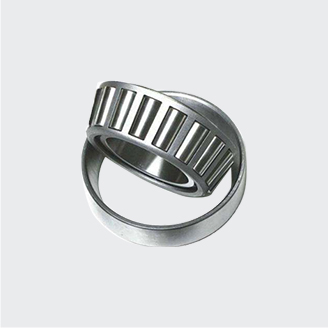
| Tapered roller | 30205 | 25 x 52 x 16.25 mm | Radial and one-way axial | Matched cone and cup, preload |
| Double row angular contact | 5205 | 25 x 52 x 20.6 mm | Radial plus axial both ways | Preload, hub bore fit |
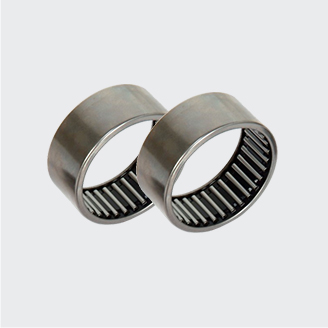
| Needle roller | HK 2020 | 20 x 26 x 20 mm | Radial, thin section | Shaft hardness, lubrication |
| Hub unit assembly | Vehicle specific | Assembly level | Combined | Encoder type, flange pattern |
Tapered roller bearings follow a different logic: the 30205 comes from the ISO 355 dimension plan and is normally sold as a matched cone and cup that must not be mixed across lots. For vehicle-specific assemblies the designation stops helping altogether. Hub units, clutch release bearings, tensioner pulleys and water pump shafts are catalogued by application, OEM number and, in the better catalogues, VIN range. A dimension string cannot describe an encoder, a flange offset or a pulley diameter.
Wheel, tensioner and water pump positions are satisfied by ABEC-1 to ABEC-3, which correspond closely to ISO 492 classes P0 and P6. ABEC-5 and above are specified when runout affects a sensor air gap or when surface speed approaches the seal limit.
Clearance is the specification most often dropped from a purchase order, and the one that changes noise and heat most. ISO 5753 divides radial internal clearance into C2, CN, C3, C4 and C5. CN is the default; C3 is the next step up and is chosen where the outer ring runs hot and thermal expansion will consume clearance.
A C3 bearing dropped into a position designed for CN runs with more play, which shows up as noise at low speed and a loose feel on the bench. The reverse error is worse: a CN bearing in a hot position can lose its running clearance and fail early. The relationship between clearance, fits and housing material is covered in this guide to bearing clearance classes and fits.
Seal type is a trade between exclusion and drag, and the answer depends entirely on where the part sits.
Grease is the second half of that decision. Fill level is a share of free internal space rather than a fixed mass, and an over-filled bearing runs hotter than a correctly filled one. A supplier that cannot state grease type, base oil viscosity and fill level has not specified the part.
Five families account for most aftermarket automotive bearing volume, and each carries its own specification trap.
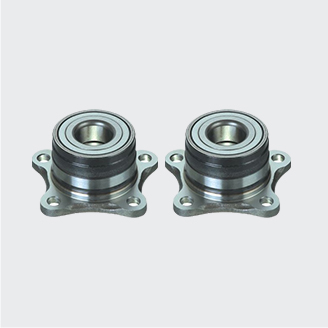
First-generation units are cartridge assemblies. Second- and third-generation units integrate the wheel flange, and the third adds the encoder ring that feeds the wheel speed sensor. An active magnetic encoder and a passive toothed ring are not interchangeable, which is why the sensor interface belongs on the purchase order next to the dimension.
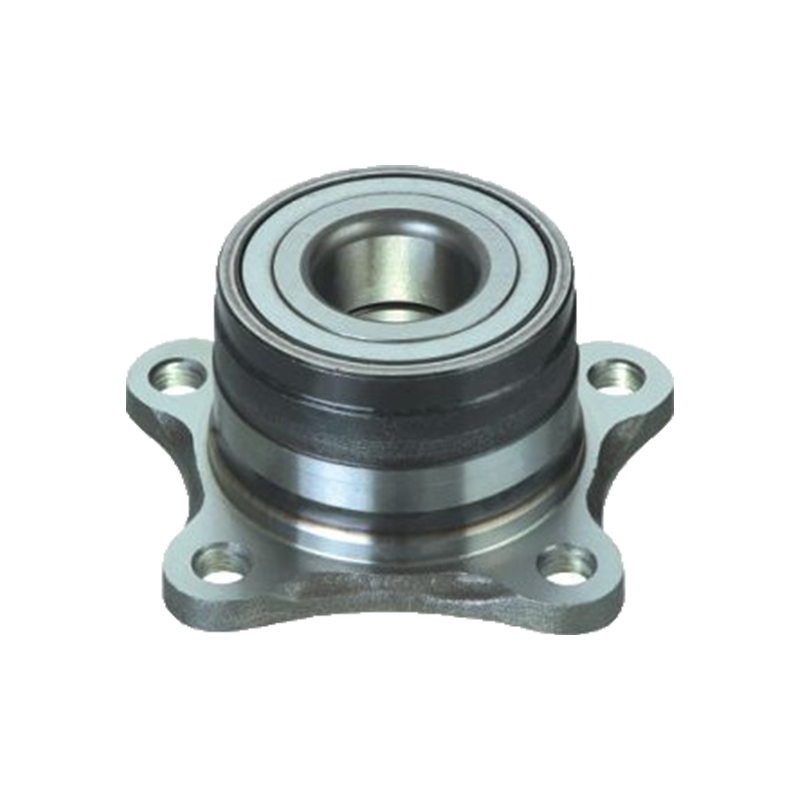 Hub Unit Bearings for Passenger and Light Commercial VehiclesBrowse integrated hub and bearing assemblies in Generation 1–3 configurations, including third-generation units with speed sensor rings for ABS/ESC.View Product →
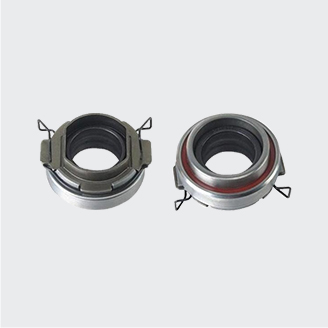
These are self-aligning angular contact thrust bearings carried in a housing, catalogued by vehicle brand because the release height, carrier geometry and bearing face differ between applications. Brand-level lookup is faster than dimension matching here, but the OEM cross-reference still has to be confirmed.
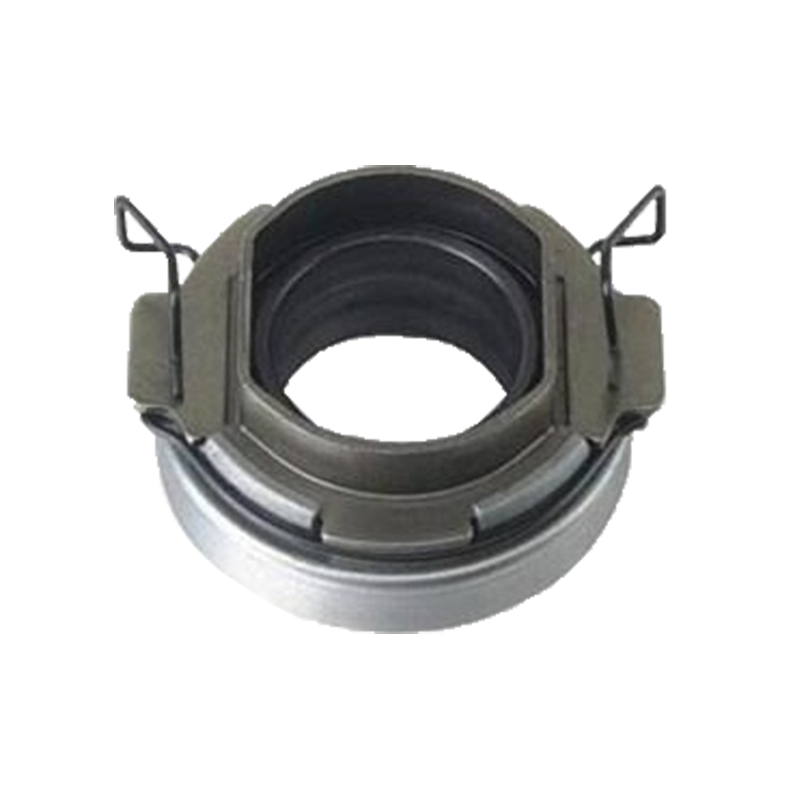 Clutch Release Bearings by Vehicle MakeFind push-type, pull-type and self-centering release bearings organized by vehicle brand, with make-specific notes and material options for clutch-system replacement.View Product →
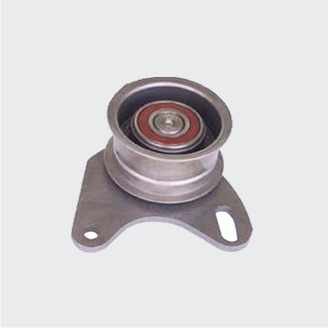
Sealed-for-life units on a pulley, usually with a defined pulley diameter and offset. Grease loss and seal hardening, not raceway fatigue, end most of them, so the seal specification matters more than a marginal gain in load rating.
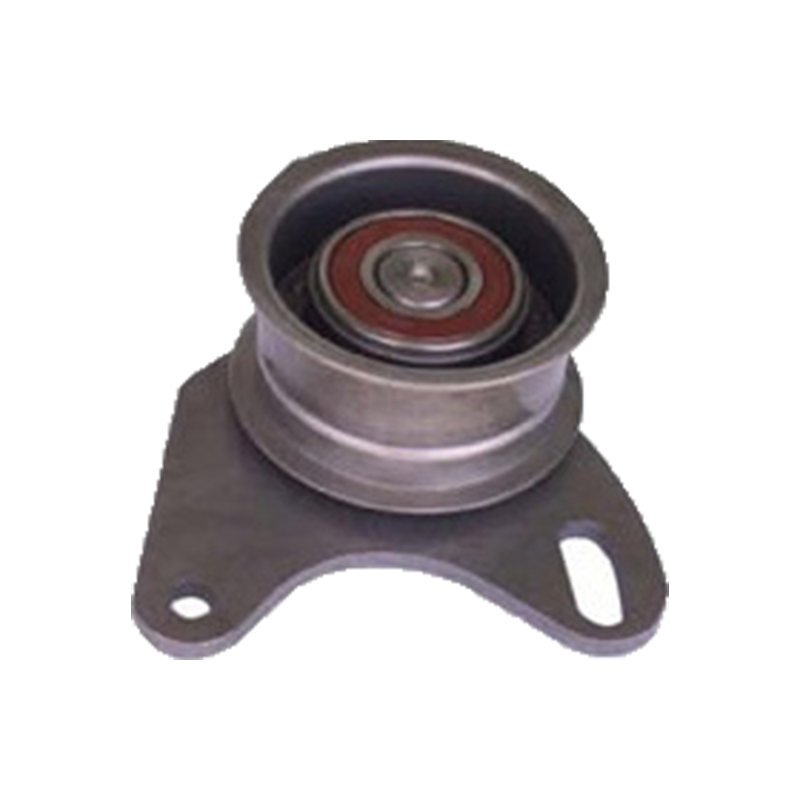 Tensioner and Idler Bearings for Belt DrivesView sealed and shielded tensioner and idler bearings for automotive and industrial belt systems, with custom shaft, load and mounting options.View Product →
U-joints run needle roller cups on a cross trunnion, sealed and often greaseable. Water pump bearings are integral shaft units supplied as ball-ball designs (W, WK, WS) or ball-roller designs (WKN, WN, WNS); the shaft is the bearing, so the whole unit is replaced rather than the rolling element set.
Basic rating life follows ISO 281: L10 equals (C/P) raised to the power p, where p is 3 for ball bearings and 10/3 for roller bearings.
A bearing rated C = 14 kN carries a load P = 4 kN. C/P = 3.5, so L10 = 3.5 cubed = 42.9 million revolutions, roughly 715 hours at 1,000 rpm. Halve the load and life rises eightfold; double it and life falls to one eighth. These figures demonstrate the arithmetic and are not a product rating.
The practical reading for a parts buyer is that a load rating without a stated load means very little. Ask at which load the rating applies, and whether the figure is a basic dynamic rating or an ISO 281 modified rating that already includes a life modification factor.
Six checks on a sample from every lot catch the specification errors that a visual inspection misses.
Write these into the purchase order: clearance group, tolerance class, seal type, grease specification, marking requirement, and packaging that survives humidity in transit. A supplier who resists naming them in writing is telling you something about the documentation behind the part.
Shanghai Yinin Bearing & Transmission Company supplies automotive bearings to distributors and parts buyers across export markets, organising the automotive range by application family rather than by generic type. Buyers evaluating the automotive bearing range should treat the catalogue as a starting filter and the specification set as the actual order.
Clearance and sealing. A 6205 exists in C2, CN, C3 and C4 clearance groups and in open, ZZ and 2RS configurations, and the string 25 x 52 x 15 mm describes none of those choices. Both omissions install cleanly, and both generate returns.
Not for wheel, tensioner, idler or water pump positions, where ABEC-1 to ABEC-3 (ISO 492 P0 to P6) covers the fit and runout requirement. Specify ABEC-5 (P5) or tighter when runout changes a sensor air gap or when surface speed approaches the seal limit.
Order a sample lot, measure it against the drawing, and require marking, batch code and packaging to match the purchase order. Ask for the clearance group and grease specification in writing. A lot that cannot be traced from box to bearing cannot be defended in a warranty claim.
It gives the load-dependent life in millions of revolutions at which 10 percent of a population is expected to fail under ISO 281, not a calendar warranty. A bearing rated 42.9 million revolutions at 1,000 rpm corresponds to roughly 715 hours of continuous running at that speed.
Our provided products
Contact Us
Tel: +86-13916786238
Fax: +86-21-68551629
Email: [email protected]
Add: HuangXu Industrial Area, DanTu, ZhenJiang city, JiangSu Province, China
Industries


 English
 日本語
 Français
 Español