Industry Trends
2026-06-04
Content
Roller bearings are precision mechanical components that reduce rotational friction and support radial or axial loads between moving parts. They are found in virtually every rotating machine — from automotive wheel hubs to industrial gearboxes — because they offer lower friction, higher load capacity, and longer service life than plain bearings.
The primary function of a roller bearing is to enable smooth, efficient rotation under load. Unlike ball bearings, which use point contact, roller bearings use line contact — distributing loads over a larger surface area and making them suitable for heavy-duty applications.
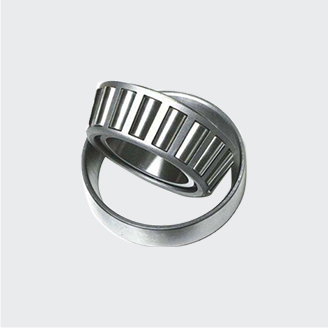
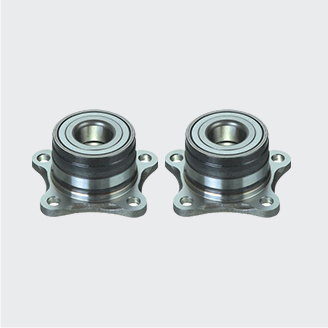
Wheel hubs, gearboxes, differentials, and engine camshafts all rely on roller bearings. A typical passenger car contains 100–150 individual bearings. Tapered roller bearings in wheel hubs handle both radial weight loads and lateral cornering forces simultaneously.
Crushing equipment, conveyor systems, and excavators use cylindrical roller bearings rated for loads exceeding 500 kN. The line-contact design resists shock loads that would fracture ball bearings within minutes.
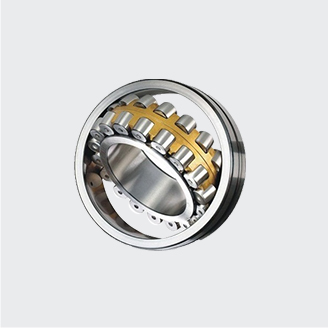
Main shaft bearings in modern 5 MW wind turbines must endure decades of continuous rotation under variable loads. Spherical roller bearings accommodate shaft misalignment up to 2.5°, which is unavoidable in tower flex conditions.
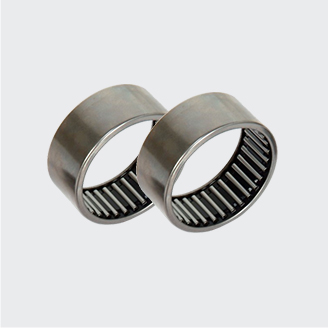
Jet engine gearboxes and helicopter rotor hubs use needle roller bearings for their exceptional load-to-size ratio. Some aerospace-grade bearings operate at DN values (bore × RPM) exceeding 1,000,000 mm·rpm.
Axle box bearings on high-speed trains (300+ km/h) are typically tapered or cylindrical roller bearings designed for continuous operation across millions of kilometers. European EN 12082 standards govern their fatigue life ratings.
Rolling mill roll necks experience radial loads of several MN. Four-row cylindrical roller bearings are standard here, with oil-mist lubrication systems to sustain speeds up to 1,500 RPM under massive load.
| Roller Bearing Type | Primary Load Direction | Typical Application | Max Speed Range |
|---|---|---|---|
| Cylindrical Roller | Radial | Electric motors, rolling mills | High (up to 15,000 RPM) |
| Tapered Roller | Combined (radial + axial) | Wheel hubs, gearboxes | Moderate (up to 8,000 RPM) |
| Spherical Roller | Heavy radial + misalignment | Wind turbines, crushers | Moderate-low |
| Needle Roller | Radial, compact space | Rocker arms, pumps | High |
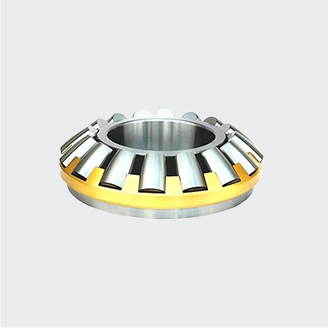
| Thrust Roller | Axial | Crane hooks, screw drives | Low-moderate |
Manufacturing a precision roller bearing involves a tightly controlled sequence of metallurgical, machining, heat treatment, and finishing processes. The dimensional tolerances involved are extraordinary — often within ±2 micrometers (0.002 mm), roughly 1/25th the diameter of a human hair.
Bearing rings and rollers are primarily made from through-hardening steels such as AISI 52100 (100Cr6), which contains approximately 1% carbon and 1.5% chromium. For high-temperature environments, case-hardening steels like 17CrNiMo6 are used. Steel cleanliness is critical — modern vacuum-degassed steels have oxygen contents below 10 ppm to minimize inclusion-driven fatigue failures.
Ring blanks are either forged from bar stock or cut from seamless steel tubes. Forging creates a superior grain structure that improves fatigue resistance by up to 30% compared to machined blanks. Rollers are cold-headed from wire or bar using progressive die stations, producing near-net-shape parts in fractions of a second.
CNC lathes rough-machine the rings, cutting raceways, faces, and bore/OD profiles. This stage removes most of the excess material, leaving a grinding allowance of approximately 0.3–0.8 mm on each surface. Roller blanks undergo centerless grinding at this stage.
Through-hardening steels are austenitized at 830–860°C, quenched in oil or polymer, then tempered at 150–180°C. This achieves a surface hardness of 58–65 HRC. Case-hardening grades undergo carburizing at 900–950°C for 10–40 hours to build a hardened case of 0.8–2.5 mm depth while preserving a tough core. Dimensional stabilization baking at 120–150°C is applied afterward to minimize residual stress distortion.
This is where bearing precision is born. CNC grinding machines shape raceways to their final geometry, achieving roundness within 0.5 µm and surface roughness Ra below 0.08 µm for high-precision grades. Roller surfaces are superfinished by lapping or honing to Ra values under 0.04 µm — smoother than a mirror — to minimize Hertzian contact stress.
Every roller is sorted by diameter to within 0.5 µm tolerance classes so matched sets are assembled. Coordinate measuring machines (CMM) and air gauges verify ring geometry. Ultrasonic or eddy-current testing detects internal cracks or inclusions. ISO 492 defines tolerances for ABEC/P-class precision grades from P0 (standard) to P2 (ultra-precision).
Rings, rollers, and cages are assembled in cleanroom or controlled-atmosphere environments. Grease fill quantities are precisely metered — typically 25–35% of free internal space — to optimize lubrication without generating excess heat. Seals or shields are pressed in, and finished bearings receive a final functional test under load and rotation.
Tapered roller bearings are engineered with a deliberate conical geometry for a precise mechanical reason: to handle combined radial and axial (thrust) loads simultaneously, which a straight cylindrical roller cannot do efficiently. The taper is not aesthetic — it is a functional necessity rooted in contact mechanics.
When a radial force is applied to a tapered roller bearing, the conical geometry decomposes it into components along the raceway surfaces. This automatically generates an equal and opposite axial reaction force. The implication: tapered roller bearings are always installed in opposing pairs (face-to-face or back-to-back) so their axial components cancel out — or are controlled through preload adjustment.
In a vehicle wheel hub, for example, the weight of the car creates a radial load, while cornering creates axial thrust. The tapered geometry transfers both force types into compressive stress along the raceway — exactly what steel handles best — rather than shear or tensile stress.
The half-included angle (contact angle) of a tapered roller bearing directly determines its load-handling bias. Standard configurations include:
| Contact Angle Range | Load Bias | Typical Use Case |
|---|---|---|
| 10° – 16° | Predominantly radial | Gearbox shafts, electric motors |
| 17° – 24° | Balanced combined loads | Automotive wheel hubs, axles |
| 25° – 29° | Predominantly axial (thrust) | Bevel gearboxes, crane slewing rings |
Unlike spherical roller bearings, tapered roller bearings do not self-align — their rigid conical geometry requires accurate shaft and housing alignment, typically within 0.001 rad (about 0.06°). Any angular misalignment beyond this range causes edge loading on the rollers, sharply reducing fatigue life. This is why precision mounting, correct preload setting (commonly 5–50 µm axial clearance), and proper shaft tolerances are all critical in tapered roller applications.
Because tapered roller bearings must operate in opposing pairs, the axial clearance (end-play) or preload between them is adjustable — a major advantage over fixed-geometry bearings. In automotive applications, wheel bearing preload is typically set to 0–50 µm positive play to balance low drag against stiffness. In machine tool spindles, negative preload (interference) of 10–30 µm eliminates deflection under cutting forces, improving dimensional accuracy to within a few micrometers.
Selecting a roller bearing correctly requires matching bearing type to the actual load case, speed, temperature, and life requirement. The ISO 281 dynamic load rating (C) and static load rating (C0) are the standard starting points. Basic rating life L10 — the point at which 10% of a bearing population will have failed from fatigue — is calculated as:
Where P is the equivalent dynamic bearing load. For example, a cylindrical roller bearing with C = 120 kN under P = 30 kN load has an L10 life of approximately 64 million revolutions — at 1,000 RPM, that is over 1,000 hours of operation before 10% failure probability.
Modern bearing selection also applies life adjustment factors (a1 for reliability, aISO for lubrication and contamination) that can extend calculated life by a factor of 10 or more in clean, well-lubricated conditions — or reduce it to nearly zero in heavily contaminated environments. This is why sealing and lubrication management often matter more than bearing size in field performance.
Our provided products
Contact Us
Tel: +86-13916786238
Fax: +86-21-68551629
Email: [email protected]
Add: HuangXu Industrial Area, DanTu, ZhenJiang city, JiangSu Province, China
Industries


 English
 日本語
日本語
 Français
 Español