Industry Trends
2026-05-24
Content
A roller bearing is a precision mechanical component that reduces rotational friction between moving parts by using cylindrical, tapered, needle, or spherical rolling elements instead of sliding contact. Roller bearings support radial and axial loads with significantly lower friction than plain bearings, extending machine service life and improving efficiency across automotive, industrial, aerospace, and consumer applications. The specific type of roller bearing selected — cylindrical, tapered, needle, spherical, or thrust — determines the load capacity, speed capability, and misalignment tolerance of the assembly.
Roller bearings are categorized by the geometry of their rolling elements. Each geometry creates a different contact pattern between the rolling element and the raceway, which directly determines the type of load the bearing can carry, the speeds it can achieve, and the degree of misalignment it tolerates. Selecting the wrong type for an application results in premature failure regardless of quality level.
Rolling elements are straight cylinders with a high length-to-diameter ratio. The line contact between cylinder and raceway gives cylindrical roller bearings the highest radial load capacity of any standard bearing type at a given cross-section — typically 30–40% higher than an equivalent deep-groove ball bearing. They run at high speeds and tolerate pure radial loads well, but require a separate thrust bearing for any axial loading. Standard series (NU, NJ, NF, N, NUP) differ in flange arrangement and axial float allowance. Common in electric motors, gearboxes, and machine tool spindles.
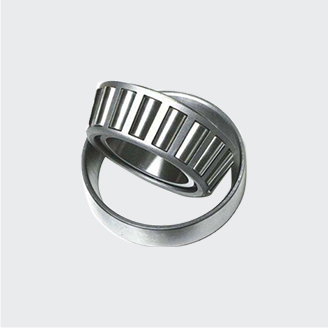
Rolling elements and raceways are conical — truncated cones whose apex converges at a common point on the bearing axis. This geometry creates simultaneous radial and axial (thrust) contact, making tapered roller bearings the standard solution for combined load applications. They are used in pairs or sets arranged face-to-face (DF), back-to-back (DB), or tandem (DT) to handle bidirectional axial loads. Dynamic load ratings for tapered bearings are typically 20–50% higher than cylindrical types of comparable size. The automotive industry uses more tapered roller bearings than any other sector — wheel hubs, differentials, transmissions, and steering systems all rely on them.
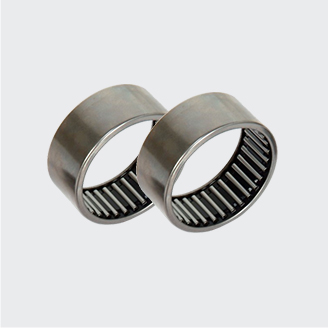
A specialized form of cylindrical roller bearing using rollers with a very high length-to-diameter ratio — typically 3:1 to 10:1 or greater. The slim profile allows high radial load capacity in an extremely compact radial section, often 40–60% thinner than equivalent cylindrical roller bearings. Available with or without inner ring (the shaft itself serves as the inner raceway in drawn cup configurations), needle roller bearings are the default choice for space-constrained reciprocating and oscillating applications. They dominate in automotive transmissions, rocker arm pivots, two-stroke engine connecting rods, and universal joints.
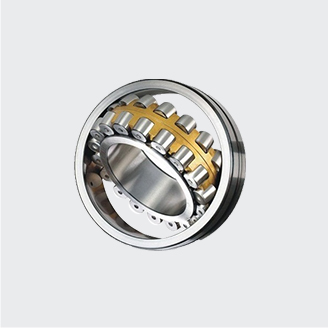
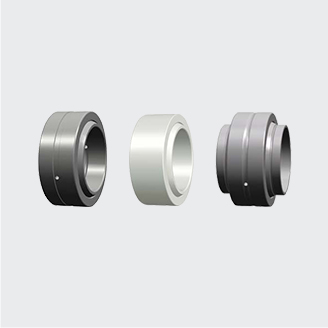
Two rows of barrel-shaped (convex) rollers running in a spherical outer raceway. The spherical geometry allows the bearing to accommodate shaft misalignment of 1–2.5 degrees without affecting load distribution — a capability unique among roller bearing types. This misalignment tolerance makes spherical roller bearings the standard choice for applications where shaft deflection, housing bore misalignment, or thermal distortion are unavoidable: paper mill rolls, heavy conveyor drives, vibratory screens, and large fans. Dynamic load ratings are very high due to the double-row configuration.
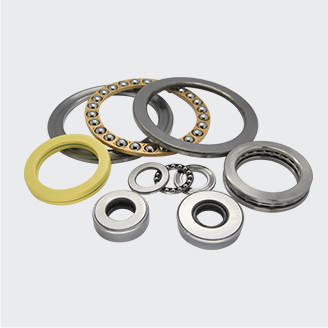
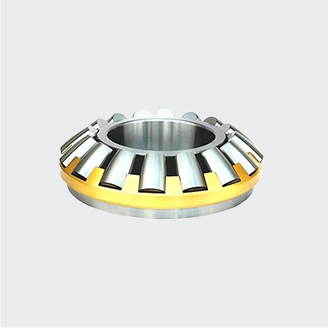
Designed exclusively or primarily for axial (thrust) loads, thrust roller bearings use cylindrical, tapered, or spherical rollers arranged on a flat or angled cage washer. Cylindrical thrust roller bearings handle pure axial loads; tapered thrust configurations support combined axial and modest radial loads; spherical thrust bearings handle heavy axial loads with misalignment tolerance. Used in crane hooks, screw-down mechanisms in rolling mills, automotive steering columns, and hydraulic clutch packs. Thrust roller bearings have substantially higher axial load capacity than comparable thrust ball bearings of the same bore diameter.
Needle roller bearings are the engineering solution to a specific problem: achieving maximum radial load capacity within the smallest possible radial cross-section. In applications where the shaft must be large (for torque transmission) but the housing must be small (for packaging constraints), no other bearing type delivers comparable performance. Their long, thin rollers create a much larger total contact area than ball bearings in the same envelope, resulting in high load ratings despite the compact profile.
Automatic and manual transmission countershaft gears float on needle roller bearings that use the gear bore and shaft as inner and outer races directly — eliminating ring components entirely. This allows close gear center distances impossible with conventional bearings. A typical 6-speed automatic transmission may contain 15–25 needle roller bearing positions, all selected for the specific gear ratio, torque level, and available radial space at each location.
Automotive rocker arm pivots use needle roller bearings to reduce valve train friction by 40–60% compared to plain bushing designs. This is measurable as a fuel economy improvement and is standard equipment in modern high-efficiency engines. The oscillating motion (rather than continuous rotation) actually suits needle bearings well — full film lubrication is less critical in oscillating service than in continuous rotation.
Each of the four trunnions of a universal joint cross is supported by a drawn cup needle roller bearing. The drawn cup — a thin-walled pressed steel cup — serves as both the outer ring and the seal housing, achieving an extremely compact assembly. U-joint needle bearings must accommodate oscillating motion at variable angles while transmitting full driveshaft torque, making their specific load-life calculation significantly more complex than simple rotating applications.
The small end of two-stroke engine connecting rods rides on a caged needle roller bearing directly on the wrist pin — no inner ring, with the pin itself as the raceway. At engine speeds of 6,000–12,000 RPM, these bearings operate under extremely high alternating loads with marginal lubrication from mist oil. Needle roller bearing selection for this application requires fatigue life calculation under variable loading rather than simple constant-load methods.
Planet gears in wind turbine main gearboxes, industrial planetary reducers, and automotive CVTs ride on needle roller bearings inside the planet carrier. The combination of high tangential load, relatively slow rotation (the planet gear orbits around the sun gear), and very limited radial space between planet pin and gear bore makes needle bearings the only practical choice. A single wind turbine main gearbox may contain 6–12 planet needle roller bearing positions rated for 20-year service life.
Yoke-type needle roller bearings and cam followers are used as track rollers in linear guide systems, tooling tables, and textile machinery where a compact rolling element is needed to follow a profiled cam or rail surface. The outer ring of cam followers is hardened and ground as a track contact surface — a needle bearing inside a cylindrical roller housing.
| Configuration | Inner Ring | Outer Ring | Key Advantage | Typical Application |
|---|---|---|---|---|
| Full complement, no cage | Optional | Yes | Maximum load capacity | Low speed, high load |
| Caged needle roller | Optional | Yes | Higher speed than full complement | Transmissions, gearboxes |
| Drawn cup (shell type) | No | Thin shell | Minimum radial section | U-joints, rocker arms |
| Combined needle + thrust | Yes | Yes | Radial + axial in one unit | Transmission shafts |
| Cam follower / track roller | Stud or yoke | Thick, hardened | Direct track contact surface | Cam drives, conveyors |
Tapered roller bearings are the standard solution wherever an application generates significant forces in both the radial and axial directions simultaneously. Their conical geometry means that radial loads naturally generate an axial thrust component, which is why they are always used in pairs or sets — each bearing in the set handles thrust in one direction. The interplay of radial and axial loading, and the need for correct preload setting, makes tapered roller bearing applications more sensitive to installation and adjustment than most other bearing types.
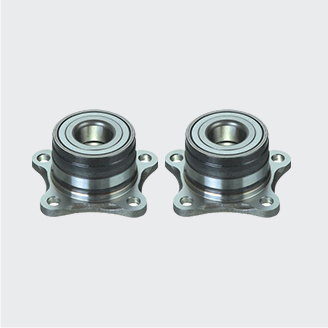
The most familiar tapered roller bearing application. Each driven or non-driven wheel hub on a conventional passenger car, truck, or SUV requires bearings that handle simultaneously: radial loads from vehicle weight and cornering forces (which can reach 3–4 times vehicle weight during hard cornering), and bidirectional axial loads from acceleration and braking. Tapered roller bearings in opposed pairs (face-to-face mounting) handle both load directions. A typical Class 8 truck front wheel hub tapered bearing set is rated for 200,000+ km service life under regulated preload conditions.
Differential pinion shafts carry the highest combined radial and axial loads in any automotive drivetrain component. The ring-and-pinion gear engagement produces both a radial separating force and a substantial axial thrust force whose magnitude depends on the spiral bevel gear helix angle (typically 35–45 degrees). Tapered roller bearings in tandem or back-to-back arrangements on the pinion shaft provide the required preloaded, stiff mounting needed to maintain precise ring-and-pinion gear mesh under varying torque. Incorrect preload on differential tapered bearings is a primary cause of premature gear failure and differential noise.
Industrial gearboxes with helical, spiral bevel, or worm gearing generate axial thrust loads that must be reacted at the shaft supports. Tapered roller bearings are specified where these thrust loads are substantial — typically in medium-to-large gearboxes above 10 kW. The advantage over angular contact ball bearings in this application is the higher load capacity at equivalent bore size: a medium-series tapered roller bearing has a dynamic load rating approximately 2–3x that of an equivalent angular contact ball bearing at the same bore diameter.
In steel, aluminum, and paper rolling mills, the roll neck bearings must handle enormous radial loads (the rolling force on work rolls in a hot strip mill can exceed 30 MN) and the axial loads generated by cambered or taper-ground roll profiles. Four-row tapered roller bearings — essentially two pairs of tapered bearings in a single compact housing — are the standard roll neck bearing for work rolls in heavy rolling mills. Their combination of very high radial capacity, bidirectional thrust capability, and proven performance in contaminated, vibrating environments makes them essentially irreplaceable in this sector.
Wheel loader axles, excavator swing bearings, drill head spindles, and crusher main shafts all rely on large-series tapered roller bearings. The ability to handle shock loads, contaminated lubricants, and combined loading under intermittent high-overload conditions — while providing a resettable, adjustable preload via the bearing pair setting — makes tapered bearings the preferred choice in heavy equipment over alternatives that cannot be field-adjusted after wear.
Despite the name "roller skate bearings," the bearings used in roller skates, inline skates, skateboards, and roller derby equipment are overwhelmingly ball bearings — not roller bearings in the cylindrical or needle sense. The universal standard for skating applications is the 608 deep-groove ball bearing: 8mm bore, 22mm outer diameter, 7mm width. This standardisation across the entire industry means that wheels from virtually any manufacturer fit hubs from any other manufacturer.
The condition and lubrication of skate bearings has a far greater effect on roll performance than ABEC rating. Even an ABEC 7 bearing contaminated with grit will perform worse than a clean ABEC 3. Practical maintenance guidelines:
The most fundamental decision in bearing selection is roller versus ball. Both are rolling element bearings, but their contact geometry produces fundamentally different load capacity, speed, and stiffness characteristics. Understanding when roller bearings outperform ball bearings — and vice versa — prevents over-specification in one direction and under-specification in the other.
| Criterion | Roller Bearings | Ball Bearings |
|---|---|---|
| Contact type | Line contact | Point contact |
| Radial load capacity | 30–50% higher at same bore | Standard reference |
| Axial load capacity | Depends on type; generally lower than deep-groove ball | Good in angular contact; moderate in DGBB |
| Speed capability | Lower limiting speed (line contact heat) | Higher limiting speed |
| Stiffness (rigidity) | Higher — better for precision machine tools | Lower at equivalent preload |
| Misalignment tolerance | None (except spherical roller) | Self-aligning ball: 2–3 degrees |
| Friction level | Slightly higher (line contact) | Lower (point contact) |
| Noise level | Generally higher | Lower; preferred for quiet applications |
| Typical use case | Heavy machinery, gearboxes, rolling mills, vehicles | Electric motors, pumps, appliances, instrumentation |
The performance envelope of any roller bearing is determined as much by its material and manufacturing precision as by its geometry. Understanding the material options and relevant international standards allows buyers and engineers to specify correctly and evaluate supplier datasheets critically.
AISI 52100 (ISO 683-17 Type 3) is the universal standard for roller bearing rings and rolling elements. Hardened to 58–65 HRC, it provides the high contact fatigue strength required for the hertzian stress levels encountered in rolling element contact. Operating temperature is limited to approximately 120°C continuous (tempered above this). The overwhelmingly dominant material for all standard roller bearing production globally.
A tough, carburised steel core with a hardened surface layer. Used for bearings subjected to shock loads where through-hardened steel would be too brittle — large spherical roller bearings in vibrating screens and impact crushers are typical applications. The core toughness absorbs shock energy that would crack a through-hardened ring, while the case provides the required contact fatigue strength.
Martensitic 440C stainless is used where moderate corrosion resistance is needed alongside bearing-grade hardness (57–60 HRC achievable). Food processing, pharmaceutical, and marine applications specify 440C roller bearings. For non-load-bearing components (cages, shields, washers), austenitic 316 stainless is standard. Stainless steel bearings have a dynamic load rating approximately 20% lower than equivalent chrome steel bearings due to the lower hardness achievable.
Ceramic rolling elements used in hybrid ceramic bearings (ceramic balls or rollers in steel rings) offer three key advantages: density 40% lower than steel (reducing centrifugal force at high speed), hardness above 1,500 HV (vs 700 HV for steel), and electrical non-conductivity (preventing current erosion damage in electric motors). Standard for machine tool spindles above 1 million DN (diameter × RPM) and for EV motor bearings requiring electrical isolation.
| Standard | Scope | Key Requirements |
|---|---|---|
| ISO 15:2017 | Radial bearings — boundary dimensions | Defines bore, OD, and width for all standard metric rolling bearings |
| ISO 281:2007 | Dynamic load ratings and rating life | Basic formula for L10 life calculation; modified life (ISO 281/Amd.1) includes contamination and lubrication factors |
| ISO 492:2014 | Radial bearings — tolerances | Defines dimensional and running accuracy tolerance classes P0 (normal) through P4 and P2 |
| ISO 355:2019 | Tapered roller bearings — boundary dimensions | Metric tapered series dimensions; aligns with ANSI/ABMA Std. 19.2 |
| ISO 1281:2021 | Static load ratings | Basic static radial and axial load ratings for roller bearings under static and slow-speed conditions |
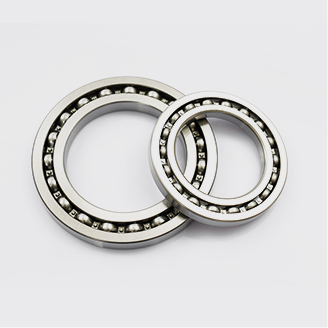
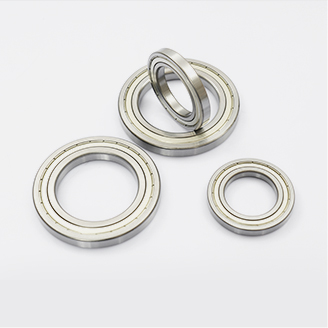
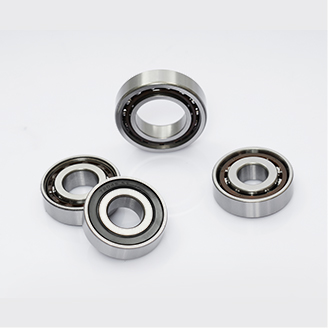
Our provided products
Contact Us
Tel: +86-13916786238
Fax: +86-21-68551629
Email: [email protected]
Add: HuangXu Industrial Area, DanTu, ZhenJiang city, JiangSu Province, China
Industries


 English
 日本語
日本語
 Français
 Español