Industry Trends
2026-01-08
Content
In the precision-driven sectors of medical imaging and sensitive electronics, the performance of mechanical components is often secondary to their electromagnetic compatibility. For engineers designing MRI machines or surgical robots, standard steel components are often unusable due to their ferromagnetic nature. Stainless steel deep groove ball bearings are the preferred solution, but the choice of specific stainless steel grades—such as 316 versus the common 440C—can dictate whether a device operates safely or fails due to magnetic interference. Shanghai Yinin Bearing & Transmission Company, an industry and trade integrated enterprise with over 25 years of expertise, specializes in providing non-magnetic stainless steel bearings for MRI and other specialized medical environments. Our technical team, supported by Jiangsu Dahua Bearing Manufacturing Co., Ltd., ensures that every bearing meets the rigorous permeability standards required for modern healthcare technology.
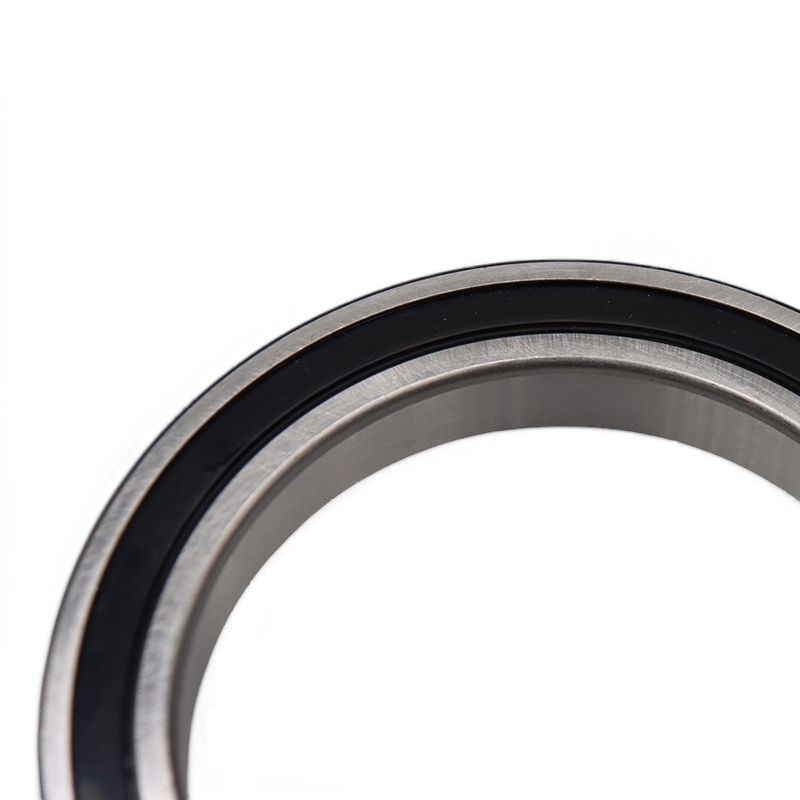
The magnetic properties of stainless steel deep groove ball bearings are determined by their crystalline structure. Most industrial-grade stainless bearings are manufactured from 440C martensitic stainless steel, which is highly magnetic due to its body-centered tetragonal structure. For medical applications requiring low magnetic interference, 316-grade austenitic stainless steel is the engineering standard. According to the 2024 Magnetic Properties of Stainless Steel Guidelines by the British Stainless Steel Association (BSSA), austenitic grades like 316 exhibit a relative magnetic permeability () close to 1.005 in their annealed state, making them "non-magnetic" for most practical purposes. However, it is important to note that 316 bearings have a lower load capacity compared to 440C, as they cannot be hardened to the same degree through heat treatment.
Source: BSSA - Magnetic Properties and Permeability Standards of Stainless Steels 2024
While 440C offers superior hardness for high-load cycles, 316 provides the critical "paramagnetic" response needed for stainless steel bearings for surgical robots and MRI scanners. The decision hinges on the balance between magnetic neutrality and mechanical load.
| Property | 440C Martensitic Stainless | 316 Austenitic Stainless |
| Magnetism | Ferromagnetic (Strongly attracted) | Paramagnetic (Negligible attraction) |
| Magnetic Permeability () | High (>100) | Ultra-low (~1.005) |
| Hardness (HRC) | 58 - 60 (High wear resistance) | 20 - 30 (Lower load capacity) |
| Corrosion Resistance | Good (Atmospheric/Fresh water) | Excellent (Saline/Chemical/Blood) |
For high-precision medical devices, "low magnetism" must be a measurable and certified value rather than a general claim. Cold working during the manufacturing of stainless steel deep groove ball bearings—such as grinding or race forming—can cause a partial transformation of austenite into martensite, which increases magnetism. To prevent this, specialized low permeability bearings for medical devices must undergo a solution annealing process (heating to ~1050°C followed by rapid quenching) to restore the non-magnetic austenitic structure. According to the ISO 2025 updates for Medical Electrical Equipment (IEC 60601-2-33), any component used within the bore of a magnetic resonance system must be verified for magnetic displacement force and torque to ensure patient safety.
Source: IEC 60601-2-33:2025 - Particular requirements for the safety of MR equipment
Procurement teams should require specific documentation to ensure the non-magnetic stainless steel bearings for MRI meet the required safety threshold. A standard "material certificate" is often insufficient without permeability testing.
When an application requires both high load capacity and zero magnetism, hybrid bearings with ceramic balls are the ultimate solution. By combining 316 stainless steel rings with silicon nitride () balls, engineers can achieve higher speeds and better durability than all-steel 316 bearings. At Shanghai Yinin, we integrate these advanced materials to create custom non-magnetic bearings for electronics that eliminate eddy current losses and prevent electromagnetic interference (EMI). These specialized stainless steel bearings for surgical robots are essential for maintaining the sub-millimeter precision required in modern minimally invasive procedures.
No. 316 stainless steel has a higher nickel content which better stabilizes the non-magnetic austenite phase. 304 is more prone to becoming magnetic after cold working compared to 316.
Generally, no. 440C is strongly ferromagnetic and could become a projectile or interfere with image quality. You should prioritize non-magnetic stainless steel bearings for MRI made of 316 grade or ceramic.
Machining processes like grinding can change the steel's internal structure. This is why low permeability bearings for medical devices must be annealed or demagnetized after production to ensure they meet permeability requirements.
Because 316 cannot be hardened to high HRC levels, it can typically support only 10% to 20% of the load capacity of a standard 440C stainless steel deep groove ball bearings unit. Always check the dynamic load ratings.
Yes. As an integrated manufacturer, Shanghai Yinin can provide certificates for ASTM A342 permeability tests to ensure our custom non-magnetic bearings for electronics meet your specific technical thresholds.
Our provided products
Contact Us
Tel: +86-13916786238
Fax: +86-21-68551629
Email: [email protected]
Add: HuangXu Industrial Area, DanTu, ZhenJiang city, JiangSu Province, China
Industries


 English
 日本語
日本語
 Français
 Español