Industry Trends
2026-11-11
Content
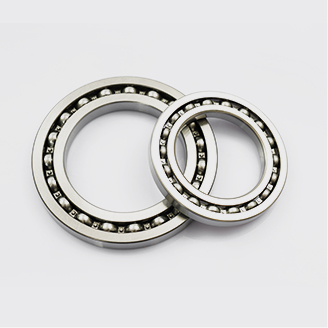
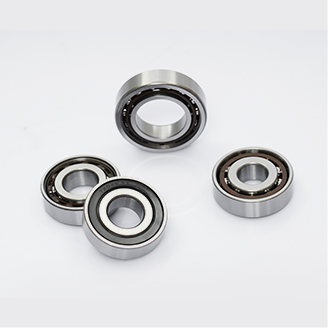
Space-constrained machinery keeps getting smaller while performance demands keep climbing. Miniature Ball Bearings exist precisely for that tension — they support rotational motion inside compact housings while still handling meaningful speed, load, and precision requirements. For buyers sourcing components for small motors, instruments, or automation systems, understanding what actually drives performance separates a good fit from a costly mismatch.
Smaller bearing footprints translate directly into smaller equipment. Miniature Ball Bearings reduce the installation space a rotating assembly requires, which lets engineers tighten component layouts without sacrificing structural integrity. Beyond space savings, they support smooth rotation and radial stability, keeping mechanical play low in mechanisms where even small amounts of wobble can affect output accuracy.
Bearing dimensions influence far more than the bearing itself — they shape the surrounding component layout, overall equipment size, and how tightly parts can be integrated. Choosing an undersized or oversized bearing can force redesigns elsewhere in the assembly.
Precision instruments and automation mechanisms depend on consistent rotation. Well-manufactured miniature bearings minimize internal clearance variation, which keeps motion smooth and repeatable across duty cycles.
Rolling contact inherently produces less resistance than sliding contact, which is why Miniature Ball Bearings are a common choice where low friction and smooth rotation matter. That said, suitability for high speed is not automatic — it depends on bearing design, internal clearance, lubrication method, precision grade, and operating temperature working together.
Not every miniature bearing is a high-speed bearing. Speed rating is the product of design, clearance, lubrication, and precision — not size alone.
Lower friction also means less frictional heat during operation, though actual temperature rise still depends on speed, load, lubrication type, bearing size, and ambient conditions. High-quality bearings help maintain smooth, consistent running with reduced vibration, which supports stable performance even as rotational speed increases.
| Compact Dimensions | Bore diameter, outer diameter, width, and total installation space |
| Load Capacity | Radial, axial, and combined load ratings |
| Precision | Dimensional accuracy, running accuracy, manufacturing tolerance |
| Material Quality | Wear resistance, corrosion resistance, service life |
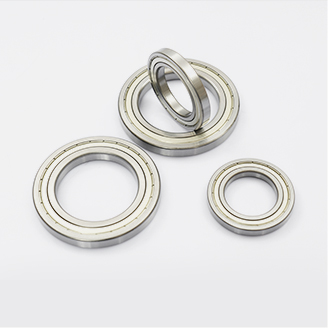
| Lubrication & Sealing | Grease or oil; open, shielded, or sealed configurations |
Confirm bore diameter, outside diameter, width, and shaft dimensions before anything else.
Account for continuous versus intermittent operation, lubrication type, and expected temperature.
Radial load, axial load, shock loads, temperature, and humidity all affect bearing life.
Open, shielded, or sealed configurations should match the operating environment.
For precision equipment, prioritize tolerance, running accuracy, and vibration limits.
Dimensional accuracy, consistent raceway and ball quality, proper heat treatment, and a documented lubrication and sealing process across the product range.
Vague material specs, no precision grade documentation, limited size or sealing options, and no evidence of high-speed testing.
Miniature ball bearings are generally defined by small bore diameters, often under 10mm, designed for compact mechanical assemblies.
Many are, but suitability depends on internal clearance, precision grade, and lubrication rather than size alone.
Open bearings suit clean, controlled environments; shielded and sealed options protect against dust and contamination in harsher conditions.
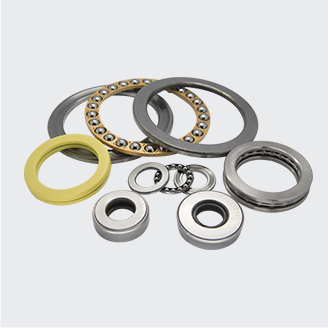
Check the manufacturer's radial, axial, and combined load ratings against your actual operating loads, not just the physical size.
Our provided products
Contact Us
Tel: +86-13916786238
Fax: +86-21-68551629
Email: [email protected]
Add: HuangXu Industrial Area, DanTu, ZhenJiang city, JiangSu Province, China
Industries


 English
 日本語
 Français
 Español