Industry Trends
2026-07-09
Content
Selecting the wrong bearing type can shorten machine life, increase noise, and drive up maintenance costs across an entire production line. A deep groove ball bearing is the most widely specified rolling element bearing in industrial, automotive, and precision mechanical systems because of its balanced ability to carry both radial and moderate axial loads. This guide covers how the bearing works, how the main types differ, where it is used, and how to choose the right one for your application.
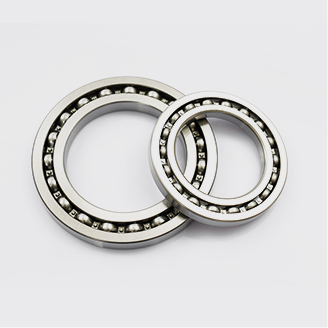
A deep groove ball bearing definition starts with its geometry: it is a rolling element bearing built from an inner ring, outer ring, a set of balls, and a cage, with deep, uninterrupted grooves machined into both raceways. This radial ball bearing structure allows the balls to sit deeper in the groove than in a shallow-groove design, which is what gives the bearing its combined radial and axial load handling ability.
The bearing load distribution mechanism works by spreading force from the shaft across multiple balls simultaneously as they roll along the raceway, converting sliding friction into rolling friction. Most deep groove bearings use a single row ball bearing design, which keeps the assembly compact while still supporting moderate thrust loads from either direction along the shaft axis.
In short, the answer to what is a deep groove ball bearing used for is any rotating shaft application that needs to handle radial load, some axial load, and moderate to high speed in a single compact component.
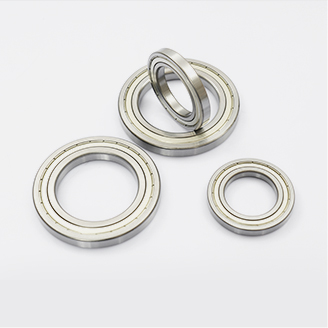
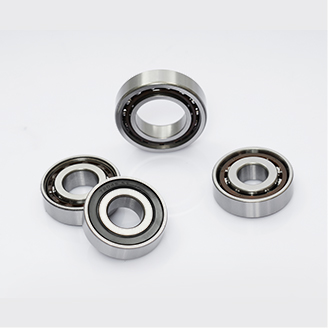
Bearings in this family are usually differentiated by row count and sealing arrangement. A single row deep groove bearing is the standard configuration for general-purpose shaft support, while a double row ball bearing adds a second row of balls to increase radial load capacity within a similar overall width.
| Type | Key characteristic |
| Open type bearing | No seal or shield; relies on external housing protection |
| Shielded bearing ZZ type | Metal shields on both sides; retains grease, blocks coarse debris |
| Sealed ball bearing 2RS | Rubber seals on both sides; strongest contamination protection |
| Double row ball bearing | Higher radial capacity in a narrow footprint |
When comparing sealed vs open ball bearing options, the practical difference comes down to environment: open bearings are chosen when the housing already provides sealing and easy re-lubrication access, while sealed or shielded types are chosen when the bearing is exposed to dust, moisture, or washdown conditions. For the 2RS vs ZZ bearing which is better question, 2RS seals generally offer better contamination exclusion, while ZZ shields allow slightly easier heat dissipation and are common in higher speed motor applications.
Because of their versatility, these bearings appear across nearly every sector that uses rotating shafts.
Used in wheel hubs, alternators, and transmission components where compact size and reliability matter.
Support rotor shafts at moderate to high speeds with low operating noise.
Found in pumps, gearboxes, conveyors, and fans across manufacturing lines.
Used in washing machine drums, blenders, and fan motors for quiet, compact operation.
Support rotating components on harvesters and tillage equipment exposed to dust and vibration.
Applications of ball bearings in automotive systems and deep groove ball bearings in electric motors both share the same underlying requirement: a compact bearing that tolerates a mix of radial and light axial load without excessive heat build-up.
A well-specified bearing should deliver a specific combination of measurable performance traits rather than a single generic quality claim.
A low friction bearing design reduces energy loss and heat generation, while an appropriate load carrying capacity bearing rating ensures the component does not fatigue prematurely under the expected shaft load.
For applications running at elevated RPM, a high speed rotation bearing rating determines the maximum safe operating speed before heat and vibration become problems. Noise reduction bearing performance depends heavily on raceway finish, ball roundness, and cage design, which is why precision-ground bearings run noticeably quieter than lower-grade equivalents. Long service life bearing steel, typically a hardened chromium steel, resists surface fatigue over millions of rotation cycles when properly lubricated and correctly loaded.
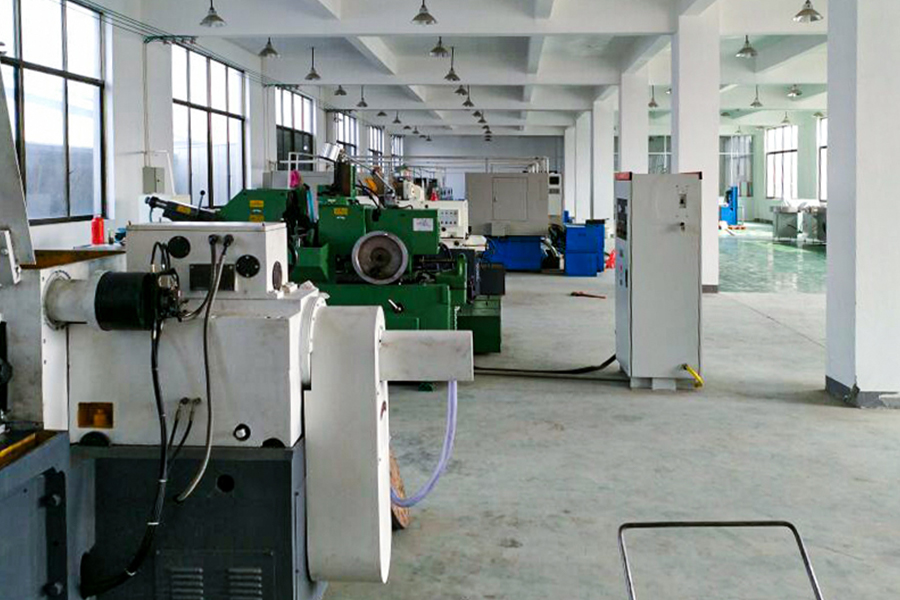
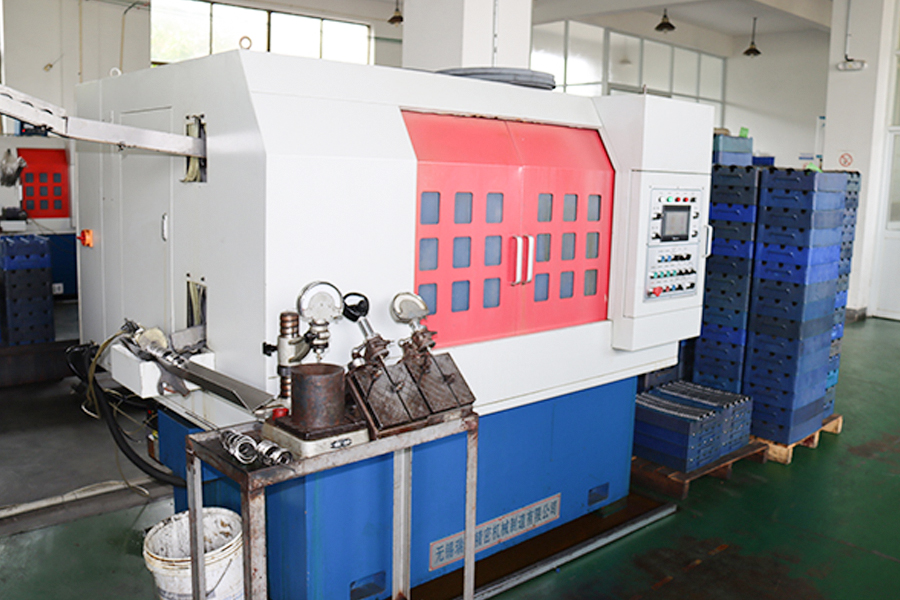
Manufacturing a precision bearing involves several tightly controlled stages that determine its final performance.
This sequence, from heat treatment process in bearing production through final sealing, is what separates a consistent, long-lasting bearing from one prone to early failure.
Understanding why deep groove ball bearings fail helps operators catch problems before a breakdown occurs.
| Failure cause | Typical result |
| Bearing fatigue failure | Surface flaking on raceways after extended load cycles |
| Lubrication failure | Increased friction, heat, and accelerated wear |
| Contamination damage bearing | Abrasive wear from dirt or metal particles |
| Misalignment bearing wear | Uneven load distribution and premature failure |
| Overheating bearing system | Grease breakdown and dimensional distortion |
Causes of bearing noise and vibration often trace back to one of these same root issues, and how to prevent bearing damage in machines generally comes down to correct fit, adequate lubrication, and keeping contaminants out of the housing.
A structured bearing selection guide for industrial machines typically works through the following checks in order.
Match bore, outer diameter, and width to the shaft and housing dimensions.
Confirm the dynamic and static load ratings exceed expected operating loads with a safety margin.
Verify the bearing's limiting speed suits the application's operating RPM.
Choose open, ZZ, or 2RS based on the surrounding contamination environment.
Select grease or oil lubrication based on speed, temperature, and maintenance access.
How to select deep groove ball bearing size and choosing sealed vs open bearings for motors both come down to matching the bearing's rated envelope to the real operating conditions rather than defaulting to whatever size fits the shaft.
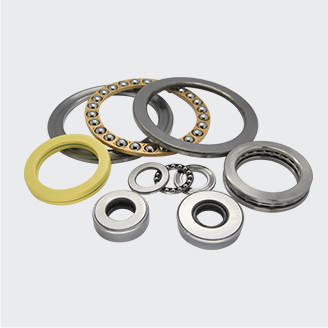
Load direction bearing types matter most in this comparison: deep groove ball bearing vs angular contact ball bearing selection usually favors deep groove designs for balanced, moderate loads, and angular contact designs for higher, more directional axial load. For ball bearing vs roller bearing which is better, the honest answer depends on load type: rollers suit heavy radial load at lower speed, balls suit moderate load at higher speed. Differences between bearing types in machinery also extend to plain bearings, which rely on sliding contact rather than rolling elements and are typically reserved for lower-speed, higher-damping applications.
Ongoing demand for deep groove ball bearing components is being shaped by tighter manufacturing tolerances and evolving material science. Precision bearing manufacturing continues to push toward finer raceway tolerances and improved roundness, which directly supports low noise bearing technology in electric vehicles and home appliances where quiet operation is now a purchasing factor.
Energy efficient mechanical components are also gaining priority as industrial operators look to reduce friction losses across motor-driven systems. Smart lubrication bearing systems, including sensor-monitored grease condition tracking, are emerging in high-value industrial equipment to predict maintenance needs before failure occurs. Advanced bearing materials, including improved steel alloys and hybrid ceramic ball options, are expanding the operating envelope for speed, temperature, and load in specialized applications.
 |
 |
It is a rolling element bearing with deep raceway grooves that allow it to support both radial and moderate axial load in a compact, single-row or double-row design.
It is used in automotive components, electric motors, industrial machinery, home appliances, and agricultural equipment wherever a rotating shaft needs radial and light axial support.
Service life depends on load, speed, lubrication, and contamination control, but properly specified and maintained bearings commonly run for years of continuous industrial service.
Common causes include fatigue from sustained loading, lubrication breakdown, contamination ingress, shaft misalignment, and overheating.
Sealed bearings include rubber or metal seals that retain lubricant and block contaminants, while open bearings rely on the surrounding housing for protection and allow easier re-lubrication.
Grease is applied during assembly for sealed and shielded types, while open bearings are typically re-greased or oil-lubricated on a scheduled maintenance interval based on speed and operating temperature.
Our provided products
Contact Us
Tel: +86-13916786238
Fax: +86-21-68551629
Email: [email protected]
Add: HuangXu Industrial Area, DanTu, ZhenJiang city, JiangSu Province, China
Industries


 English
 日本語
日本語
 Français
 Español