Industry Trends
2026-07-02
Content
A 6208 bearing is a metric-series deep groove ball bearing with a 40mm bore, 80mm outside diameter, and 18mm width, built to carry combined radial and light axial loads at moderate to high rotating speeds. It is one of the most widely specified single-row ball bearing sizes in industrial equipment, and choosing the right variant depends on sealing type, load direction, speed rating, and the operating environment of the machine it supports. This guide breaks down the type options, common applications, technical properties, and installation practices buyers need to make a confident selection.
Every 6208 deep groove ball bearing shares the same core dimensions, but the sealing and shielding configuration determines how well it resists contamination, retains lubricant, and performs under specific operating conditions. Selecting the correct type is the first decision in any purchasing process, since it directly affects service life and maintenance frequency.
DefinitionA deep groove ball bearing is a rolling-element bearing with deep raceway grooves in both the inner and outer rings, allowing it to support radial loads, moderate axial loads in both directions, and high rotational speeds in a single compact unit.
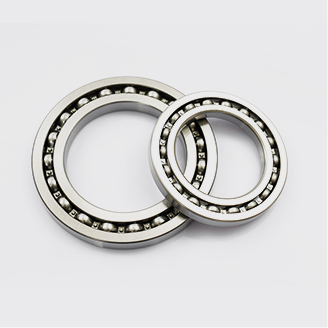
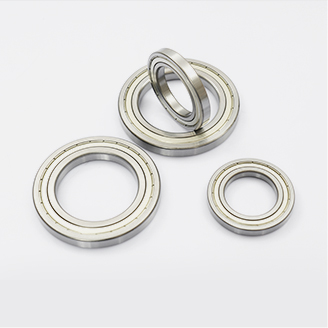
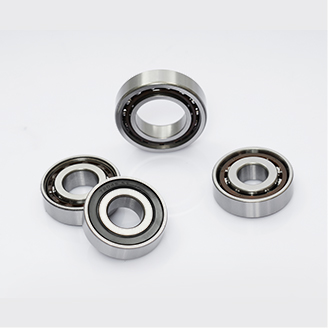
The 6208 size is available in four common configurations, each suited to a different balance of protection and friction:
| Type | Protection Level | Relative Friction | Best Fit Environment |
| Open | None — relies on housing | Lowest | Clean, sealed gearboxes |
| ZZ (shielded) | Moderate, dust and splash | Low | General indoor machinery |
| 2RS (rubber sealed) | High, moisture and particulate | Slightly higher | Washdown, outdoor, agricultural |
| Single-side sealed | Asymmetric protection | Low to moderate | One exposed, one enclosed face |
Buyers comparing a 6208 ZZ bearing against a 6208 2RS bearing should weigh the small increase in seal drag against the reduction in contamination-related failures. In dusty or wet environments, the extra friction of a rubber seal is almost always offset by a longer service interval and fewer unplanned bearing replacements.
Beyond sealing, buyers should also confirm the internal design of the bearing being quoted. Standard catalog 6208 bearings use a conventional ball complement and cage, but some suppliers offer a maximum-capacity variant with a filling slot that allows more balls to be loaded, increasing radial load capacity at the cost of reduced axial load handling. This variant is rarely needed for typical industrial applications, but it is worth ruling out explicitly when a purchasing specification calls for unusually high radial loads in a compact envelope. Requesting the internal design designation alongside the sealing code helps ensure the quoted part actually matches the intended duty, not just the bore and outside diameter.
The 6208 bearing size sits in a practical middle ground — large enough to carry meaningful radial load, compact enough to fit standard shaft housings across a wide range of rotating equipment. This versatility is why it appears across several distinct industrial categories.
An industrial ball bearing in the 6208 size is a standard fit for medium-frame three-phase electric motors, typically in the 3 to 15 kW output range. As a 6208 bearing for electric motor use, it supports the rotor shaft against both the radial pull of the air gap and light axial thrust from coupling misalignment, while its speed rating comfortably covers common 1500 and 3000 rpm motor speeds.
Centrifugal and rotary pumps rely on a 6208 bearing for pump shaft support on the drive end, where it manages combined radial load from impeller thrust and any residual axial force from fluid pressure variation. Sealed variants are frequently specified here to resist moisture migration along the shaft.
Inside helical and worm gearboxes, a 6208 bearing for gearbox input or output shafts absorbs the radial reaction forces generated by gear meshing. Because gearboxes often run in an oil bath, an open or lightly shielded variant is common, since the lubricant is already filtered and recirculated.
A 6208 bearing for agricultural machinery — including seed drills, balers, and rotary mowers — typically uses the 2RS sealed configuration to withstand dust, moisture, and crop debris, conditions where an open bearing would fail prematurely from contamination ingress.
Rotor shaft support at standard industrial motor speeds.
Drive-end radial and axial load management.
Absorbs gear mesh reaction forces in oil-lubricated housings.
Sealed protection against field debris and moisture.
Across all four categories, the selection logic is consistent: match the sealing type to the contamination risk, and confirm the speed and load rating against the equipment's actual duty cycle rather than its nameplate maximum.
It is also worth accounting for mounting orientation and duty cycle when specifying a bearing across these categories. A pump running continuously in a 24-hour process line places very different cumulative fatigue stress on a bearing than a seasonal piece of agricultural equipment used for only a few weeks per year, even if the peak load figures look similar on paper. Continuous-duty equipment generally benefits from a slightly more conservative load margin and a stricter relubrication schedule, while intermittent-duty equipment often prioritizes contamination resistance over raw load margin, since long idle periods in an uncontrolled environment are where corrosion and particulate ingress do the most damage. Framing the application in terms of duty cycle, not just peak load, helps buyers avoid both over-specifying an unnecessarily expensive bearing and under-specifying one that fails early.
Choosing a 6208 bearing on dimensions alone is not sufficient. Four performance properties determine whether the bearing will meet the equipment's real operating demands: load capacity, speed rating, material and tolerance class, and internal clearance.
Standard steel 6208 deep groove ball bearings are manufactured to fixed ISO dimensions, but dynamic load rating, limiting speed, and tolerance class vary by grade and should always be confirmed against the specific manufacturer's technical datasheet before ordering.
The 6208 bearing load capacity is expressed as a dynamic load rating (for rotating conditions) and a static load rating (for stationary or slow-oscillating loads). Standard-grade steel bearings in this size typically carry a dynamic rating in the high-20 to low-30 kilonewton range, though buyers should always request the exact figure for the specific material and cage design being purchased, since heat-treatment and steel cleanliness can shift the number.
Dynamic and static ratings are not interchangeable, and buyers occasionally confuse the two when comparing quotes. The dynamic rating estimates the load a bearing can sustain for a defined number of revolutions before fatigue failure becomes statistically likely, so it is the figure that matters for continuously rotating equipment such as motors and pumps. The static rating instead describes the load a stationary or very slow-moving bearing can withstand without permanent deformation of the raceway, which is more relevant for equipment that sits loaded but idle for long periods, such as machinery in standby mode. Specifying a bearing against the wrong rating for the actual duty condition is a common and avoidable source of premature failure.
The 6208 bearing speed rating depends heavily on lubrication method. Grease-lubricated standard bearings generally support several thousand rpm, while oil-lubricated or oil-mist setups allow meaningfully higher limiting speeds. A high speed bearing designation typically reflects a lighter cage, tighter tolerance grade, or optimized internal geometry rather than a change in the base 6208 dimensions.
The 6208 bearing tolerance class defines how tightly the bore, outside diameter, and running accuracy are controlled. Standard industrial applications use normal tolerance class bearings, while a precision ball bearing grade is specified when shaft runout, vibration, or noise must be minimized — for example in high-speed spindles or low-noise bearing applications such as fan motors in noise-sensitive equipment.
Most 6208 bearings use through-hardened chrome steel for the rings and balls, paired with a pressed steel or polyamide cage. A heavy duty bearing variant may use a machined brass cage and tighter internal clearance for applications with shock loading or higher operating temperatures.
| Property | Standard Grade | High Speed / Precision Grade |
| Tolerance Class | Normal (P0) | P6 or tighter |
| Cage Material | Pressed steel or polyamide | Machined brass or polyamide |
| Typical Use | General industrial machinery | Motors, spindles, low-noise equipment |
| Relative Cost | Lower | Higher |
Buyers evaluating 6208 bearing specifications should request a full datasheet covering dynamic and static load ratings, limiting speed under both grease and oil lubrication, radial internal clearance group, and tolerance class — this combination, not bore size alone, determines fitness for a given application.
Correct installation directly determines how long a 6208 bearing lasts in service, and improper mounting is one of the most common causes of premature bearing failure across industrial equipment.
Confirm shaft and housing dimensions match the bearing's fit requirements before mounting; incorrect fits cause creep, overheating, or premature wear.
Apply mounting pressure through the correct ring — never transmit force through the balls — using a hydraulic press or induction heater for interference fits.
Fill the bearing cavity to the manufacturer-specified percentage; overfilling causes churning heat, underfilling accelerates wear.
Check shaft-to-housing alignment and confirm the bearing rotates freely with no binding before returning equipment to service.
Bearing lubrication practices for a 6208 bearing depend on the sealing type: open and ZZ variants typically require scheduled relubrication at intervals defined by speed and operating temperature, while 2RS sealed bearings are usually grease-filled for life and are not designed for relubrication.
A structured 6208 bearing maintenance guide should include periodic vibration or noise monitoring, temperature checks during operation, and visual inspection during scheduled downtime. Early signs of wear — increased noise, elevated running temperature, or visible grease discoloration — indicate that 6208 bearing replacement should be planned before failure occurs, since running a failing bearing to completion often damages the shaft or housing as well.
Bearing service life is influenced heavily by contamination control, correct lubrication, and load conditions staying within the rated range. Equipment operators who follow a consistent inspection schedule typically see meaningfully longer service intervals than those relying on run-to-failure maintenance.
A 6208 bearing is a metric single-row deep groove ball bearing with a 40mm bore, 80mm outside diameter, and 18mm width, designed to support combined radial and light axial loads at moderate to high rotational speeds.
The standard dimensions are 40mm bore diameter, 80mm outside diameter, and 18mm width, fixed by ISO metric bearing sizing across manufacturers.
A 6208 ZZ bearing uses metal shields for basic dust and splash protection with lower running friction, while a 6208 2RS bearing uses rubber seals that provide stronger protection against moisture and fine particulate at a slightly higher friction level.
Standard-grade steel 6208 bearings typically carry a dynamic load rating in the high-20 to low-30 kilonewton range, though the exact figure depends on the specific material grade and should be confirmed against the manufacturer's datasheet.
Service life depends on load, speed, lubrication, and contamination control rather than a fixed timeframe; bearings operated within their rated load and speed range with proper lubrication and clean conditions consistently outlast those exposed to overload or contamination.
Match the sealing type to the environment, confirm load and speed ratings against actual operating conditions, and select the tolerance class and cage material appropriate for the application's precision and durability requirements.
Selecting the right 6208 bearing comes down to matching four factors to the application: sealing type against contamination risk, load and speed ratings against real operating conditions, tolerance class against precision needs, and lubrication method against maintenance capacity. Electric motors, pumps, gearboxes, and agricultural machinery each place different demands on these properties, so the same 40mm bore size can call for very different specifications depending on where it is installed. Buyers who evaluate the full specification sheet — not just the bore size — consistently select bearings that deliver longer, more predictable service life.
Our provided products
Contact Us
Tel: +86-13916786238
Fax: +86-21-68551629
Email: [email protected]
Add: HuangXu Industrial Area, DanTu, ZhenJiang city, JiangSu Province, China
Industries


 English
 日本語
日本語
 Français
 Español