Industry Trends
2026-11-27
Content
An equipment builder in the food processing sector recently specified a washdown conveyor bearing with 316 stainless steel rings, a 19 mm bore that falls between the standard 15 mm and 20 mm steps, FDA-approved H1 grease, and a seal rated for 120 degrees Celsius steam. No catalog item covers that combination, so the design relied on a customized non-standard bearing.
Specialized industrial equipment nearly always carries specialized bearing requirements. The gap between catalog products and real operating conditions defines the daily work of a bearing supplier with engineering capability.
A non-standard bearing is any bearing whose bore, outside diameter, width, material grade, tolerance class, cage design, seal type, or lubrication specification deviates from values published in a standard bearing catalog.
The line between standard and non-standard is not always obvious. A 6205 bearing with a standard 25 mm bore but 316 stainless steel material is non-standard because the steel sits outside the catalog chrome steel specification. A deep groove bearing that keeps its standard envelope but uses C4 clearance, a high-temperature cage, and a fluoroelastomer contact seal is also non-standard.
Non-standard bearing definition: a bearing engineered outside the published dimensional series, material grades, tolerance classes, cage designs, sealing configurations, or lubricant specifications of a standard product catalog.
In practice, non-standard does not mean exotic. Most non-standard bearings look like standard bearings; they simply match one specific application better than any catalog line item.
Standard bearings fail to deliver when an application demands a dimension not in the catalog series, a material that resists an aggressive environment, or operating conditions outside published speed and load ratings.
Three situations account for most failures. Dimensional mismatch: a mounting bore or housing pocket that falls between standard dimensions. Environmental attack: moisture, chemicals, steam, or washdown solutions that corrode standard steel and break down standard lubricants. Dynamic overload: continuous operation beyond the catalog envelope.
Bearings fail at the interface between the machine and its environment as often as they fail under pure load. A corrosion-managed seal and lubricant package usually extends service life further than a heavier load rating.
| Factor | Standard bearing | Non-standard bearing |
| Availability | Stock or short lead | Engineered to order |
| Unit price | Lower, volume-driven | Higher, engineering included |
| Minimum order | Flexible | Usually higher |
| Engineering input | Catalog selection | Application engineering |
| Documentation | Standard certificates | Material, test and inspection reports |
The practical takeaway is to involve bearing engineering early. When a requirement falls outside the catalog, the decision shifts from product selection to supplier capability.
Material, internal geometry, clearance and preload, cage design, sealing system, and lubrication can each be modified independently to create a bearing that matches a specialized requirement.
These six levers cover every non-standard bearing specification used in industrial equipment:
In practice, more than 70 percent of non-standard bearing projects combine at least two of these levers; material and sealing changes occur together most frequently.
Aerospace, food and beverage, medical devices, and automotive manufacturing account for the largest share of non-standard bearing engineering requests across industrial supply chains.
Each industry pushes different levers, and the differences shape both design and supplier selection.
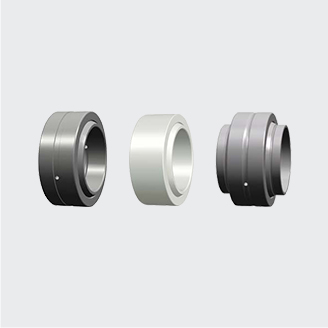
Aerospace actuators and flight control linkages require spherical plain bearings that tolerate oscillation, misalignment, and aggressive anti-corrosion treatments. The GE-E-ES series, with steel-on-bronze sliding contact, is a common starting point for such customizations.
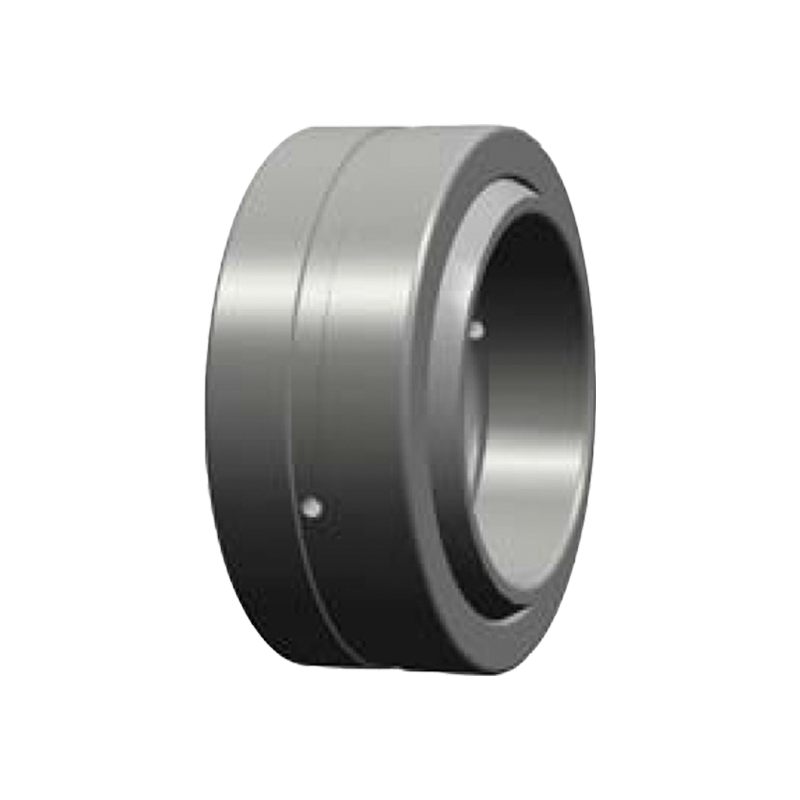 GE...(E)ES Spherical Plain Bearing for Oscillation and MisalignmentThis steel-on-bronze spherical plain bearing suits aerospace actuators and linkages that endure oscillation, misalignment, and aggressive anti-corrosion treatments, offering low friction and self-lubricating performance.View Product →
Food production lines run wet, hot, and continuous. The usual starting point is an insert bearing with 316 stainless steel rings, H1 grease, and a robust seal package. The UC200 series insert bearing is a typical base because its spherical outer ring allows self-alignment under mounting deflection.
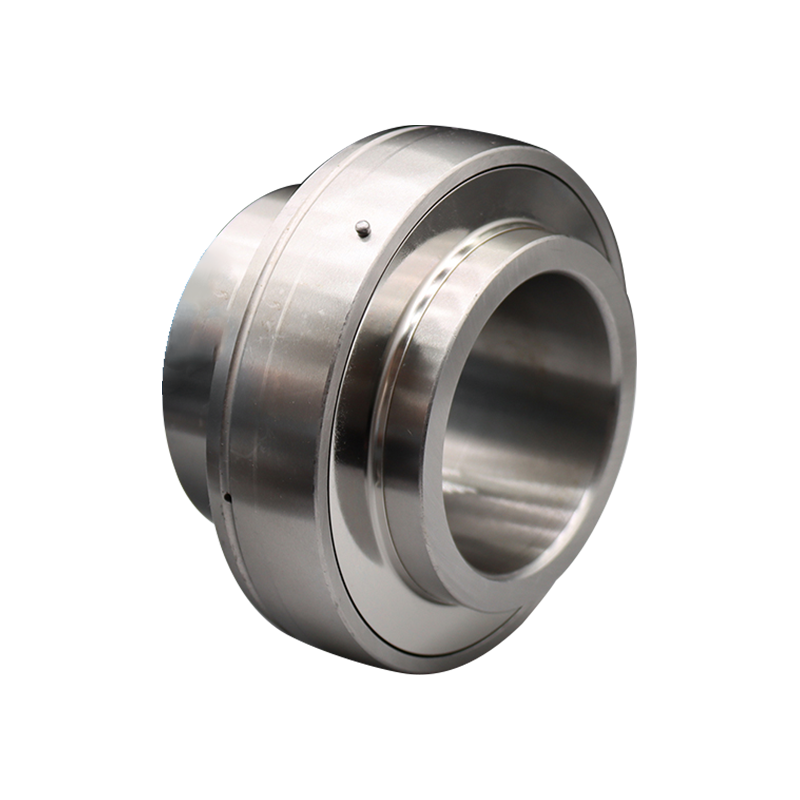 UC200 Series Insert Bearing with Self-Aligning Spherical Outer RingDesigned for wet, hot food production lines, this insert bearing uses 316 stainless steel rings, H1 grease, and robust seals, while its spherical outer ring compensates for mounting deflection.View Product →
Medical equipment demands low running noise, tight radial runout, and non-magnetic options for imaging systems. Deep groove bearings in the 6000 series are frequently ordered with ABEC 5 or ABEC 7 precision grades and batch-level noise and vibration checks.
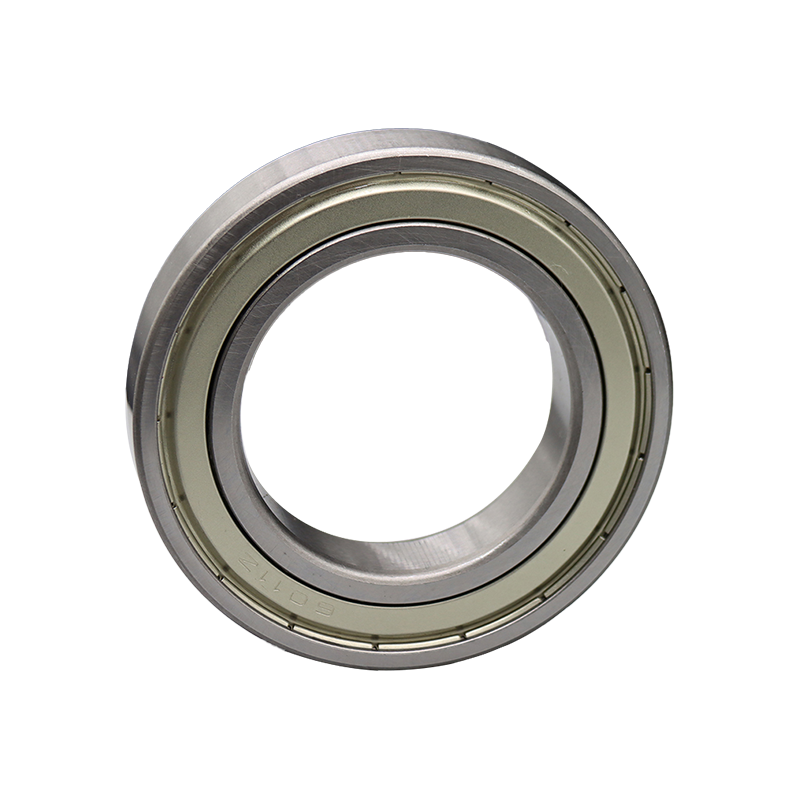 6000 Series Deep Groove Ball Bearing for Low Noise and PrecisionIdeal for medical equipment, this deep groove bearing supports radial and axial loads with low friction, and precision grades like ABEC 5 or 7 enable tight radial runout and reduced vibration.View Product →
Automotive production lines combine high speed, compact envelopes, and abrasive environments. Angular contact bearings in the 7200 series are often customized with reduced contact angles and special cage retention features for robot joint and conveyor drive applications.
Designers in food and beverage projects should expect every shaft, pulley, and conveyor roller to need a corrosion-managed bearing, not just the washdown zones.
A customized non-standard bearing project moves through six defined stages: requirement review, calculation, design freeze, sampling, validation, and serial production.
The difference between a successful prototype and a failed one is almost always the quality of the requirement review. A bearing that passes the test rig but fails in production usually missed a real operating condition.
Engineers who want a structured method for defining bearing requirements can reference this application and selection guidance for ball bearings in industrial equipment.
Non-standard bearings cost more per unit and take longer to deliver than standard parts, but the premium buys an exact match to application load, environment, and operating life.
Three procurement factors deserve attention. Minimum order quantities are typically higher because tooling costs must be spread across a batch. Lead times range from four to ten weeks for prototypes and eight to sixteen weeks for serial production. Documentation is more extensive, including material certificates, dimensional reports, and process control plans.
Lead time benchmark: 4 to 10 weeks for prototypes, 8 to 16 weeks for serial production, excluding testing and customer approval cycles.
Supplier qualification should cover manufacturing traceability, inspection equipment, and proven industry experience. A supplier that reviews load and environment data before quoting saves more engineering hours than one that ships a catalog approximation. Shanghai Yinin Bearing & Transmission Company, for example, structures its non-standard bearing projects around the same review-first process.
In practice the terms overlap. A non-standard bearing is any bearing outside catalog dimensions or specifications; a custom bearing adds project-specific engineering such as a unique bore size, a special material grade, or modified internal clearance. Both require the same design and validation discipline.
Prototype lead times typically range from 4 to 10 weeks depending on material availability and complexity. Serial production adds roughly 4 to 8 weeks, and customer approval cycles, testing, or third-party inspection can extend the total timeline.
Yes, the per-unit price is higher because of lower volumes, dedicated tooling, engineering input, and stricter inspection. Total cost of ownership, however, is often lower when service life improves or unscheduled downtime disappears.
A complete quote request should include operating load, speed, temperature, mounting dimensions, lubrication, sealing, expected service life, and any industry certifications or documentation requirements.
Our provided products
Contact Us
Tel: +86-13916786238
Fax: +86-21-68551629
Email: [email protected]
Add: HuangXu Industrial Area, DanTu, ZhenJiang city, JiangSu Province, China
Industries


 English
 日本語
 Français
 Español