Industry Trends
2026-01-29
Content
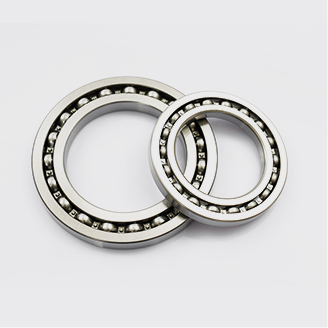
In industrial engineering, selecting the appropriate material for rotary components is the deciding factor between long-term operational stability and catastrophic mechanical failure. stainless steel deep groove ball bearings are indispensable in sectors where moisture, chemicals, and salt spray are prevalent. Shanghai Yinin Bearing & Transmission Company, established as an industry and trade integrated enterprise since 2016, leverages decades of expertise to provide high-end bearing solutions. With our manufacturing facility, Jiangsu Dahua Bearing Manufacturing Co., Ltd., we specialize in spindle, motor, and customized non-standard stainless steel bearings. Understanding the metallurgical nuances of different stainless steel grades is essential for B2B procurement professionals to ensure equipment longevity in harsh conditions.
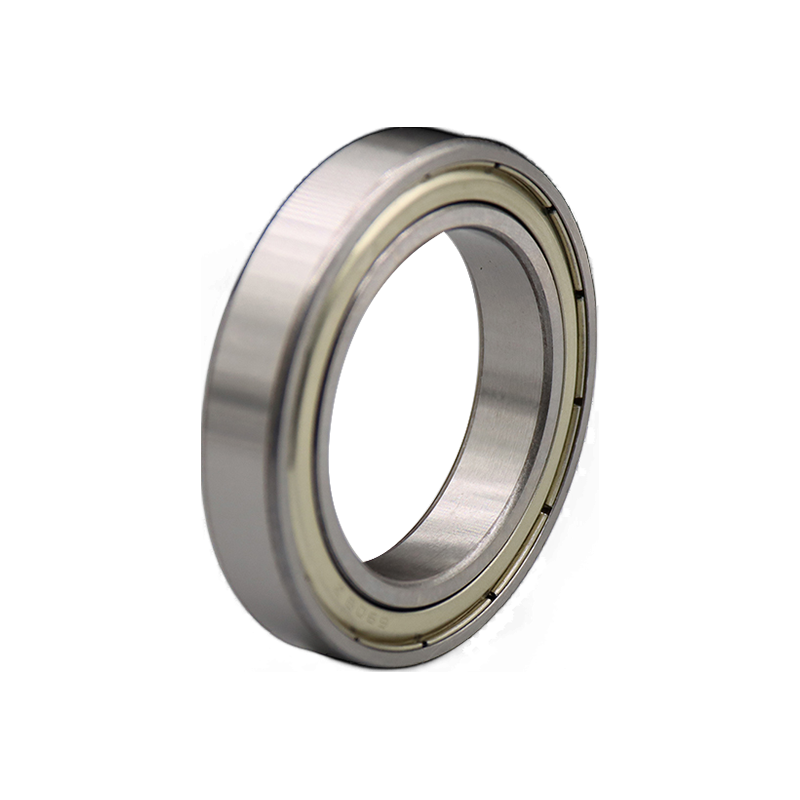
The choice of grade primarily depends on the balance between mechanical load requirements and the severity of the corrosive media. AISI 440C is a martensitic stainless steel that offers high hardness and wear resistance, making it ideal for high-load applications, though its corrosion resistance is lower than austenitic grades. In contrast, AISI 316 stainless steel bearings offer superior resistance to chlorides and acids due to the addition of molybdenum. According to the 2024 standards published by the International Organization for Standardization (ISO), specialized heat treatments for martensitic stainless steels have improved the pitting resistance equivalent number (PREN) of modern 440C variants, allowing them to perform better in humid environments than previously recorded.
While 440C provides the necessary Rockwell hardness for high-speed rotation, 316 and 304 grades are often categorized as food grade stainless steel bearings because they can withstand aggressive washdown procedures without oxidizing.
| Property | AISI 440C (Martensitic) | AISI 316 (Austenitic) |
| Hardness (HRC) | 58 - 62 (High) | 20 - 25 (Low) |
| Corrosion Resistance | Moderate (Atmospheric) | Exceptional (Marine/Chemical) |
| Load Capacity | High Dynamic/Static Load | Limited (approx. 20-30% of 440C) |
Even the highest grade of waterproof stainless steel ball bearings will fail if the lubrication is not compatible with the environment. In marine or food processing applications, the lubricant must resist emulsification and washout. For high speed stainless steel motor bearings, low-torque grease with wide temperature stability is required. Technical breakthroughs in 2025 by the Society of Tribologists and Lubrication Engineers (STLE) highlighted the efficacy of solid lubricants and calcium-sulfonate thickeners in preventing galvanic corrosion within stainless steel races when exposed to electrolyte-rich fluids.
Source: STLE: Advances in Synthetic Lubrication for Corrosive Industrial Environments 2025
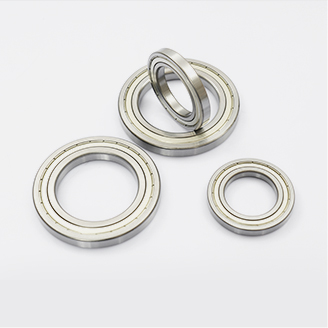
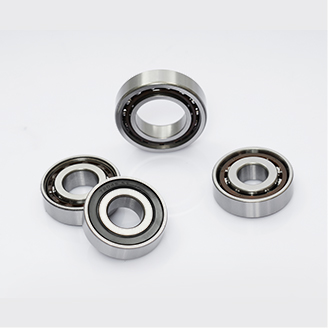
Protection against particulate ingress is as vital as corrosion resistance. corrosion resistant shielded bearings (ZZ) or sealed bearings (2RS) provide an additional barrier. For high-hygiene environments, contact seals made of Nitrile (NBR) or Viton are preferred to prevent lubricant leakage and the entry of cleaning agents. At Shanghai Yinin Bearing, we utilize our 12 specialized technicians to design customized non-standard stainless steel bearings that feature optimized internal geometries and specialized sealing lips to handle the unique pressure differentials found in chemical pumps and marine propulsion systems.
Shielded bearings are better suited for high-speed applications with low friction requirements, whereas sealed bearings offer the maximum protection necessary for submerged or heavily splashed environments.
| Feature | Shielded (Metal ZZ) | Sealed (Rubber 2RS) |
| Speed Rating | Higher (Low Friction) | Lower (Contact Friction) |
| Moisture Protection | Minimal | High (Water-tight) |
| Grease Retention | Moderate | Excellent |
Shanghai Yinin Bearing & Transmission Company operates with quality as the basis and technology as the foundation. Our industry-trade integration allows us to oversee every step from comprehensive design to final service. Whether you require high speed stainless steel motor bearings for precise automated systems or heavy-duty components for maritime use, our team ensures that every bearing passes through stringent quality control systems. Our ability to establish江苏大华轴承制造有限公司 reflects our commitment to scaling production while maintaining the meticulous standards required by the world stage.
Selecting the right stainless steel deep groove ball bearings involves more than just picking a part number. It requires a deep dive into metallurgy, lubrication, and sealing technology. By choosing AISI 440C for load-bearing and AISI 316 stainless steel bearings for chemical resistance, and ensuring they are corrosion resistant shielded bearings, engineers can effectively mitigate the risks of corrosive failure. Trusting an experienced partner like Shanghai Yinin ensures you receive the highest quality bearings backed by nearly three decades of export and manufacturing excellence.
Our provided products
Contact Us
Tel: +86-13916786238
Fax: +86-21-68551629
Email: [email protected]
Add: HuangXu Industrial Area, DanTu, ZhenJiang city, JiangSu Province, China
Industries


 English
 日本語
日本語
 Français
 Español