 English
 日本語
日本語
 Français
 Español

A roller bearing is a precision mechanical component that uses cylindrical, tapered, spherical, or needle-shaped rolling elements to reduce rotational friction and support radial and axial loads between moving parts. They are used across virtually every industry — from automotive and aerospace to heavy machinery and household appliances — and can last anywhere from 10,000 to over 1,000,000 operating hours depending on load, speed, and maintenance. Yes, most roller bearings require grease or oil lubrication to function properly and achieve their rated service life.
What Are Roller Bearings
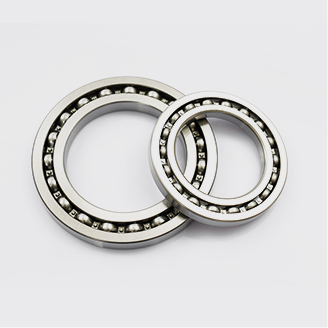
Roller bearings belong to the broader family of rolling-element bearings. Unlike plain (sliding) bearings, they replace direct surface contact with rolling elements that sit between an inner ring (raceway), an outer ring, and a cage that keeps the elements evenly spaced.
The core types differ mainly in the shape of the rolling element:
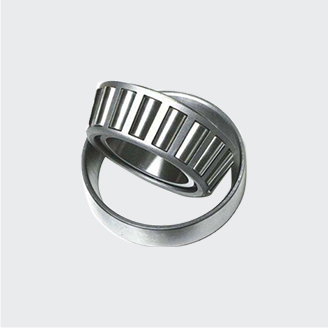
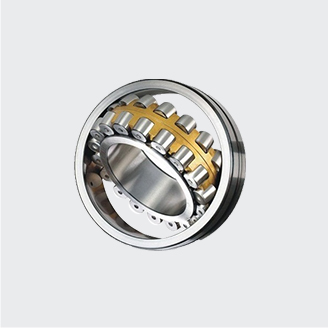
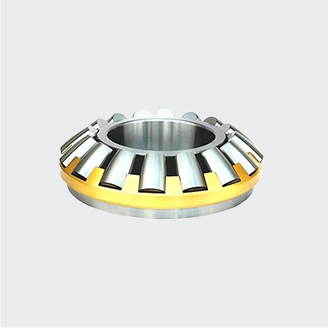
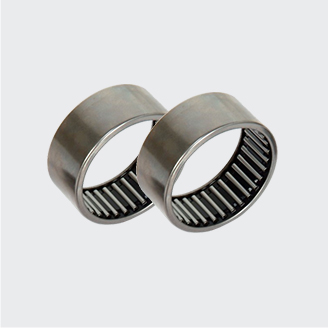
| Type | Rolling Element | Primary Load Direction | Typical Application |
|---|---|---|---|
| Cylindrical Roller Bearing | Cylinder | Radial | Electric motors, gearboxes |
| Tapered Roller Bearing | Tapered cone | Radial + axial (combined) | Wheel hubs, transmissions |
| Spherical Roller Bearing | Barrel/sphere | Radial + moderate axial | Conveyor systems, mining equipment |
| Needle Roller Bearing | Thin needle | Radial (high load, small space) | Rocker arms, pumps, compressors |
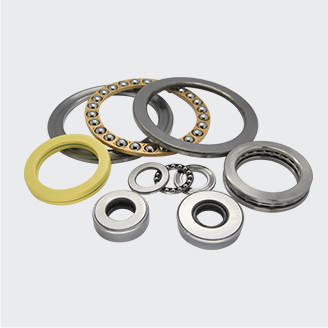
| Thrust Roller Bearing | Cylinder or taper | Axial (thrust) | Crane hooks, screw presses |
The line contact between a roller and its raceway — as opposed to the point contact of a ball bearing — means roller bearings carry significantly higher loads for the same outer diameter. This makes them the preferred choice wherever high radial capacity is critical.
Where Are Roller Bearings Used
Roller bearings appear wherever rotating shafts must carry substantial loads efficiently. Their presence spans nearly every engineered system in modern life.
Automotive and Transportation
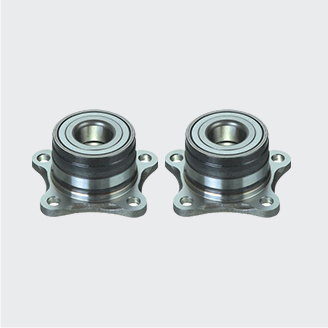
Tapered roller bearings are the standard in vehicle wheel hubs because they handle both radial loads from the vehicle weight and axial loads from cornering. A typical passenger car wheel hub bearing is rated for roughly 150,000–200,000 km before replacement is due. Transmissions, differentials, and axles also rely heavily on cylindrical and needle roller bearings for smooth power transfer.
Industrial Machinery and Manufacturing
Heavy industrial equipment such as rolling mills, paper machines, and mining conveyors depends on spherical roller bearings because they self-align to compensate for shaft deflection and housing misalignment — a critical feature when shafts span several meters. A single spherical roller bearing in a steel rolling mill can carry radial loads exceeding 5,000 kN.
Aerospace and Defense
Jet engine mainshaft bearings — often cylindrical roller bearings — must operate reliably at speeds above 15,000 RPM and temperatures exceeding 200°C. Bearing failure in these contexts is catastrophic, so aerospace-grade bearings are manufactured to tolerances measured in micrometers and are individually inspected.
Electric Motors and Generators
Most electric motors from fractional-horsepower household appliances up to multi-megawatt wind turbine generators use cylindrical or deep-groove roller arrangements. Wind turbine main shafts, which endure variable and unpredictable loads, increasingly rely on large-diameter spherical roller bearings with outer diameters above 2 meters.
Construction and Agriculture
Excavators, bulldozers, combine harvesters, and tractors all incorporate roller bearings in pivot joints, drivetrains, and hydraulic pumps. The demanding combination of shock loads, contamination, and infrequent maintenance schedules makes sealed spherical roller bearings particularly common in these environments.
Consumer and Medical Equipment
Washing machines, power tools, bicycles, and even MRI scanners all use roller bearings. Needle roller bearings, being extremely compact, are embedded in small-diameter shafts inside power drills and other hand tools where space is at a premium.
How Long Do Roller Bearings Last
Bearing manufacturers rate service life using the ISO-standardized L10 life — the number of operating hours (or revolutions) at which 10% of a large sample of identical bearings will have failed due to material fatigue. The other 90% will last longer.
| Application | Typical L10 Life Target | Key Life-Limiting Factor |
|---|---|---|
| Passenger car wheel hub | 150,000–200,000 km | Road contamination, overloading |
| Electric motor (continuous) | 20,000–40,000 hours | Speed, temperature, lubrication interval |
| Industrial gearbox | 30,000–100,000 hours | Load spectrum, oil cleanliness |
| Wind turbine main bearing | 175,000 hours (20 years) | Variable loads, vibration, lubrication |
| Jet engine mainshaft | Per overhaul interval (design-specific) | Speed, temperature, material fatigue |
Several variables shorten or extend actual service life beyond the L10 estimate:
- Load magnitude and direction: Operating above the dynamic load rating accelerates fatigue exponentially. Doubling the load can cut life by a factor of 8 to 10.
- Speed: Higher speeds generate more heat and increase the rate of lubricant degradation.
- Contamination: Particles as small as 5–10 micrometers can indent raceways and initiate fatigue cracks. Oil cleanliness is one of the single largest controllable life factors.
- Misalignment: Even a 0.5-degree shaft misalignment on a cylindrical roller bearing generates edge loading that dramatically reduces life.
- Lubrication quality and interval: Bearings running on degraded or insufficient lubricant experience adhesive wear and thermal failure well before the rated L10 life.
- Temperature: Continuous operation above 120°C reduces the hardness of bearing steel, lowering load capacity. Special high-temperature steels and lubricants are required for elevated-temperature environments.
With optimal conditions — correct load, clean environment, proper lubrication, and good alignment — many industrial roller bearings comfortably exceed their calculated L10 life by a factor of 3 to 5.
Do Roller Bearings Need Grease
Yes. Lubrication is not optional — it is the single most important maintenance factor for roller bearing performance and longevity. Without adequate lubrication, metal-to-metal contact occurs within seconds, generating heat and causing rapid, irreversible damage.
Grease vs. Oil: Which to Use
The choice between grease and oil depends on speed, temperature, load, and accessibility.
- Grease is preferred in most roller bearing applications. It is easier to retain within a housing, provides sealing against contaminants, and typically requires relubrication intervals of 3,000 to 10,000 operating hours in normal conditions. Lithium-complex and polyurea greases are the most widely used base types.
- Oil lubrication — via bath, circulation, or mist systems — is used when speeds are very high (above the grease speed limit), when continuous heat removal is needed, or when the bearing is part of a gearbox that is already oil-lubricated. Circulating oil systems also filter and cool the lubricant, extending both oil and bearing life.
How Much Grease Is Correct
Overfilling with grease is one of the most common and damaging maintenance errors. Excess grease churns, generates heat, and can cause bearing temperatures to rise by 20–40°C above normal — accelerating lubricant degradation and reducing life. The standard recommendation is to fill 30–50% of the free internal space of the bearing and housing at moderate to high speeds, and up to 60–70% only at very low speeds.
Sealed vs. Open Bearings
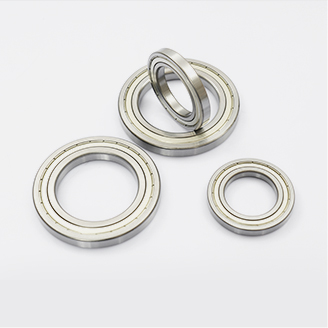
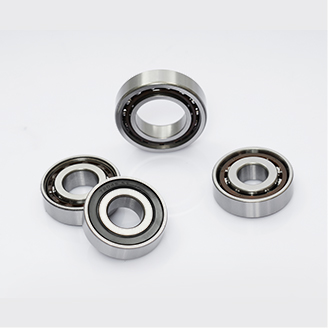
Many smaller roller bearings — particularly needle roller bearings in consumer and automotive applications — are supplied sealed and pre-greased for life. These require no field relubrication but also cannot be replenished; they are replaced as a unit when their lubricant is exhausted. Larger industrial bearings almost always use open or shielded designs with external lubrication systems, allowing regreasing on a scheduled interval.
Signs of Lubrication Failure
- Abnormal noise — squealing, grinding, or rumbling sounds during operation
- Elevated bearing temperature — typically more than 20°C above normal running temperature
- Visible grease darkening, hardening, or metallic particle contamination on inspection
- Increased vibration detected by condition monitoring sensors
- Visible pitting, spalling, or discoloration on raceway surfaces during teardown inspection
Selecting the Right Roller Bearing for Your Application
Choosing a roller bearing correctly requires evaluating several parameters together, not in isolation:
- Load type and magnitude: Pure radial loads favor cylindrical roller bearings; combined radial and axial loads call for tapered or spherical roller bearings; pure axial (thrust) loads require thrust roller bearings.
- Speed rating: Each bearing type has a limiting speed expressed in RPM or as a speed factor (n × dm). Needle roller bearings, despite their small size, can handle high speeds. Large spherical roller bearings are comparatively speed-limited.
- Misalignment tolerance: Spherical roller bearings self-align up to 1–2.5 degrees. Cylindrical roller bearings tolerate virtually no misalignment without edge loading.
- Space constraints: Where radial space is restricted, needle roller bearings deliver high load capacity in the smallest envelope.
- Environment: Exposure to water, dust, chemicals, or extreme temperatures requires sealed designs, special coatings, or stainless steel variants.
- Maintenance access: Remote or inaccessible installations benefit from sealed-for-life units or automatic lubrication systems.
For critical applications, bearing manufacturers provide detailed selection software and engineering support. Providing accurate load spectra — not just peak loads — leads to far more accurate life predictions and better bearing selection.